
- 33 years on death row for a murder Jarvis Masters insists he did not commit
- 3 key legal arguments in his appeal: false evidence (Napue v. Illinois), withheld exculpatory evidence (Brady v. Maryland), and exclusion of critical defense evidence (Chambers v. Mississippi)
- 3 jailhouse informants recanted their testimony, admitting they lied in exchange for leniency
Experts in criminal justice and legal scholars would likely conclude that Jarvis Masters' case raises serious concerns about due process violations and the reliability of convictions built on recanted testimony and suppressed evidence, warranting a thorough review by the Ninth Circuit Court of Appeals.
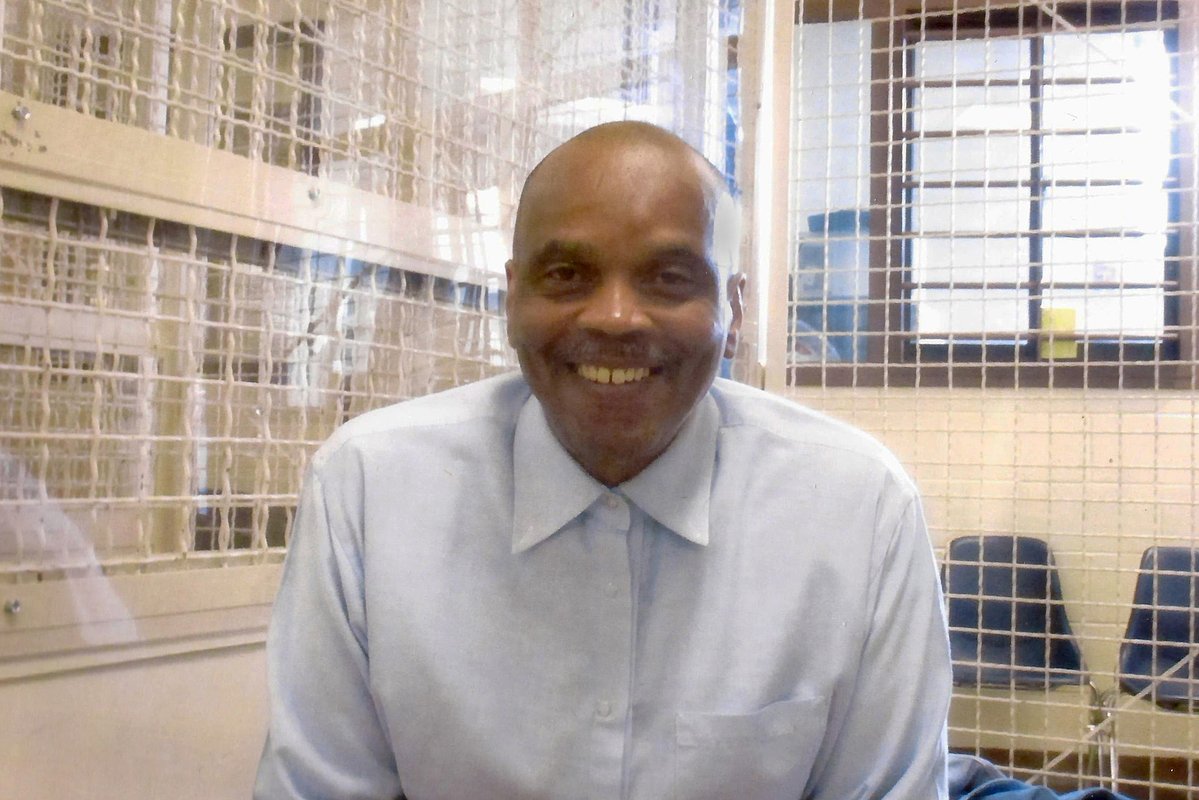
Jarvis Masters Takes Wrongful Conviction Fight to Ninth Circuit Court
SAN FRANCISCO, CA – January 23, 2026 – After more than three decades on death row for a murder he insists he did not commit, renowned author and Buddhist practitioner Jarvis Jay Masters is taking his fight for exoneration to the federal courts. On January 22, his legal team filed a comprehensive brief with the U.S. Ninth Circuit Court of Appeals, arguing that his 1990 conviction was the result of profound constitutional violations that denied him a fair trial.
The appeal challenges a lower district court's denial of his habeas corpus petition and represents a critical new chapter in a legal saga that has spanned more than half his life. Masters, 63, was recently transferred from San Quentin State Prison to the California Men’s Colony, but he remains condemned to die. His case, built on a foundation of recanted testimony and suppressed evidence, has become a focal point for advocates questioning the integrity of the criminal justice system.
“This appeal before the Ninth Circuit renews hope that my decades-long journey to freedom may finally come to an end,” Masters said in a statement. “My plight represents that of so many others, and I am determined to prove my innocence while raising awareness of the flaws and inequities in the criminal justice system.”
Constitutional Claims at the Core
At the heart of Masters' appeal are arguments rooted in established Supreme Court precedents designed to protect an individual's right to due process. His pro bono legal team from the international law firm Kirkland & Ellis contends that the state of California secured his death sentence by violating these fundamental rights.
The appeal focuses on three key legal arguments:
First, it alleges the prosecution presented false evidence, a violation of the standard set in Napue v. Illinois. This claim centers on the testimony of a key jailhouse informant, Bobby Evans, and benefits he allegedly received in exchange for his testimony. The California Supreme Court had previously deemed the false testimony "immaterial," a conclusion Masters' team argues is an unreasonable application of the law.
Second, the brief asserts a violation of Brady v. Maryland, which requires prosecutors to disclose favorable, or exculpatory, evidence to the defense. Masters’ lawyers argue the state withheld critical impeachment evidence against Evans. While the California Supreme Court acknowledged this failure to disclose, it again concluded the evidence was not material enough to have changed the trial's outcome—a finding the appeal directly contests.
Finally, the appeal cites Chambers v. Mississippi, arguing that the trial court's exclusion of significant exculpatory evidence violated Masters' right to present a complete defense. This includes the confession of another inmate who admitted to the role for which Masters was convicted. The trial judge barred this confession as hearsay, a decision the appeal now frames as a due process violation.
“We are pleased to see that the Ninth Circuit Court has accepted Jarvis’ appeal," stated Michael F. Williams, a partner at Kirkland & Ellis. "Our legal team remains determined and confident in the case we have built to grant Jarvis the freedom he has long deserved.”
A Trial Built on Shaky Ground
Masters' 1990 conviction stemmed from the 1985 murder of Sergeant Howell Burchfield at San Quentin, where Masters was already incarcerated for armed robbery. Prosecutors did not accuse Masters of the stabbing itself. Instead, they argued he fashioned the makeshift spear used in the attack, a role that nevertheless led to a death sentence. In a stark sentencing disparity, the two other men convicted in the case—one for carrying out the stabbing and the other for ordering it—received sentences of life without parole.
The prosecution's case against Masters relied heavily on the testimony of three jailhouse informants: Rufus Willis, Bobby Evans, and Johnny Hoze. Willis claimed Masters helped plan the murder and copied incriminating notes, or "kites," detailing the plot. However, all three men have since recanted their testimony in sworn statements, admitting they lied in exchange for leniency or other benefits.
The defense has long pointed to a trove of exculpatory evidence that was never fully considered. This includes:
- A Confession: Another inmate, Harold Richardson, reportedly confessed to fashioning the weapon. Critically, Richardson’s physical appearance matched the initial eyewitness description provided by Willis, whereas Masters’ did not.
- Recanted Testimony: Willis later admitted he coerced a terrified Masters into copying the incriminating notes under threat from a prison gang.
- Co-Defendant Corroboration: Andre Johnson, the man convicted of the stabbing, has provided a sworn statement confirming that Masters had no involvement in the crime.
Despite this evidence, Masters' state-level appeals were consistently denied. In a 2011 ruling, a special referee appointed by the California Supreme Court dismissed the recantations, deeming the witnesses not credible. This created a legal paradox that supporters find galling: the witnesses were credible enough to send a man to death row, but not credible enough to exonerate him when they admitted to lying.
From Death Row to Oprah's Book Club
While the legal battle has churned on for decades, Masters has undergone a profound personal transformation. Immersing himself in Buddhist practice, he has become a celebrated author and a voice for compassion from behind bars.
His 2009 autobiography, That Bird Has My Wings: The Autobiography of an Innocent Man on Death Row, received widespread acclaim and was selected as an Oprah’s Book Club pick in 2022, bringing his story to a global audience. The book details his traumatic childhood and his path to finding inner peace and purpose while facing execution. He has also published Finding Freedom: How Death Row Broke & Opened My Heart.
Masters’ influence extends beyond his writing. He is a part of the spiritual advisory council for the Human Kindness Foundation, has presented at the Black and Buddhist Summit, and has consulted for the Compassion Prison Project, an organization focused on healing trauma in incarcerated populations. This work has garnered him a wide network of supporters, from legal advocates to spiritual leaders and everyday citizens, who see his case as a profound injustice.
As his case enters the federal appellate system, it carries the weight of not only his own freedom but also broader questions about the finality of convictions built on questionable evidence. For Masters, the fight is both personal and public.
“I want to thank everyone who has advocated for me during this journey and spoken up on my behalf," Masters stated. "You have all given me the strength and energy to continue pursuing justice, and I am incredibly grateful to have you at my side every step of the way.”