
- $110 million: Utopai Studios' projected revenue for upcoming projects.
- 40%: Potential reduction in animation production time with AI tools like PAI.
- 16 shots: Maximum narrative flow supported by PAI for cinematic storytelling.
Experts view this collaboration as a strategic milestone, demonstrating AI's potential to augment professional content creation while navigating industry concerns about job displacement and creative integrity.
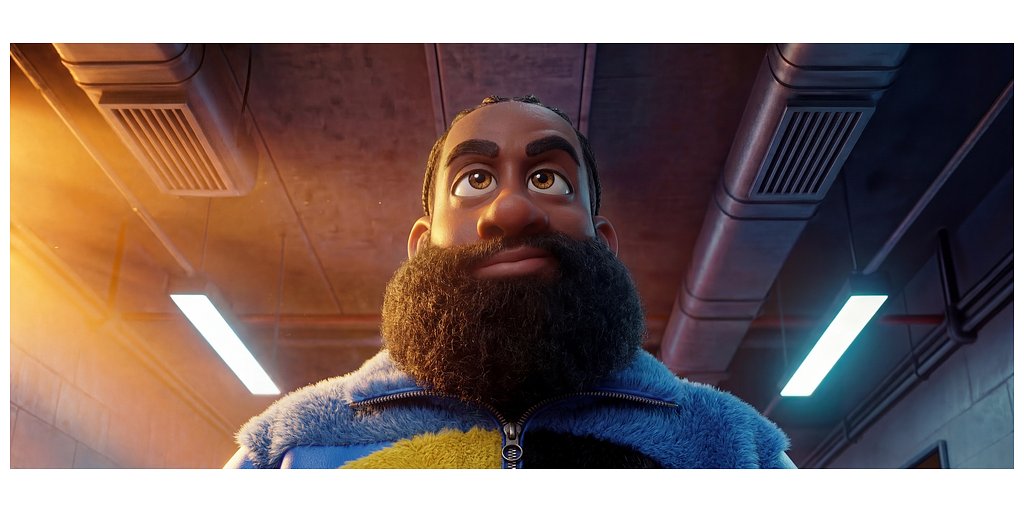
James Harden and Utopai's AI: A New Game for Content Creation
MOUNTAIN VIEW, CA – April 09, 2026 – In a move that fuses sports celebrity with cutting-edge technology, NBA superstar James Harden has collaborated with Utopai Studios to release an AI-generated animated short celebrating one of the most famous trademarks in sports: his beard. The video, which debuted across Harden's massive social media following on Instagram, X, and TikTok, was created using Utopai's proprietary PAI platform, a system designed to transform narrative concepts into cinematic content.
The partnership marks a significant moment, moving AI-driven content generation from theoretical demonstrations to a high-profile, real-world application with one of basketball's biggest stars. Harden himself expressed enthusiasm for the creative process.
“I love playing around on PAI,” said James Harden in a statement. “We were able to cook up this animated short about my beard real quick. It’s been fun working with Utopai Studios and we got more on the way.”
This collaboration began when Harden's team was introduced to the technology, quickly evolving from a simple introduction into a creative partnership. The successful launch of a second video signals that for professionals like Harden, PAI is proving to be more than just a novelty; it's a viable tool for storytelling.
A New Playbook for Content Creation
At the heart of this project is Utopai Studios' PAI, or Proprietary AI, a platform the company positions as a cinematic storytelling engine. Unlike many popular AI video tools that excel at generating short, disconnected clips from text prompts, PAI is engineered for a “screenplay-to-screen” workflow. This structured production pipeline allows creators to develop consistent characters, cinematic shots, and coordinated sequences from a script or detailed concept.
A key technical challenge in AI video generation has been maintaining visual consistency—or avoiding “visual drift”—across multiple shots. Utopai claims PAI addresses this by enabling story-level editing, where creators can revise elements like character performance and composition within a sequence without having to regenerate it from scratch. The platform currently supports narrative flows of up to 16 shots, with video output up to a minute in length at 4K resolution.
Crucially, the system includes safeguards to prevent the unauthorized creation of copyrighted characters or the likenesses of public figures, a critical ethical consideration as AI-generated media becomes more sophisticated. This focus on a structured, professional-grade workflow suggests Utopai is targeting filmmakers and established creators looking to integrate AI as a powerful production assistant rather than a simple prompt-based toy.
The Power of Celebrity in the AI Era
The partnership is a savvy strategic move for both parties. For James Harden, it reinforces his brand as a cultural icon who is in tune with technological innovation. For Utopai Studios, it’s an invaluable proof point that catapults its technology into the mainstream conversation, backed by one of the most recognizable faces in global sports.
Utopai Studios, founded in 2022 by Cecilia Shen and Jie Yang, has ambitions that extend far beyond being a software provider. With a leadership team featuring veterans from Google Research, Meta, and Amazon AGI, the company aims to become a full-fledged Hollywood studio that leverages its own technology to create and own intellectual property. This IP-centric approach is a departure from the common model of simply licensing AI tools.
The company's strategy is backed by significant financial and structural moves. After rebranding from Cybever, Utopai announced approximately $110 million in revenue for upcoming projects and has expanded through acquisitions and partnerships, including a joint venture with sales firm K5 International to handle distribution. This infrastructure is designed to support a new creator economy where filmmakers can develop projects outside the constraints of the traditional studio system.
The Harden collaboration perfectly illustrates this model in action: a high-profile partnership that not only showcases the technology but also generates original content that builds the Utopai brand. It transforms PAI from an abstract piece of tech into a tangible tool used by a global superstar.
Artists vs. Algorithms: The Industry Reacts
While the Harden short is a playful piece of content, it lands in the middle of a tense industry-wide debate about the role of artificial intelligence in creative fields. The 2023 strikes by the Writers Guild of America (WGA) and SAG-AFTRA brought these anxieties to the forefront, with AI's potential impact on jobs and creative integrity becoming a central point of contention.
The concerns are multifaceted. Many artists and animators fear job displacement as AI automates tasks that once required human skill. There are also worries about the commodification of art, where the ease of generation could devalue the craft and lead to a flood of homogenous content. Copyright remains a legal minefield, with ongoing debates about the ethics of training AI models on vast datasets of existing art without consent or compensation.
However, another perspective is rapidly gaining ground: AI as a powerful co-pilot. Proponents argue that tools like PAI can democratize content creation, lower production costs, and handle tedious, repetitive tasks, freeing human creators to focus on higher-level storytelling and conceptual work. Some reports suggest AI tools can slash animation production time by as much as 40%. Surveys of creative professionals already using AI reveal a surprising level of optimism, with a majority seeing it as a supportive tool for the future rather than an immediate threat to their jobs.
Utopai's PAI platform appears designed to appeal to this latter group, positioning itself as a professional tool that augments, rather than replaces, the filmmaker's vision.
Navigating a Crowded Field
Utopai Studios is entering an increasingly competitive market. The AI media and entertainment sector is projected to swell to over $123 billion by 2033, and a host of powerful players are vying for dominance. Tech giants are in the race with models like OpenAI's Sora and Google's Veo, which have stunned the world with their high-fidelity video generation. Meanwhile, specialized platforms like Runway, LTX Studio, and Pika are already popular with creators for their powerful editing and animation features.
In this crowded landscape, a company’s unique value proposition is paramount. Utopai is betting that its focus on long-form narrative consistency and a workflow built for professional storytellers will be its key differentiator. The challenge will be to maintain a technical edge while effectively communicating that value to an industry that is both intrigued and apprehensive about the technology it represents. In a market where visibility is as valuable as venture capital, leveraging the power of a globally recognized beard might just be the most strategic play of all.
Topics & Related
AI & Machine Learning
Software & SaaS
Streaming & Digital Media
Generative AI
Private Placement
Related Company Pulse