
- 63% of Hong Kong companies reported experiencing an AI-related cybersecurity breach, higher than the global average.
- 70% of Hong Kong’s white-collar workers are already using AI tools.
- Embedded micro-insurance for robots is now integrated at the point of sale, reducing barriers to adoption.
Experts would likely conclude that this partnership between Zurich Insurance and YAS represents a critical step in mitigating risks associated with robotics adoption, accelerating Hong Kong’s transition to a fully automated economy.
Insuring the Automaton: A New Policy Unlocks Hong Kong's Robot Future
HONG KONG – June 16, 2026 – In the bustling, vertically-integrated landscape of Hong Kong, a new class of worker is becoming increasingly common. Robots are no longer confined to factory floors; they patrol construction sites, navigate crowded shopping malls, and deliver goods in office towers. But with this rise in automation comes a complex new web of risk. What happens when a service robot collides with a customer, or a construction drone malfunctions? Answering these questions is critical to unlocking the next phase of technological adoption, and a new partnership between insurance giant Zurich Insurance (Hong Kong) and InsurTech firm YAS aims to provide the solution.
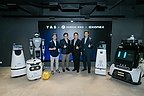
The two companies have announced a collaboration to create bespoke, embedded micro-insurance for robots sold and serviced by YAS and its partners. By integrating insurance directly into the point of sale, they aim to remove a significant barrier to entry for businesses, transforming a complex capital risk into a manageable operational cost. It’s a move that signals a profound shift, not just for the insurance industry, but for the pace of Hong Kong’s entire digital transformation.
The High-Stakes World of Urban Robotics
Hong Kong's ambition to become a world-leading “Smart City” is well-documented, backed by government initiatives and significant investment in artificial intelligence. A high-level government committee dedicated to AI development was formed just this month, and a recent McKinsey report noted that 70% of the city’s white-collar workers are already using AI tools. Yet, this individual enthusiasm has not fully translated into corporate-wide deployment. A key reason is risk.
Deploying a fleet of robots involves more than just the upfront cost. Each machine represents a point of potential failure with financial and legal consequences. The risks are highly contextual. A robot on a construction site, as YAS Co-Founder William Lee noted, operates near heavy machinery, posing different dangers than a robot in a retail setting that “needs to move through crowds and interact with customers.”
These concerns are not theoretical. A recent survey by DLA Piper revealed that 63% of Hong Kong companies reported experiencing an AI-related cybersecurity breach, a figure higher than the global average. The risks span from physical damage and third-party liability to system outages and data privacy violations—exposures that traditional business insurance policies often fail to adequately cover. This creates a significant hurdle for businesses, forcing them to weigh the promise of improved efficiency against the specter of unquantifiable risk.
A New Safety Net: Deconstructing Embedded Insurance
The solution proposed by Zurich and YAS is elegant in its simplicity: make insurance an invisible, integral part of the technology itself. Instead of requiring businesses to seek out complex, specialized coverage after purchasing a robot, the protection is embedded from the start. This “scenario-based” insurance is tailored to the specific use case of each robot, providing coverage for repair costs from insured incidents and, crucially, enhancing protection for third-party liability.
“As AI and technology advance at unprecedented speed, the risks faced by businesses are becoming more diverse,” said Eric Hui, Chief Executive Officer of Zurich Insurance (Greater China). He described Zurich’s “lab approach,” where the insurer collaborates with tech firms to combine forward-looking insights with its deep expertise in risk management. This robotics insurance is the latest product from its “Zurich Smart Vision Series” of micro-insurance offerings, designed to help clients “navigate operational challenges with confidence.”
For YAS, an AI-driven risk technology company, the partnership is a natural fit. “By adding innovative embedded micro-insurance, we can further strengthen their confidence in applying robotics technology,” explained William Lee. This isn’t the first time the two companies have joined forces. A previous collaboration provided AI-powered, behavior-based insurance for electric taxi fleets, proving the viability of their model. The current initiative extends that logic from vehicles to autonomous machines.
From Hesitation to Adoption: The Business Case for Insured Robots
The availability of this embedded insurance fundamentally alters the business case for automation. Industry analysis has pointed to a “seniority adoption gap” in Hong Kong, where executive leadership has been slower to embrace AI than their employees. This hesitation often stems from a justifiable concern over risk and return on investment. By providing a clear financial backstop, the YAS-Zurich partnership gives operational managers a powerful tool to make the case for automation in the boardroom.
The insurance effectively de-risks the investment, protecting both the asset itself and the company from unforeseen liabilities. This allows businesses to, as the announcement states, strike a better balance between “improving efficiency” and “taking on additional risk.” It transforms the conversation from one of potential catastrophic loss to one of predictable, manageable costs, making automation a more secure and viable strategic choice for small and medium-sized enterprises, not just large corporations.
This partnership is a prime example of how legacy systems are adapting to the modern economy. The centuries-old model of insurance is being re-engineered to serve as a direct enabler of cutting-edge technology. It’s no longer a reactive product purchased out of obligation, but a proactive service that greases the wheels of innovation.
Hong Kong's InsurTech Moment
Beyond its immediate impact on the robotics market, this collaboration solidifies Hong Kong’s standing as a burgeoning hub for InsurTech innovation. It demonstrates a market mature enough to develop sophisticated financial products for emerging technologies, aligning perfectly with the government’s broader economic and technological goals.
The forward-looking nature of the partnership is perhaps its most compelling aspect. Lee mentioned plans to deepen the “lab” collaboration with Zurich to tackle other complex fields, including “autonomous driving, electric vehicle ecosystem, drones and green finance.” This signals a long-term strategy to build a platform for insuring the next wave of innovation.
As autonomous systems become more deeply woven into the fabric of our economy and daily lives, the frameworks that govern them must evolve. By creating a safety net for the machines among us, Zurich and YAS are not just selling a product; they are building the trust and financial security necessary for a truly automated future to take root.