
- $23 billion: Annual economic cost of 'lawsuit abuse' in Illinois, per a 2023 study by The Perryman Group.
- 68% decline: Civil lawsuits filed in Illinois between 2010 and 2023, according to state court data cited by opponents of tort reform.
- 215,000+ jobs: Lost annually in Illinois due to 'lawsuit abuse', per the same study.
Experts are divided: the insurance industry argues that legal system reforms are necessary to control rising premiums, while trial lawyers and consumer advocates contend that such reforms would limit access to justice and corporate accountability.
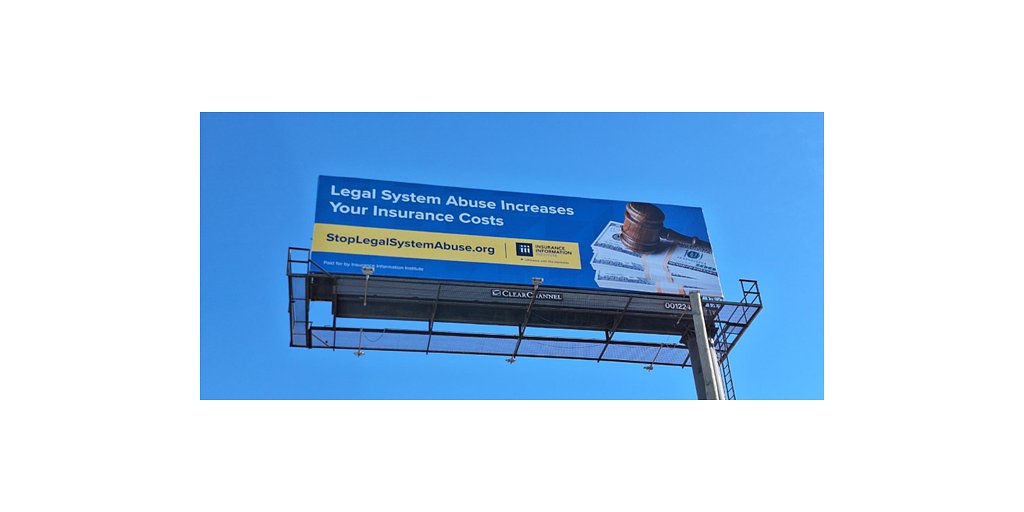
Insurance Industry Targets 'Legal System Abuse' in CA & IL
MALVERN, PA – February 11, 2026 – Commuters on the congested highways of Los Angeles and Cook County, Illinois, are now face-to-face with a new message from the insurance industry: the legal system is costing you money. The Insurance Information Institute (Triple-I), a major industry trade group, has launched a high-profile public awareness campaign aimed at what it terms “legal system abuse,” directly linking courtroom practices to soaring insurance premiums for homes, cars, and businesses.
The multi-pronged offensive includes large-scale billboards, digital displays on bus stops and urban panels, and a targeted social media push directing residents to a dedicated microsite, StopLegalSystemAbuse.org. The campaign’s goal is to mobilize public support for legislative tort reform by framing the issue as a direct hit to the wallets of everyday citizens in two of the nation's largest metropolitan areas.
The Campaign's Target: Defining 'Legal System Abuse'
At the heart of the campaign is the term “legal system abuse,” a phrase the insurance industry codified to describe practices it believes artificially inflate the cost and duration of insurance claims. This includes a constellation of issues, from the aggressive advertising of “billboard attorneys” to the rise of third-party litigation funding, where outside investors finance lawsuits in exchange for a portion of the settlement. Proponents of the campaign argue these elements create an environment ripe for inflated claims and massive jury awards, often called “nuclear verdicts,” that go far beyond traditional compensation.
“As we continue to be inundated across the U.S. by the likes of billboard attorneys preying on vulnerable Americans and increasing insurance costs for everyone, now is the time for further action from California and Illinois lawmakers,” stated Triple-I CEO Sean Kevelighan in the announcement. He pointed to recent legislative changes in another state as a model for success.
“We have seen positive results in states such as Florida that comprehensive legal reform works – leading to market stabilization, more competition and better pricing of insurance for consumers,” Kevelighan added.
Triple-I argues that these legal practices create a ripple effect. When insurers face higher and less predictable payouts, they raise premiums to cover the increased risk. These costs are then passed on not only to individual policyholders but also to businesses, which in turn may raise prices for goods and services, creating a hidden “tort tax” on the entire economy.
'Judicial Hellholes' and the Florida Model
The choice of Los Angeles County and Cook County was no accident. Both jurisdictions were recently named on the American Tort Reform Foundation’s (ATRF) 2025-2026 “Judicial Hellholes®” list, an annual report that identifies court systems ATRF deems the most unfair and unbalanced in the nation. The report, heavily criticized by trial lawyers as biased corporate propaganda, flags jurisdictions for allegedly allowing rampant litigation and plaintiff-friendly rulings that drive up costs for businesses and, by extension, consumers.
The insurance industry’s reference to Florida as a success story is a key part of its argument. In 2022 and 2023, Florida enacted sweeping tort reform legislation aimed at curbing runaway litigation, particularly in the state's beleaguered property insurance market. The laws eliminated “one-way attorney fees,” which had required insurers to pay claimants’ legal bills in disputed cases, and tightened rules around lawsuits. Early data from the Florida Office of Insurance Regulation suggests these reforms have led to a significant decrease in litigation. However, the promised consumer benefit of lower premiums has been slower to materialize. While the rate of premium increases has reportedly slowed, many Floridians still face some of the highest insurance costs in the country as insurers seek to recoup past losses, leaving the long-term impact on consumer pricing an open question.
The Economic Stakes: A Billion-Dollar 'Tort Tax'?
Quantifying the economic impact of litigation is a central pillar of the insurance industry's argument. Reports commissioned by pro-reform groups put the numbers in stark terms. A 2023 study by The Perryman Group, cited by the Illinois Coalition for Legal Reform, claimed that “lawsuit abuse” costs the Illinois economy over $23 billion in annual gross product and results in more than 215,000 lost jobs. Similarly, tort reform advocates in California point to studies suggesting that practices like third-party litigation funding impose a significant financial burden on consumers and businesses.
The American Tort Reform Association (ATRA) estimates that excessive tort costs create a nationwide “tort tax” amounting to thousands of dollars per family each year. Triple-I's campaign aims to bring this abstract economic argument down to a personal level, connecting the lawyer on a billboard to the rising cost of a driver's auto insurance policy or a small business owner’s liability coverage.
A Contentious Debate: Access to Justice vs. Corporate Profit
The insurance industry's campaign has reignited a fierce, long-standing battle with trial lawyers and consumer advocacy groups, who frame the issue not as “abuse” but as “access to justice.” Opponents of tort reform argue that these campaigns are a self-serving effort by insurance companies and large corporations to evade accountability and boost profits by limiting the rights of injured individuals.
Groups like the Illinois Trial Lawyers Association (ITLA) and the Consumer Attorneys of California (CAOC) contend that the civil justice system is a critical tool for holding negligent parties responsible for the harm they cause. They argue that so-called “nuclear verdicts” are often the result of juries seeing evidence of egregious corporate misconduct and that capping damages would disproportionately harm victims with catastrophic, life-altering injuries. These groups often refer to the movement not as “tort reform,” but as “tort deform,” claiming it weakens safety incentives for corporations.
Furthermore, they challenge the very premise of a “litigation crisis.” The ITLA, for instance, points to state court data showing that the number of civil lawsuits filed in Illinois has actually declined by 68% between 2010 and 2023. They argue the narrative of out-of-control litigation is a myth manufactured by corporate interests to justify laws that would pad their bottom lines at the expense of ordinary people.
As billboards cast a glow over highways in Chicago and Los Angeles, they illuminate a deep divide over the purpose and function of the American legal system. For the insurance industry, it is a system in urgent need of reform to control costs. For their opponents, it is the last line of defense for individuals against powerful interests. The outcome of this public relations battle could shape legislative agendas in Sacramento and Springfield, with significant consequences for both corporate balance sheets and the ability of citizens to seek redress in court.
Topics & Related
Insurance
Regulation & Compliance
Corporate Action
Related Company Pulse