
- Instacart's advertising business grew from $740 million in 2022 to a projected $1.45 billion in 2025
- Data Hub enables analysis of key metrics like customer lifetime value and repurchase frequency
- The tool allows brands to target specific audience segments, such as households buying organic produce but not their brand of organic snacks
Experts view Instacart's Data Hub as a significant advancement in privacy-safe data environments, offering CPG brands a powerful tool to enhance targeting, optimization, and measurement in a post-cookie advertising landscape.
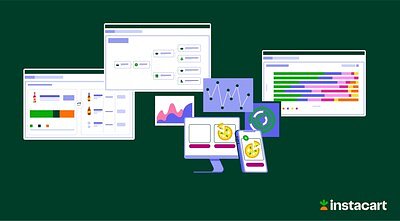
Instacart Ups the Ante in Retail Media Wars with New Data Hub
LAS VEGAS, NV – January 06, 2026 – Instacart today staked a deeper claim in the fiercely competitive retail media landscape, unveiling its “Data Hub” at CES 2026. The new offering is a data clean room, a secure and privacy-compliant environment designed to give consumer packaged goods (CPG) brands and their agencies a powerful new lens into the American grocery cart.
This strategic move allows marketers to securely merge their own first-party data—such as information from loyalty programs, website visitors, or direct-to-consumer sales—with Instacart’s vast and granular anonymized data on consumer purchasing habits. The goal is to move beyond platform-specific analytics and give brands a holistic understanding of campaign effectiveness, from a social media ad view to a final purchase, all while navigating the industry's seismic shifts toward consumer privacy.
A New Era of Grocery Intelligence
At its core, the Data Hub is Instacart’s answer to a growing problem for CPG brands: in an advertising ecosystem rapidly losing third-party cookies, how do you effectively target customers and measure return on investment? Data clean rooms have emerged as the industry's preferred solution. They act as a neutral, secure digital space where different datasets can be analyzed without either party having to expose their raw, personally identifiable information.
Instacart’s Data Hub is engineered to provide insights that are particularly valuable to CPGs. Brands can analyze key metrics like customer lifetime value, identify new-to-brand shoppers, and track repurchase frequency. This allows them to build highly specific audience segments—for instance, identifying households that frequently buy organic produce but have never purchased their brand of organic snacks—and then activate campaigns targeting those segments across a variety of off-platform channels, including social media, streaming services, and the open web.
"Retail media data is increasingly essential to enhance targeting, optimization, and measurement for omnichannel media activations," said Ali Miller, GM of Advertising at Instacart, in the company's announcement. "We've designed the Instacart Data Hub to provide partners with a deeper understanding of shopping behavior and a practical way to apply those insights to their marketing strategies."
This sentiment is echoed by major advertising partners. Lauren Lavin, Executive Director of NA Commerce at WPP Media, noted the move reflects "the growing demand in our industry for privacy-safe data environments and new approaches to audience targeting and measurement strategies." Similarly, Melissa Burdick, President & Co-Founder of the e-commerce ad platform Pacvue, called it a "big step forward," stating that the tool gives brands a "level of clarity that's been missing in retail media."
Battling for the Billion-Dollar CPG Budget
The launch is not happening in a vacuum. It is a calculated offensive in the burgeoning retail media wars, a sector dominated by giants like Amazon and Walmart. Instacart's advertising business has seen explosive growth, scaling from approximately $740 million in 2022 to a projected $1.45 billion in 2025. However, its ad revenue growth rate has recently trailed its larger rivals, putting pressure on the company to innovate and demonstrate unique value.
Instacart's key differentiator is the specificity and scale of its data. While Amazon Marketing Cloud (AMC) offers deep insights into its vast e-commerce ecosystem and Walmart Connect leverages the power of the nation's largest retailer, Instacart's Data Hub is built exclusively on first-party grocery signals. For CPG brands, whose products fill the aisles of thousands of different grocery banners, this specialized data is the holy grail. It provides a cross-retailer view of shopping behavior that is difficult to replicate.
By enabling brands to measure the impact of their entire marketing spend—not just ads placed on Instacart—the company is positioning itself as an indispensable data partner, not merely another ad network. This move aims to persuade CPGs to increase their investment by proving how Instacart’s data can optimize their entire marketing budget, strengthening its competitive moat against rivals and justifying its share of the multi-billion-dollar CPG ad spend.
Navigating the Privacy-First Advertising World
Data Hub's arrival is timely, addressing the dual industry pressures of consumer privacy demands and the technical decay of traditional tracking methods. With the deprecation of third-party cookies, brands have lost a primary mechanism for tracking users across the web, making campaign measurement and attribution notoriously difficult. Simultaneously, regulations like GDPR in Europe and CCPA in California have raised the stakes for data governance, imposing steep penalties for non-compliance.
Clean room technology is designed to solve this conundrum. By using privacy-enhancing techniques like pseudonymization and data aggregation, Instacart's Data Hub allows for sophisticated analysis without compromising individual user privacy. This is particularly crucial for CPG companies, which have historically been removed from the final point of sale and lack the direct consumer data that retailers possess. The Data Hub acts as a bridge, allowing them to finally connect their marketing efforts to verified purchase outcomes in a secure and compliant manner.
This shift from broad, often imprecise targeting to privacy-safe, data-driven audience building represents a fundamental maturation of the digital advertising space. It moves the focus from tracking individuals to understanding aggregated behavioral patterns, a change that aims to build consumer trust while still delivering the performance marketers require.
From Insights to Action
Instacart's Data Hub is not a standalone product but the latest addition to a growing suite of analytical tools. It complements the company's Consumer Insights Portal, a self-serve resource launched in 2025 that provides brands with real-time shopping trends and category performance data. While the portal helps brands understand what is happening on the marketplace, the Data Hub is designed to help them act on those insights with customizable analytics and audience activations.
Adoption will be a key focus for Instacart in 2026. The company has been piloting the solution with a select group of CPGs and agencies to refine the user experience and demonstrate its value. Hurdles remain, as implementing any new data solution requires investment, technical integration, and internal expertise. However, the strong positive feedback from pilot partners suggests a clear market appetite for these capabilities.
Ultimately, the launch of Data Hub marks another significant step in Instacart's evolution from a grocery delivery service to a core technology and media pillar of the CPG industry. By providing the tools for brands to navigate a complex, privacy-focused future, the company is betting that the most valuable asset it holds is not just its network of shoppers, but the powerful data that flows through its digital aisles.
Topics & Related
Data-Driven Decision Making
Regulation & Compliance
Revenue
Fintech
Cloud & Infrastructure
Related Company Pulse