
- 1.5 GW+: InSolare's EPC portfolio spans 22 states, showcasing its extensive reach in renewable energy projects.
- April 2024 Storm: A severe storm caused significant damage to a floating solar plant at Omkareshwar Dam, highlighting the vulnerability of renewable infrastructure.
- 60 Years: CSIR-SERC brings nearly six decades of expertise in structural engineering research.
Experts agree that structural resilience is critical to the long-term success of India's renewable energy transition, and this partnership between InSolare and CSIR-SERC sets a new benchmark for quality assurance and reliability in the sector.
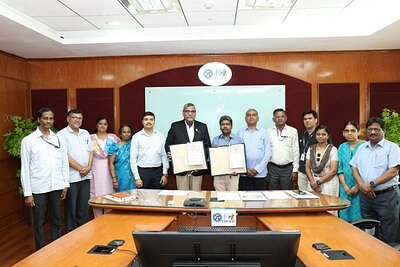
InSolare, CSIR-SERC Forge Alliance to Toughen India's Green Energy Grid
MUMBAI, India – March 06, 2026 – In a strategic move to reinforce the backbone of India’s renewable energy infrastructure, InSolare Energy Limited has announced a formal partnership with the CSIR-Structural Engineering Research Centre (CSIR-SERC), a premier national laboratory. The Memorandum of Understanding (MoU), signed on February 16, 2026, establishes a framework for scientifically validating the structural integrity of InSolare's expanding portfolio of clean energy technologies, from solar farms to next-generation green hydrogen systems.
This collaboration aims to embed rigorous scientific testing and engineering excellence into the lifecycle of renewable projects, a critical step as India accelerates its transition to a Net-Zero future amidst increasingly challenging environmental conditions.
The Critical Need for Structural Resilience
India's ambitious renewable energy targets are being pursued against a backdrop of rising climate volatility. Recent years have provided stark reminders of the vulnerability of energy infrastructure to extreme weather. In April 2024, a severe storm with high-velocity winds caused significant damage to a large floating solar plant at Omkareshwar Dam in Madhya Pradesh. Similar incidents involving cyclones, heavy rains, and heatwaves have repeatedly tested the limits of solar and wind installations across the country, particularly in coastal states like Gujarat and Odisha.
Structural failures do more than just cause immediate power disruption; they lead to costly repairs, reduced asset lifespan, and diminished investor confidence. Industry data shows that solar panel efficiency degrades in extreme heat, while wind turbine blades face erosion and fatigue from constant stress. These challenges underscore a growing consensus: the long-term success of India's green transition depends not just on the quantity of installed capacity, but on the quality and durability of the infrastructure itself. Structural resilience is no longer an afterthought but a core component of project viability.
A Partnership Forged in Science and Steel
The collaboration between InSolare, a company with a 1.5 GW+ EPC portfolio across 22 states, and CSIR-SERC, a national institution with nearly six decades of expertise, directly addresses this need. Under the MoU, CSIR-SERC will provide comprehensive testing, technical evaluation, and analytical support for InSolare's proprietary systems on a project-to-project basis. This means new designs and components for solar, wind-hybrid, and even green hydrogen installations will undergo intense scrutiny before deployment.
CSIR-SERC brings formidable capabilities to the table. The Chennai-based laboratory is renowned for its advanced facilities, including one of India's largest boundary layer wind tunnels, which can simulate cyclonic wind forces on structures. Its expertise extends to seismic testing, materials science, and fatigue analysis, and it has played a key role in developing national building codes, including wind load standards. This partnership effectively bridges the gap between laboratory-grade research and real-world industrial application.
Dr. Sunit Tyagi, Founder and Managing Director of InSolare Energy, emphasized the foundational importance of this rigor. "Engineering excellence is not optional in renewable infrastructure, it is foundational," he stated. "Our collaboration with CSIR-SERC institutionalizes that rigor within our innovation journey. Every asset we deploy must be resilient, tested under real-world conditions, and built to endure decades of operation."
Echoing this sentiment, Dr. N. Anandavalli, Director of CSIR-SERC, noted the partnership's role in strengthening the national ecosystem. "By providing rigorous testing, validation, and analytical support, we aim to enhance the safety, durability, and performance of emerging clean energy systems," she said.
De-Risking Green Investments and Bolstering 'Make in India'
The financial and strategic implications of this alliance are significant. By proactively validating structural integrity, InSolare aims to de-risk its projects in the eyes of investors, lenders, and insurers. In a market where insurance premiums for renewable assets are rising due to climate-related losses, demonstrating a commitment to superior structural resilience can enhance a project's bankability and secure more favorable financial terms.
This partnership also represents a powerful example of the 'Make in India' initiative in action. It combines the agility and market-driven innovation of a private sector leader like InSolare with the deep scientific expertise of a government research institution. While many competitors rely on standard third-party certifications, this deep-seated collaboration allows for bespoke validation of proprietary and emerging technologies, fostering indigenous innovation.
Col. Pankaj Sharma, Vice President (R&D) at InSolare, highlighted this forward-looking approach. "Innovation in clean energy must be matched by disciplined validation," he commented. "This moves us beyond conceptual innovation towards scientifically verified deployment. By aligning laboratory-grade research with on-ground execution, we are accelerating the translation of indigenous technologies into scalable, dependable renewable infrastructure."
As InSolare expands into complex systems like Battery Energy Storage Systems (BESS) and green hydrogen production, which involve new structural and safety considerations, the expertise of CSIR-SERC will become even more critical. This proactive approach ensures that as India's energy systems become more advanced, they also become more robust. The collaboration sets a new benchmark for quality assurance, signaling a maturing industry where long-term performance and reliability are the ultimate metrics of success.