
- $8.7 billion: The global embodied AI market is projected to reach this value by 2033, up from $2.5 billion in 2024.
- 4,000 square meters: The size of Nexdata's Embodied AI Data Factory, designed to mass-produce real-world robot interaction data.
- 98% annotation accuracy: The facility achieves this high standard through a multi-stage validation process.
Experts agree that Nexdata's Embodied AI Data Factory represents a critical step in overcoming the 'sim-to-real gap' in robotics, providing standardized, high-quality data essential for advancing embodied AI technology.
Inside the Factory Where Robots Learn to Be Human
By Matthew Richardson
SINGAPORE – January 27, 2026 – As the race to build intelligent, human-like robots heats up, a critical bottleneck has emerged, threatening to stall progress: a profound scarcity of high-quality, real-world data. While AI models can be trained on mountains of text and images from the internet, robots must learn from physical interaction—a resource that is painstakingly slow and expensive to acquire. Addressing this challenge head-on, AI data solutions provider Nexdata has today announced the full operation of its Embodied AI Data Factory, a sprawling, world-class facility designed to mass-produce the very experiences that will teach robots how to navigate our world.
This launch signals a strategic shift for the company, moving from a data service provider to a self-described "core infrastructure builder" for the entire embodied AI ecosystem. The factory aims to be the proving ground that accelerates humanoid robots and other intelligent agents from controlled laboratory environments to unpredictable, real-world commercial applications.
Bridging the Uncanny Valley of Data
The greatest hurdle in modern robotics is often called the "sim-to-real gap." AI models for robots can be trained rapidly in virtual simulations, but these digital worlds, no matter how detailed, fail to capture the chaotic nuances of physical reality. A robot that flawlessly performs a task in a simulation often fails spectacularly when confronted with real-world variables like unexpected friction, lighting changes, or the slight give of a cardboard box. This gap means that progress is often slow, requiring extensive, task-specific tuning for every new application.
This problem is compounded by a severe data drought. The global market for embodied AI is projected to surge from approximately $2.5 billion in 2024 to over $8.7 billion by 2033, yet the data needed to fuel this growth is notoriously difficult to obtain. Unlike the vast, publicly available datasets that powered revolutions in image recognition and language processing, robot interaction data is fragmented and often proprietary. Collecting it requires expensive hardware, specialized facilities, and expert operators, leading to data silos where companies guard their limited findings, hindering broader industry advancement.
Nexdata's facility is engineered to break this cycle. By creating a centralized, industrial-scale source for real-world interaction data, it aims to provide the standardized, high-volume fuel needed to train more robust and adaptable AI models, directly tackling the sim-to-real challenge that has perplexed the industry for years.
A Playground for the Next Generation of Robots
Spanning over 4,000 square meters, the Embodied AI Data Factory is less a traditional factory and more a meticulously designed stage for robot learning. The facility houses a collection of highly realistic, configurable environments that mimic the complex scenarios robots are expected to one day master. These include mock supermarkets with aisles of products, pharmacies with neatly organized shelves, industrial factory floors, and even automotive repair workshops.
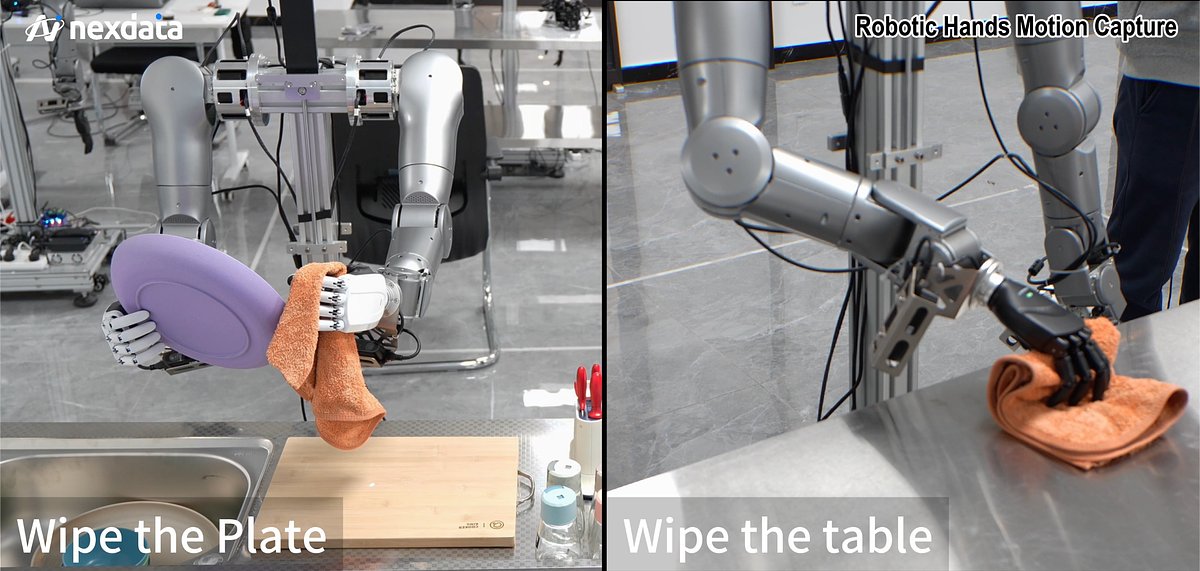
Within these environments, a diverse fleet of over 100 humanoid robots and 50 advanced robotic hands are put to work. The collection includes well-regarded industry models from manufacturers like Unitree, Franka, and Leju, ensuring the data captured is relevant to a wide array of commercial and research platforms. This hardware diversity is key, allowing the factory to generate data for a vast range of tasks—from autonomous navigation and mobile manipulation to complex, dual-arm collaboration with human workers.
A sophisticated multi-modal data acquisition system captures every aspect of these interactions. It records not just what the robot sees (vision) and how it moves (motion), but also captures speech, force-feedback, tactile sensations from its grippers, and a host of other heterogeneous sensor signals. This rich, fine-grained data provides a holistic view of the interaction between robots, humans, and the environment.
This entire process is managed through a closed-loop pipeline that encompasses data collection, annotation, and quality control. The company reports achieving annotation accuracy exceeding 98% through a multi-stage validation process, ensuring the data is not only plentiful but also clean and reliable for training sophisticated AI models.
Establishing the New Gold Standard
In the burgeoning economy of embodied intelligence, high-quality, real-world data is quickly becoming the most valuable commodity. By making a significant investment in this physical infrastructure, Nexdata is positioning itself at the very foundation of the industry's future growth. The factory is already supporting several top-tier international AI companies, providing the crucial data needed to train everything from autonomous mobile robots to advanced humanoid platforms.
Critically, the facility operates in strict compliance with a suite of international data security and privacy standards, including ISO 27001 for information security, ISO 27701 for privacy management, and regulations like GDPR and CCPA. This commitment is vital, as the collection of physical interaction data, especially involving humans, requires rigorous governance to ensure privacy and security, building trust with global partners.
Looking forward, Nexdata plans to continuously expand the factory's capabilities, incorporating next-generation robotic platforms and even more complex task configurations. Through collaboration with leading enterprises and research organizations, the ultimate goal is to help establish scalable data standards and foster an open, efficient data ecosystem. By systematically generating the physical experiences robots need to learn, this factory may not just be solving a data bottleneck; it may be laying the very groundwork for the next phase of real-world embodied intelligence.