
- 3 million cases processed by Indonesia's judiciary in 2025, with a 97% resolution rate. - 97% resolution rate achieved through digital transformation initiatives like e-Court and e-Litigation. - Digital divide persists, with rural areas facing barriers to accessing online legal services.
Experts agree that while Indonesia's legal system has made significant strides in digital transformation, maintaining human integrity and addressing ethical challenges will be crucial for delivering fair and accessible justice in the age of AI.
Indonesia's Legal Future: High-Tech Courts & A Call for Human Conscience
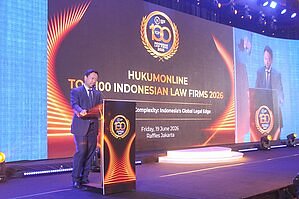
JAKARTA, Indonesia – June 19, 2026 – At a recent awards ceremony celebrating Indonesia's top law firms, the central message wasn't about billable hours or landmark deals, but about the enduring need for a moral compass in an age of automation. Syamsul Maarif, Chief of the Development Chamber of Indonesia’s Supreme Court, delivered a powerful reminder that the future of the nation's legal system depends not on algorithms alone, but on human integrity.
"In the legal profession, there are at least three forces that guide every decision we make: reason, instinct, and conscience," Maarif stated in his keynote address at the Hukumonline Practice Leaders & Top 100 Indonesian Law Firms 2026 event. His words cut through the celebratory atmosphere, framing the industry's rapid technological adoption within a crucial ethical context. As Indonesia pushes to modernize its judiciary and align with global standards, it faces a critical question: Can its legal professionals harness technology's power without losing their humanity?
The Digital Gavel: Efficiency Meets New Challenges
Indonesia's judiciary has made undeniable strides in its digital transformation journey. The Supreme Court’s e-Court and e-Litigation initiatives have been instrumental in tackling an immense caseload. In 2025 alone, the court system processed over three million cases, resolving an astonishing 97 percent of them—an achievement Maarif directly linked to the "growing maturity of the judiciary's digital transformation."
These platforms have streamlined case filing, fee payments, and even court summons, dramatically increasing efficiency and transparency. For many, this has improved access to justice by reducing the time and cost associated with litigation. The system's success is a tangible result of a multi-year effort to bring the nation's courts into the 21st century.
However, Maarif cautioned that modernization is not simply a matter of adopting new software. "Any transformation of the legal system," he emphasized, "must be grounded in integrity and guided by the principles of substantive justice." This warning resonates deeply across the archipelago, where the benefits of digitalization are not evenly distributed. A significant digital divide persists between urban centers and remote rural areas, where limited internet infrastructure and lower digital literacy present formidable barriers to accessing online legal services. The very tools designed to broaden access to justice risk excluding the most vulnerable if not implemented with care and consideration for these disparities.
A Call for Conscience in the Age of AI
The complexity deepens with the rapid rise of artificial intelligence. AI tools are no longer science fiction but are being integrated into legal practices for everything from legal research to contract drafting. Yet, as one legal market analyst noted, Indonesia's legal infrastructure has lagged behind the rapid embrace of these technologies, with existing regulations being fragmented and ill-equipped to handle the novel risks AI presents, such as algorithmic bias and accountability gaps.
This is where Maarif’s call for “reason, instinct, and conscience” becomes particularly salient. He defined reason as the clarity and rational judgment needed to analyze legal issues. Instinct, he explained, is the intuition that helps lawyers navigate nuanced and shifting circumstances—a skill honed through experience. But it was his emphasis on conscience as a "moral compass" that carried the most weight.
Conscience, Maarif argued, serves to remind practitioners that behind every case file and legal matter are individuals whose lives hang in the balance. As firms adopt AI to boost efficiency, this human-centric perspective is vital. Who is responsible when an AI-generated contract contains a critical error, or when an algorithm used in a legal process perpetuates societal biases? Without the guiding hand of human conscience, the pursuit of efficiency could inadvertently undermine the core tenet of the legal system: delivering dignified justice.
Global Ambitions, Local Realities
The push for technological and ethical advancement is being driven by Indonesia's increasing integration into the global economy. Developments such as the formal recognition of Indonesian court decisions in foreign jurisdictions and the nation's accession to the Hague Conference on Private International Law (HCCH) signal a growing trust in its legal system. Ambitious plans to establish the Indonesia Financial Center (IFC) further underscore the country's desire to become a major player on the world stage.
This global alignment is essential for attracting foreign investment and enhancing national competitiveness. However, it also introduces a new dimension of legal complexity, with Indonesian law firms now facing more intricate cross-border transactions and disputes. The pressure is on to not only understand international law but also to operate at a standard that meets global expectations for service, expertise, and integrity.
The Evolving Indonesian Law Firm
This confluence of technological disruption, ethical imperatives, and global pressures is reshaping the Indonesian legal market. According to Arkka Dhiratara, CEO of Hukumonline, the host of the awards, clients are demanding more than ever before. "Ultimately, a law firm's success is measured not only by its reputation or scale, but by its ability to earn trust, deliver solutions, and create meaningful value for clients," Dhiratara said.
In a landscape shaped by economic headwinds and geopolitical uncertainty, clients now expect legal advice that is delivered with "greater speed, strategic insight, and operational efficiency." In response, leading Indonesian law firms are adapting. Many are deepening their specialist expertise in high-demand areas like technology law and compliance, investing heavily in their own tech stacks, and adopting more client-centric service models. Collaboration between firms on large-scale domestic and cross-border matters has also become a defining feature of the market.
The Hukumonline awards, now in their ninth year, serve as a benchmark for this evolution, recognizing firms that demonstrate the resilience and adaptability needed to thrive. As Indonesia continues to navigate the complex intersection of technology, global standards, and justice, the ability of its legal professionals to balance digital tools with human wisdom will determine the future of its legal edge.