
- $2.3 billion: The total investment in MU CITY, the largest single investment in the region's history.
- 4,000 hectares: The size of the land being developed for the integrated industrial ecosystem.
- 4 GW of capacity: The project's hybrid energy plan, split between 2 GW of solar and 2 GW of gas-based power.
Experts view MU CITY as a strategic model for integrating clean energy, digital innovation, and inclusive economic growth, though its success hinges on navigating regulatory and environmental challenges.
Indonesia's $2.3B Bet on MU CITY: A New Energy & Tech Blueprint
KARIMUN, INDONESIA – November 24, 2025
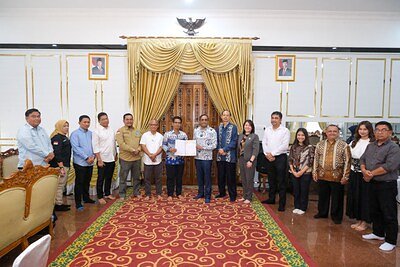
Singapore-based Aslan Energy Capital has signed a landmark Heads of Agreement with the Government of Karimun Regency to develop "MU CITY," a sprawling $2.3 billion integrated industrial ecosystem that represents the largest single investment in the region's history. The ambitious project aims to transform 4,000 hectares of land at the strategic crossroads of Singapore, Malaysia, and Indonesia into a next-generation hub for clean energy, e-mobility, and artificial intelligence, potentially redrawing the strategic map for technology and energy supply chains in Southeast Asia.
The agreement signals a major step forward for a development designed to accelerate the region's transition to a low-carbon, digital future. Backed by an initial three-year investment of $2.3 billion, MU CITY is more than an industrial park; it is a meticulously planned ecosystem intended to function as a self-sustaining city of innovation.
"MU CITY is a living example of how clean energy, digital innovation, and inclusive prosperity can thrive together," said Dr. Muthu Chezhian, CEO of Aslan Energy Capital. The Regent of Karimun, Ing. H. Iskandarsyah, echoed this sentiment, stating the project "opens up opportunities for employment, education, and ownership for the people of Karimun."
A Hybrid Power Strategy for a New Era
At the core of MU CITY is a formidable and strategically pragmatic energy plan. The development will be powered by up to 4 gigawatts (GW) of capacity, split between 2 GW of solar power and 2 GW of gas-based power. This hybrid approach addresses one of the fundamental challenges of renewable energy integration: providing stable, 24/7 baseload power required to run heavy industry and hyperscale data centers.
This is not a simple gas-and-solar mix. The project’s Clean Energy Hub incorporates a sophisticated suite of technologies, including large-scale solar farms, advanced Battery Energy Storage Systems (BESS), LNG import facilities, and high-efficiency Combined Cycle Gas Turbines (CCGTs). Critically, it also includes plans for blue ammonia tank complexes, signaling a forward-looking strategy that integrates lower-carbon gas technologies and hydrogen carriers into its long-term roadmap. The inclusion of BESS is particularly timely, as Indonesia's state utility, PT PLN, and the government are aggressively pursuing energy storage solutions to stabilize the grid and support the nation's immense solar potential, estimated at over 200 GW.
This energy infrastructure is not just for internal consumption. A significant portion of the clean energy generated is slated for export to neighboring ASEAN nations, aligning perfectly with Indonesia's ambition to become a regional energy provider and a key participant in the long-envisioned ASEAN Power Grid. By leveraging its strategic location, MU CITY could serve as a critical node for cross-border energy trade, helping to enhance regional energy security while accelerating decarbonization efforts in power-hungry markets like Singapore.
The Industrial Engine: From EVs to AI Data Hubs
MU CITY’s economic viability rests on three interconnected hubs designed to tap into the most dynamic sectors of the global economy. The Mobility & Manufacturing Hub is poised to become a key player in Indonesia's national strategy to build a fully integrated electric vehicle (EV) ecosystem.
This ambition is well-founded. Indonesia holds the world's largest nickel reserves, a critical component for EV batteries, and has successfully attracted billions in investment from industry giants like Hyundai, LG, and CATL for battery production plants. MU CITY aims to build on this momentum by creating a dedicated zone for EV assembly, battery manufacturing, and even AI chip ecosystems, positioning itself as a high-value link in the global automotive and semiconductor supply chain.
The AI & Digital Infrastructure Hub is equally ambitious, with plans for up to 1.21 GW of hyperscale data center capacity. These facilities are purpose-built for the intense computational demands of artificial intelligence and cloud computing. The key differentiator is the promise of powering this massive digital infrastructure entirely with renewable energy generated on-site—a compelling proposition for global tech companies facing intense pressure to meet ESG targets and decarbonize their operations. Aslan Energy Capital’s parallel development of a renewable-powered data center in Jakarta suggests a deep understanding of this burgeoning market demand across the archipelago.
A Blueprint for Growth, A Test of Execution
Beyond the steel and silicon, Aslan has positioned MU CITY as a new model for "cooperative and inclusive development." The project includes a commitment to actively involve over 10,000 local residents through profit-sharing, equity participation, education, and technical training programs. This people-centered approach aims to ensure that the economic benefits of this massive investment are shared directly with the community, making them stakeholders rather than spectators.
However, the scale of the project presents formidable challenges. The successful execution of a $2.3 billion, multi-faceted development requires navigating Indonesia's complex regulatory environment, managing potential land acquisition issues, and mitigating environmental impacts. While Aslan’s portfolio includes other complex, large-scale energy projects in Indonesia and abroad—such as the ARUN Blue Ammonia project in Aceh and the ANEM green hydrogen facility in Mexico—MU CITY will be the ultimate test of its ability to integrate technology, industry, and community benefit on an unprecedented scale.
The specifics of the profit-sharing and equity models for local residents remain to be detailed, and their effective implementation will be critical to fulfilling the project's inclusive promise. The world will be watching to see if this grand vision can translate into a tangible, sustainable, and equitable reality for the people of Karimun.
If Aslan Energy Capital can deliver on its comprehensive blueprint, MU CITY could become a powerful and replicable model for how emerging economies can bypass legacy infrastructure and build a prosperous, tech-driven future that harmonizes with both people and the planet.