
- 87% vs. 86.9%: Myval THV series achieved a 1-year clinical efficacy rate comparable to Sapien and Evolut valves in the LANDMARK trial.
- 768 patients: The trial enrolled 768 patients across 31 centers in 16 countries, ensuring global applicability.
- 10-year follow-up: The study will track patients for a decade to assess long-term durability and safety.
Experts conclude that Meril’s Myval THV series has demonstrated non-inferiority to established global leaders, validating its potential as a competitive, evidence-based alternative in the TAVI market.
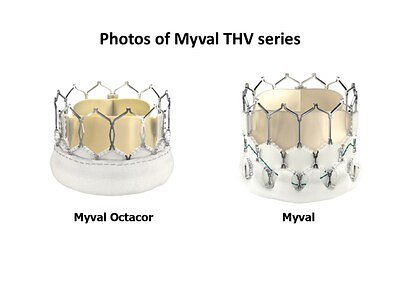
India's Meril Challenges Global Heart Valve Giants with Landmark Data
LONDON, UK – November 24, 2025
The highly competitive, multi-billion-dollar market for life-saving heart valve devices, long dominated by a duopoly of American titans, just received a significant jolt. At the prestigious PCR London Valves 2025 conference, a hub for the world's leading cardiologists, Indian MedTech firm Meril Life Sciences presented one-year results from a pivotal clinical trial that positions its homegrown technology as a direct challenger to the industry's most established players.
The data, from the head-to-head LANDMARK Randomized Controlled Trial (RCT), demonstrated that Meril’s Myval Transcatheter Heart Valve (THV) series delivered clinical outcomes statistically comparable to the widely used Sapien valves from Edwards Lifesciences and Evolut valves from Medtronic. This is not merely a technical achievement; it is a strategic milestone that validates India's emergence as a source of high-precision, globally competitive medical innovation and signals a potential realignment in the structural heart market.
The Rigor of a Head-to-Head Trial
For any new medical device to gain the trust of clinicians, it must be proven through rigorous, unbiased evidence. The LANDMARK trial was designed to provide exactly that. As the first-ever multicenter RCT to directly compare an Indian-developed THV against the world’s leading systems under identical clinical conditions, its methodology was its strength. The study enrolled 768 patients with severe aortic stenosis across 31 centers in 16 countries, ensuring the results are applicable to a diverse global population.
The primary measure of success was a composite clinical efficacy endpoint—a combined metric of freedom from all-cause death, all stroke, and any hospitalization related to the valve or procedure. At one year, the results were strikingly similar across the board: 87% for the Myval THV series, compared to 86.9% for both the Sapien and Evolut series. This finding of “non-inferiority” is the statistical gold standard for proving a new therapy is as good as the existing standard of care.
Professor Patrick W. Serruys, the study's chairman, highlighted the trial's significance, stating, "The LANDMARK trial continues to provide the global TAVI community with meaningful comparative insight. By bringing together three leading THV platforms in a rigorously designed randomized study, we are able to better understand differences that matter clinically."
This sentiment was echoed by Professor Andreas Baumbach, the trial's Global Principal Investigator. "This study is unique in its ability to benchmark performance across balloon-expandable and self-expanding valves under identical trial conditions," he noted. "The consistency seen in both standard and extended clinical efficacy endpoints demonstrates that the Myval THV series performs on par with established global systems."
A New Contender in a Dominated Market
The market for Transcatheter Aortic Valve Implantation (TAVI) devices is a high-stakes arena. Edwards Lifesciences and Medtronic have cultivated a formidable duopoly over the last decade, built on billions in R&D, extensive clinical trial data like the PARTNER and Evolut Low Risk trials, and deep relationships with hospitals and cardiologists. Their Sapien and Evolut platforms are the undisputed standards of care, backed by years of real-world evidence confirming their safety and durability.
Meril's success in the LANDMARK trial directly challenges this entrenched leadership. By achieving non-inferiority in a robust, head-to-head comparison, the Indian firm has generated the high-quality evidence needed to compete on a level playing field. For healthcare systems and providers, the arrival of a third, clinically validated competitor could have profound implications. It introduces the potential for increased market competition, which can often lead to price pressures and expanded access. For clinicians and patients, it means more choice, allowing for device selection based on specific patient anatomies and clinical needs.
This development is more than just a new product launch; it's a validation of a different innovation model. It proves that world-class medical devices can be developed and validated outside the traditional MedTech strongholds of North America and Europe.
A Milestone for India's MedTech Ambitions
Meril's achievement is a powerful symbol of India's broader economic and industrial strategy. The Indian government, through initiatives like "Make in India" and the Production-Linked Incentive (PLI) scheme, has been actively working to transition the nation's MedTech sector from a high-volume producer of lower-end consumables to a hub for high-value, complex device innovation. The goal is to reduce the country’s significant reliance on imports—which account for up to 80% of its medical devices—and establish it as a global R&D and manufacturing power.
Until now, this ambition has faced hurdles, including a complex regulatory environment and intense competition from established global players. The success of the Myval THV in a trial of this magnitude provides a powerful proof point that Indian engineering and clinical science can meet and exceed global benchmarks. It moves the perception of 'Made in India' from one of cost-effective manufacturing to one of evidence-based, cutting-edge innovation.
Sanjeev Bhatt, Senior Vice President of Corporate Strategy at Meril, framed the trial within this larger vision. "The LANDMARK trial reflects our commitment to building robust clinical evidence that enables confident clinical decision-making," he said. "Our focus at Meril is to develop globally relevant, scientifically driven innovations that expand access to advanced structural heart care."
The Marathon of Trust and the Importance of Durability
While the one-year results are a watershed moment, the journey to full market acceptance is a marathon, not a sprint. The LANDMARK trial's plan to follow patients for a total of ten years is a critical component of this long-term strategy. For TAVI devices, durability is paramount. As the procedure becomes more common in younger, lower-risk patients with longer life expectancies, clinicians and patients need to be confident that the implanted valve will last.
Long-term follow-up will monitor for signs of structural valve deterioration (SVD), a gradual decline in valve function that can occur many years after implantation. By committing to a decade of data collection, Meril is aiming to build a comprehensive evidence base for the Myval valve's long-term safety and performance. This long-term data will be crucial for influencing clinical guidelines and securing a permanent place for the Myval series as a trusted option in cardiovascular care.
The results presented in London are a clear signal that the global business currents in MedTech are shifting. A new contender, backed by rigorous science and national ambition, has officially arrived on the world stage, promising to bring new dynamics to a market ripe for innovation and competition.