
- 2,000 students trained in the 'AI for Future Workforce' Summer School Program
- First private university in India to launch an AI lab in collaboration with Intel
- New degree programs in Data Science with integrated Intel Certifications
Experts view this collaboration as a strategic model for bridging the AI skill gap in India by combining academic rigor with industry-relevant, hands-on training.
India's AI Blueprint: A Deep Dive into the University-Intel Talent Engine
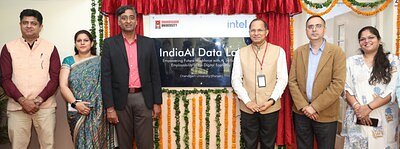
CHANDIGARH, India – June 02, 2026 – In a move that signals a strategic shift in how India prepares its next generation of technologists, Chandigarh University today inaugurated the 'IndiaAI Data Lab,' becoming the first private university in the country to launch such a facility in collaboration with Intel India. The initiative is more than just a new lab; it represents a meticulously crafted model designed to directly funnel skilled talent into a nation with an insatiable appetite for expertise in Artificial Intelligence and Data Science.
This collaboration, which also includes the launch of new Bachelor's and Master's degree programs in Data Science, is the culmination of a nearly three-year effort between the two organizations. It aims to transcend traditional academic boundaries by creating a simulated apprenticeship environment, a space where theory immediately gives way to application. As corporations worldwide pivot to an AI-first strategy, this partnership provides a compelling answer to the critical question: how do we build a workforce that is not just educated, but ready?
A New Model for Experiential Learning
The core of the initiative is the 'IndiaAI Data Lab' itself, housed within the university's University Institute of Computing (UIC). It's designed to function as a hub for project-based learning, moving students beyond rote memorization and what Chandigarh University's Vice-Chancellor, Prof (Dr) Raviraja N Seetharam, calls “boring classroom teaching.” He emphasized the need for a more dynamic educational experience, stating, “Nobody wants boring classroom teaching because it's the activity-based learning, project-based learning, group discussions which make learning interesting.”
The lab will provide students with access to cutting-edge hardware, including dedicated AI PCs, and the software stacks essential for developing modern AI solutions. This hands-on environment allows students to work on real-world projects, participate in hackathons, and collaborate directly with industry mentors. The goal is to simulate the demands and workflows of a professional technology environment, effectively serving as an apprenticeship platform that bridges the gap between a degree and a career.
Further cementing this industry-academic integration, the university has launched a Master of Computer Applications (MCA) in Data Science and a Bachelor of Computer Applications (BCA) in Data Science. A standout feature of these new programs is the integration of Intel Certifications, which students can earn each semester. This provides a tangible, industry-recognized validation of their skills, significantly enhancing their employability in a competitive global market. The effectiveness of this integrated approach is already showing promise; a team of CU’s BCA students recently secured second place at a national Intel AI Summit, showcasing the caliber of innovation fostered by such early-stage industry exposure.
Addressing a National Skill Imperative
The Chandigarh University-Intel partnership arrives at a pivotal moment for India's technology sector. The demand for skilled AI and Data Science professionals far outstrips the current supply, creating a significant skill gap that threatens to slow economic growth. This initiative is a direct and strategic response to that national imperative.
Shweta Khurana, Senior Director for Government Partnerships & Initiatives at Intel, framed the collaboration as a crucial step in cultivating domestic talent. “The launch of the IndiaAI Data Lab at Chandigarh University is an important step towards building AI-ready talent,” she stated. “By providing students with hands-on experience and access to AI PCs, this initiative will enable them to learn, create, and innovate using the latest AI technologies, while helping bridge the gap between academia and industry needs.”
This focus on practical application and employability is a recurring theme. The collaboration previously saw the 'AI for Future Workforce' Summer School Program, which trained over 2,000 students from various computing and engineering streams. Such programs are essential for creating a robust talent pipeline, ensuring that graduates possess not just theoretical knowledge but the practical capabilities to contribute from day one. By aligning curriculum and certification directly with the needs of a tech giant like Intel, the university is creating a clear and valuable pathway for students into high-demand, high-value careers.
Intel’s Strategic Ecosystem Play in India
While the Chandigarh University lab is a significant milestone, it is not an isolated event. It is a key component of Intel's broader, multi-pronged strategy to cultivate a comprehensive AI ecosystem in India. The company has been methodically building a network of academic partnerships across the country, often under its 'Intel Unnati' program, establishing similar data-centric labs at institutions like MIT Manipal, Nitte University, and the public Panjab University.
These collaborations demonstrate Intel's commitment to nurturing talent at every level. The strategy extends beyond higher education through its partnership with the government's IndiaAI Mission. This includes the 'YuvaAI' initiative to bring AI skills to school students and 'StartupAI' to provide mentorship and resources to fledgling AI companies. This holistic approach creates a continuous pipeline, guiding talent from the classroom to the startup garage and into the corporate world.
By investing in education, providing access to its technology stack, and aligning with national strategic goals, Intel is not just a participant but an architect of India's AI future. These academic partnerships ensure that the next generation of innovators is fluent in the tools and platforms that will define the industry, embedding Intel's technology at the grassroots level and solidifying its long-term market presence.
As India pushes forward with its ambitious digital transformation, collaborations like the one at Chandigarh University serve as a powerful blueprint. They demonstrate how focused, sustained partnership between academia and industry can effectively address national skill shortages, drive innovation, and ultimately build a future-ready workforce poised to lead in an AI-driven world.