
IMCC's 'DEEP C' Aims to Reshape Marine Construction with Digital Push
- 5 strategic pillars: The 'DEEP C' program is structured around Drive, Enable, Execute, Perform, and Connect.
- Hundreds of millions of dollars: Invested by Kuwaiti state-owned energy firms in digitalization projects, aligning with IMCC's transformation.
- Phased rollout: The initiative will be implemented in stages to ensure measurable progress.
Experts view IMCC's 'DEEP C' as a strategic necessity to meet rising industry demands for digital integration, efficiency, and sustainability, positioning the company as a leader in Kuwait's maritime sector transformation.
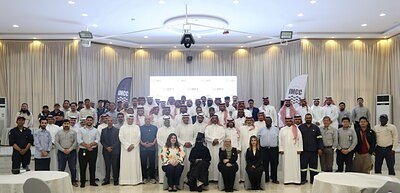
IMCC's 'DEEP C' Aims to Reshape Marine Construction with Digital Push
KUWAIT CITY, KUWAIT – April 24, 2026 – International Marine Construction Company (IMCC), a cornerstone of Kuwait's maritime industry for over five decades, has launched a comprehensive corporate transformation program named "DEEP C." The initiative, unveiled at a company-wide event on April 20, is designed to fundamentally reshape its operations through integrated digital systems and data-driven practices, positioning the firm for a new era of growth and operational excellence.
Under the ethos of "Think New, Act New," the program marks a significant strategic pivot for the established marine services provider. It aims to enhance efficiency, strengthen corporate governance, and secure sustainable growth as the energy and maritime sectors navigate increasing technological and environmental demands. The initiative represents one of the most significant modernization efforts in the region's offshore construction sector.
Charting a New Course for Operational Excellence
The "DEEP C" program is built on a structured transformation model with five strategic pillars: Drive, Enable, Execute, Perform, and Connect. This framework is intended to create a clear line of sight from high-level strategy to daily execution, ensuring that all functions within the organization are aligned toward measurable business outcomes. It signals a move away from siloed operations toward a more integrated, cohesive, and responsive corporate structure.
Speaking at the launch event, Maen Razouqi, Vice Chairman and CEO of IMCC, described the program as a fundamental shift in the company's operational philosophy. "The program represents a step-change in how the company operates, with a clear focus on accountability, integration, and measurable outcomes," he stated. As Chair of the DEEP C Steering Committee, Razouqi emphasized IMCC's commitment to embedding this transformation across all levels of its marine solutions.
He further noted the human-centric aspect of the transformation, explaining that the program reflects what the company stands for by "placing our customers and people at the center, driving performance with discipline, and delivering sustainable returns." This highlights a dual focus on leveraging advanced technology while simultaneously fostering a forward-looking, performance-driven culture that empowers its workforce.
Riding the Regional Digital Wave
IMCC's strategic overhaul does not exist in a vacuum. It aligns directly with broader economic and technological trends sweeping across Kuwait and the Gulf Cooperation Council (GCC). Kuwait's Vision 2035 national development plan heavily prioritizes economic diversification and the creation of a knowledge-based economy, with significant investment earmarked for digital transformation, particularly within its critical energy sector.
State-owned giants like Kuwait Petroleum Corporation (KPC) and Kuwait Oil Company (KOC) have already allocated hundreds of millions of dollars toward digitalization projects, aiming to integrate artificial intelligence, big data, and other advanced technologies to boost efficiency and safety. IMCC's "DEEP C" program positions the company as a key partner in this national agenda, demonstrating its readiness to meet the evolving digital standards of its major clients and the industry at large.
By proactively modernizing its own infrastructure and processes, IMCC not only enhances its competitiveness but also contributes to raising the technological baseline for the entire regional marine construction ecosystem. This move is critical in an industry where project complexity is rising and clients increasingly demand greater transparency, predictability, and data-backed performance guarantees.
The Technology Behind the Transformation
While the company has not detailed specific software vendors or platforms, the program's objectives point toward the adoption of a suite of cutting-edge industrial technologies. The execution will be enabled through "digital tools, standardized processes, and stronger cross-functional alignment to deliver sustainable results," according to Khalid Al-Bustan, Vice Chair of the DEEP C Steering Committee and Head of the Program.
Industry experts suggest such transformations typically involve deploying a range of interconnected systems. This could include Internet of Things (IoT) sensors on vessels and equipment for real-time monitoring and predictive maintenance, AI and machine learning algorithms to analyze vast operational datasets for efficiency gains, and integrated cloud-based platforms to unify project management, finance, and HR functions. The creation of 'digital twins'—virtual replicas of physical assets—is another potential technology that would allow IMCC to simulate operations, optimize performance, and reduce risk.
Al-Bustan added that the initiative, guided by the Board of Directors' vision, will help the business achieve "more consistent and measurable outcomes, while ensuring that our customers and people remain at the core of how the organization operates." This focus on measurement is key, as data analytics will allow leadership to track key performance indicators (KPIs) and make agile decisions, moving from reactive problem-solving to proactive optimization.
A Deeper Commitment to Sustainability and Governance
A crucial dimension of the "DEEP C" program is its explicit link to Environmental, Social, and Governance (ESG) principles. The initiative is designed to support the development of more transparent, efficient, and resilient operations, which are foundational to a robust sustainability strategy. By enhancing governance standards through digital tracking and reporting, IMCC can provide stakeholders with greater confidence in its operations.
On the environmental front, digitalization offers tangible benefits. Optimized vessel routing and engine performance monitoring can significantly reduce fuel consumption and greenhouse gas emissions, helping the company align with global maritime decarbonization targets. Enhanced data management can also improve waste tracking and environmental compliance across its global activities.
Socially, the investment in people and systems promises to create a safer and more empowering work environment. Predictive maintenance reduces equipment failures and associated safety risks for offshore personnel, while digital training platforms can accelerate workforce upskilling. Stronger governance, the third pillar of ESG, is woven into the program's core through its emphasis on accountability, transparency, and standardized processes. As IMCC rolls out the program in phases, its ability to demonstrate measurable progress against these ESG goals will be critical to reinforcing its position as a responsible leader in the evolving energy and marine sectors.