
- 9.8 megawatts of clean electricity generated by the solar farm, powering hundreds of local homes and businesses.
- 650+ subscribers, including 200 low-income households, benefiting from discounted energy credits.
- 35-year projected lifespan of the solar farms, ensuring long-term economic and environmental benefits.
Experts would likely conclude that the Minonk solar project exemplifies a successful model for repurposing former industrial sites into sustainable energy hubs, combining economic revitalization, grid modernization, and energy equity through strategic public-private partnerships.
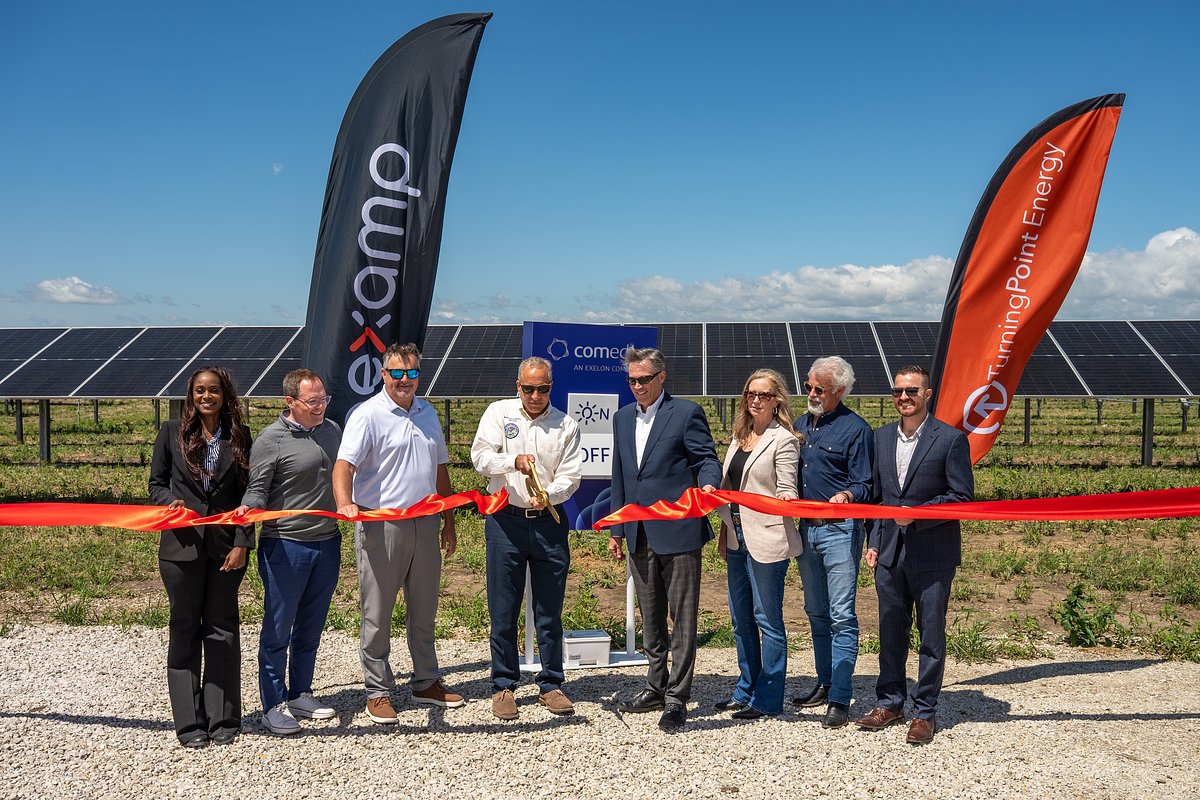
Illinois' Solar Blueprint: How a Former Coal Mine Powers a New Economy
MINONK, IL – June 17, 2026
In a field just outside this small central Illinois city, a ribbon-cutting ceremony marked the official launch of two community solar farms. But this was no ordinary greenfield project. The 16,950 gleaming solar panels now stand on land that once yielded coal from the Colchester Seam for over 75 years. This transformation from a 19th-century coal mine to a 21st-century power source is more than symbolic; it represents a meticulously engineered success story—a blueprint for economic revitalization, grid modernization, and energy equity that investors and policymakers across the nation are watching closely. The project, a collaboration between developer TurningPoint Energy and owner-operator Nexamp, is a forensic case study in how to successfully repurpose America's industrial past to power its clean energy future.
A New Economic Engine on Old Ground
For generations, Woodford County's identity was tied to the fossil fuels beneath its soil. Today, that legacy is being leveraged, not erased. The 40-acre site, now certified as a brownfield under the state's Illinois Shines program, is generating 9.8 megawatts of clean electricity—enough to power hundreds of local homes and businesses. The project is the first of its kind in the county, signaling a deliberate shift in its economic and energy strategy. "For generations before us, this land represented our community’s role in powering Illinois with fossil fuels; today, it represents our role in powering Illinois with the clean energy of the future," stated Minonk Mayor Russell Ruestman, underscoring the local significance of the development. Beyond the clean power, the project injects tangible economic benefits. The construction phase employed prevailing wage labor, ensuring skilled workers received fair compensation. Research into local records reveals a deeper commitment, with road use agreements stipulating that the developers will cover future road maintenance costs, a direct investment in local infrastructure. State Senator Chris Balkema praised the development as proof that an "all-of-the-above energy strategy" can create tangible local benefits. “This Minonk community solar project demonstrates how we can build on our energy heritage while embracing new opportunities... affordable, reliable energy is essential for lowering costs for families, attracting investment, and supporting quality jobs right here in Woodford County,” he said. The use of 100% U.S.-manufactured solar modules further anchors the project's economic impact within domestic supply chains, a critical consideration for national energy security.
The Brightfield Blueprint: Policy and Partnership
The Minonk project did not happen in a vacuum. It is the direct result of strategic public policy and sophisticated private partnership. The engine behind this "brownfield-to-brightfield" conversion is the Illinois Shines program, a state initiative administered by the Illinois Power Agency. The program offers specific incentives and renewable energy credits for projects built on previously disturbed or contaminated land. This policy masterstroke makes otherwise overlooked sites economically attractive for developers, steering solar growth away from prime agricultural land and toward areas ripe for environmental and economic renewal. This project serves as a powerful proof-of-concept for the state's ambitious goal of reaching 100% renewable energy by 2050. The partnership structure itself is a key component of this success. TurningPoint Energy, a specialist in clean energy development, identified and prepared the site, navigating the complex local permitting and community engagement, which included public informational meetings as early as October 2022. They then partnered with Nexamp, the nation's largest community solar provider, which financed, built, and now owns and operates the solar farms for their 35-year projected lifespan. This division of labor leverages the core strengths of each company. “The successful completion of the Minonk community solar projects reflects both the strength of our partnership with Nexamp and the role community solar must play in meeting Illinois’ long-term energy objectives,” said Salar Naini, President of TurningPoint Energy. His statement highlights a critical takeaway for investors: successful energy transition projects require a fusion of development expertise, operational scale, and supportive government policy.
Engineering a Smarter, More Resilient Grid
Beyond its location, the Minonk project is a landmark for its technical sophistication. It is one of the first developments in the ComEd utility territory to integrate a Distributed Energy Resource Management System (DERMS). This smart grid technology is the digital backbone that allows the utility to see and manage the flow of power from distributed sources like solar farms in real-time. For a grid built for a world of large, centralized power plants, integrating thousands of smaller, intermittent renewable sources presents a significant engineering challenge. DERMS is the solution. It allows ComEd to balance electrical loads, manage voltage fluctuations, and ensure the smooth, reliable flow of clean energy, even as more solar and wind power come online. Mark Baranek, Senior Vice President at ComEd, praised the collaboration, stating, “We have been grateful to collaborate with Nexamp on one of the first projects on our system to use DERMs, which supports more flexible and efficient interconnection of community solar.” This technical integration is a major "why" behind the project's success. It de-risks the project for the utility and paves the way for scaling renewable energy without compromising grid stability. "By pairing that affordability with U.S.-manufactured equipment and advanced grid tools like DERMS, these Minonk projects... show how community solar can make the grid smarter, more resilient, and better prepared for Illinois’ clean energy future," noted Zaid Ashai, CEO of Nexamp. This demonstrates a strategic move by the operator to position itself not just as a power producer, but as a critical partner in modernizing the nation's energy infrastructure.
Power to the People: Democratizing Clean Energy
Perhaps the most impactful aspect of the Minonk project is its social architecture. As a community solar initiative, its benefits are not limited to a single corporate entity. Instead, the power—and the savings—are distributed among more than 650 subscribers. This model fundamentally democratizes access to renewable energy. Crucially, the project demonstrates a powerful commitment to energy equity. Approximately 200 of the residential subscribers are from low-income households, a segment often excluded from the benefits of the clean energy transition due to barriers like credit checks or the inability to install rooftop panels. Nexamp’s program eliminates these hurdles, requiring no upfront costs, no credit checks, and no cancellation fees. Subscribers simply receive credits on their regular ComEd bill for their share of the solar energy produced, then pay Nexamp for those credits at a discount—typically 15-20%—resulting in direct, tangible monthly savings. The financial viability of this inclusive model is secured by anchor subscribers. Rush University Medical Center and the College of DuPage have subscribed to 40% of the project's output, providing a stable, creditworthy revenue stream that underpins the entire development. This institutional backing enables the broader community participation. For Rush, the decision was mission-driven. “Community solar is preventative medicine—it reduces harmful emissions, improves the air quality in vulnerable communities, and moves us closer to the healthier, more sustainable future our patients deserve,” explained Ian Hughes, Director of Environmental Sustainability at Rush. This holistic view, connecting energy policy to public health, elevates the project from a simple infrastructure deal to a comprehensive community investment.