
- Power Usage Effectiveness (PUE) of less than 1.2 (global average: 1.56)
- 109 million EUR invested in Akureyri, with potential for 200 million EUR
- 90% of construction workforce hired locally
Experts agree that Iceland's ICE03 data center sets a new standard for sustainable digital infrastructure, demonstrating how renewable energy, waste heat reuse, and community integration can create a scalable, environmentally responsible model for the global industry.
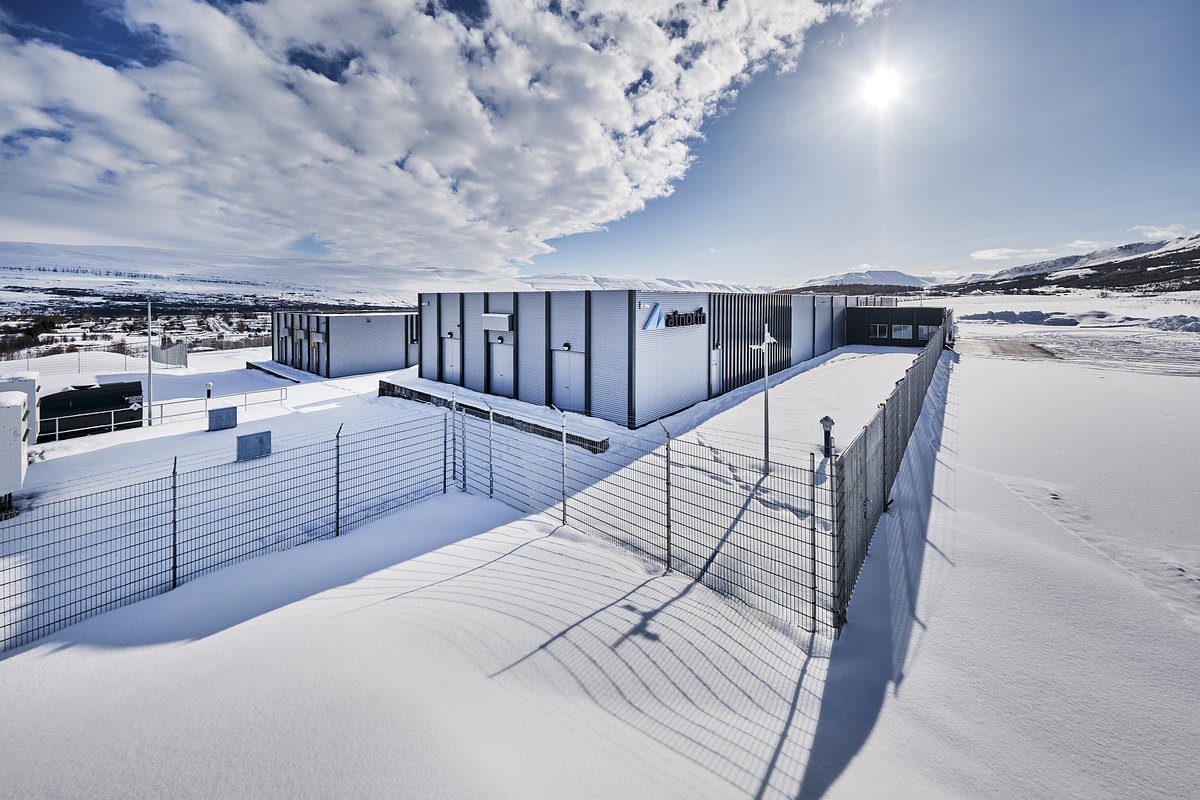
Iceland's Green Data Center: A Blueprint for Sustainable Infrastructure
AKUREYRI, Iceland – December 12, 2025
In the world of digital infrastructure, where the hunger for power and cooling seems insatiable, a new benchmark for sustainability is emerging from the subarctic landscape of northern Iceland. atNorth, a Nordic data center provider, has recently secured the prestigious 'Environmental Impact Award' at the Data Center Dynamics (DCD) Awards for its ICE03 facility in Akureyri. The recognition, often hailed as an "Oscar of the data center industry," isn't just for another energy-efficient building; it celebrates a holistic design blueprint that masterfully integrates environmental stewardship with profound social and economic impact, offering a compelling vision for the future of the global supply chain's digital backbone.
The Anatomy of an Award-Winning Green Data Center
At the heart of atNorth's success is a design that moves beyond incremental improvements to fundamentally rethink the data center's relationship with its environment. The ICE03 facility boasts a Power Usage Effectiveness (PUE) of less than 1.2, a figure that stands in stark contrast to the global average of 1.56. A lower PUE signifies that more energy is used to power the computing equipment itself, rather than for overhead like cooling. This remarkable efficiency isn't accidental; it's the direct result of leveraging Iceland's unique geographical advantages.
The nation's naturally cool climate and its grid, powered almost entirely by renewable geothermal and hydroelectric sources, provide an ideal foundation. The facility employs high-efficiency Direct Liquid Cooling (DLC), a method perfectly suited for the high-density computing workloads demanded by AI and complex simulations. This technology, combined with the ambient cool air, dramatically reduces the energy required for cooling, which is traditionally one of a data center's largest operational expenses and carbon contributors.
The commitment to sustainability extends to the very structure of the building. In a departure from industry norms that rely heavily on steel and concrete, the ICE03 facility was constructed using sustainable materials like Glulam—a strong, laminated timber product that sequesters carbon—in place of steel beams. Combined with locally sourced Icelandic rockwool for insulation, this "chips-to-bricks" approach minimizes the project's embodied carbon footprint from its inception, proving that environmental responsibility can be woven into every aspect of development.
From Waste Heat to Community Harvest: A Circular Economy in Action
Perhaps the most innovative aspect of the ICE03 model is what it does with its primary byproduct: waste heat. Instead of simply venting this valuable thermal energy into the atmosphere, atNorth has engineered a system for its productive reuse, transforming a liability into a community asset. In a pioneering alliance with the local municipality of Akureyri, the data center is designed with heat reuse equipment as a standard feature.
This captured waste heat is channeled to a local community greenhouse, creating a tangible link between digital computation and local food security. This partnership enables the year-round cultivation of fresh vegetables, a significant achievement in a region with a challenging agricultural climate. The initiative not only helps lower the carbon footprint of both the data center and the local food supply chain but also fosters a powerful circular economy. Clients using the ICE03 facility are not only decarbonizing their IT workloads by running on 100% renewable energy but are also indirectly contributing to local sustainability.
Furthermore, the greenhouse serves as a living classroom. Local schoolchildren visit to learn about ecological cultivation and sustainable food production, embedding principles of environmental literacy in the community's next generation. It’s a powerful demonstration of how industrial infrastructure can move beyond a purely extractive model to one that is regenerative and symbiotic.
Beyond the Racks: Weaving Infrastructure into the Community Fabric
The ICE03 project serves as a compelling case study in how large-scale technology investment can become an engine for local prosperity rather than an isolated industrial island. The Mayor of Akureyri, Ásthildur Sturludóttir, estimates atNorth's total investment in the town will reach approximately 109 million EUR, with a long-term potential of 200 million EUR. This influx of capital is coupled with a deep commitment to the local community.
During the initial development phase, over 90% of the construction workforce was hired from the local area, a policy the company is committed to maintaining for its operational staff. This focus on local employment is bolstered by proactive educational support. For instance, atNorth donated a significant amount of mechatronics equipment to the Vocational College of Akureyri. This strategic contribution helps train local talent for the high-skilled roles required in data center operations, creating a sustainable talent pipeline that benefits both the company and the regional economy.
The company's role as a corporate citizen extends further, with active support for local charities, sports teams, a ski facility, and even the local search and rescue team. This level of deep integration redefines the relationship between a data center and its host community, building a foundation of mutual benefit and shared success.
Catalyzing Regional Connectivity and Setting a Nordic Precedent
The impact of the ICE03 data center reverberates beyond Akureyri's local economy, fundamentally enhancing the region's digital supply chain. The facility's presence was a key factor in telecommunications operator Farice's decision to establish a new Point of Presence (POP) in the area. This POP serves as a critical gateway, connecting northern Iceland directly to Farice's three submarine cables that link the island to mainland Europe.
For businesses and residents in the region, this development significantly enhances telecommunications security, boosts service reliability, and provides lower-latency international connectivity. It makes northern Iceland a more attractive location for other digital and tech-focused businesses, creating a virtuous cycle of investment and innovation.
This holistic approach is precisely what the industry needs as it faces unprecedented growth. As atNorth's CEO, Eyjólfur Magnús Kristinsson, stated, "There is a critical need for a transformation in the approach to digital infrastructure development to ensure the scalability and longevity of the industry. Data center operators must take a holistic approach to become long-term, valued partners of thriving communities."
By embedding itself within the local ecosystem—powering greenhouses, training students, and anchoring regional connectivity—the ICE03 project demonstrates that the future of digital infrastructure is not just about being green, but about being a good neighbor. It sets a powerful precedent, challenging operators worldwide to look beyond their own four walls and consider how their facilities can become catalysts for a more sustainable and equitable future.