
- 5,000+ healthcare organizations already use Huawei's technology.
- 94% accuracy in AI-powered cancer diagnosis with Huawei's digital pathology platform.
- 500+ partners from over 40 countries joined the AHEAD program launch.
Experts view Huawei's AHEAD program as a strategic pivot to dominate critical infrastructure ecosystems, but its success hinges on overcoming geopolitical trust barriers and proving long-term value over risk.
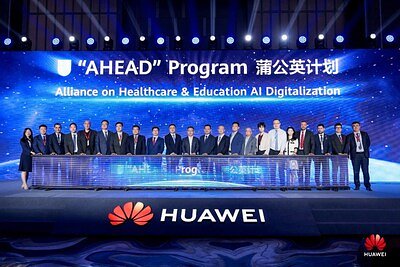
Huawei's AHEAD Program: A Global Gambit for Critical Infrastructure
SHENZHEN, China – June 09, 2026 – In a convention hall bustling with over 500 partners from more than 40 countries, Huawei today unveiled a sweeping ambition that extends far beyond telecommunications hardware. The launch of its "AHEAD" program—the Alliance on Healthcare & Education AI Digitalization 2.0—signals a strategic and deeply calculated push into the foundational pillars of society: how we learn and how we heal.
Framed as a collaborative effort to build a new global ecosystem, the initiative aims to harness artificial intelligence to solve entrenched challenges in education and healthcare. "We are in a wave of transformation driven by AI," declared Junfeng Li (Wind), Vice President of Huawei and CEO of its Global Public Sector BU. He described the intelligent transformation of these sectors as a "global imperative" that harbors immense opportunities.
Yet, behind the polished rhetoric of enabling "intelligent-led Education & Healthcare," lies a more complex story. The AHEAD program is not merely a corporate social responsibility play; it is a meticulously designed strategy to embed Huawei's technology and standards into the critical infrastructure of nations worldwide. It represents a pivot from selling equipment to orchestrating the very digital ecosystems that will define public services for a generation, a move that is as promising as it is fraught with geopolitical tension.
From Infrastructure to Ecosystem: The AHEAD Blueprint
For years, Huawei has been a key player in building the digital backbone for public services, with its technology underpinning operations in over 5,000 healthcare organizations and its ICT Academies training tens of thousands of students annually. The AHEAD program, however, marks a significant evolution from this foundation. It's an explicit move from being an infrastructure provider to becoming an ecosystem architect.
The core of this strategy is the "Partner Alliance 2.0," an upgrade that deepens collaboration across six pillars: trend insight, empowerment, solution co-creation, marketing, opportunity sharing, and expansion. According to Robert Yang, Director of the Partner Development Department for Huawei's Global Public Sector BU, the goal is to "mobilize the collective expertise of global partners" to drive a "quantum leap" in digital transformation.
This language reveals a strategy centered on co-dependency and shared growth. By providing the platform, the AI tools, and the market access, Huawei positions itself as the indispensable hub for a vast network of smaller, specialized companies. For these partners, the alliance offers a chance to scale solutions and access markets they could never reach alone. For Huawei, it secures a vast, loyal network that builds solutions on its technology stack, creating a powerful moat against competitors. It's a tangible strategy to shift from selling boxes to building a pervasive, integrated, and self-sustaining digital environment.
The Promise of Intelligent Transformation
To understand the appeal of the AHEAD program, one must look at the tangible differences it promises to make. The potential for AI to democratize access to quality education and healthcare is immense, and Huawei's existing projects offer a glimpse into this future. These are not abstract concepts but functioning systems delivering measurable results.
In healthcare, the company's "Smart Hospital" solutions are already transforming care delivery. Its digital pathology platform, which uses AI to achieve a reported 94% accuracy in identifying common cancers, dramatically speeds up diagnosis. In China, the National Telemedicine Center at the First Affiliated Hospital of Zhengzhou University, built with Huawei's technology, connects over 1,000 institutions, allowing specialists to consult on complex cases in remote regions and even in partner countries like Zambia. This isn't just about efficiency; it's about saving lives by bringing expert knowledge to places where it's scarce.
Similarly, in education, the impact extends beyond simply putting laptops in classrooms. Huawei's partnerships with organizations like UNESCO have focused on creating "Technology-enabled Open Schools for All" in African nations, building the digital platforms and providing the teacher training necessary to bridge educational divides. In higher education, its powerful computing platforms, like the Zhiyuan-1 at Shanghai Jiao Tong University, are enabling cutting-edge AI research. The vision is clear: an educational system where AI tutors provide personalized learning paths for students and AI-powered tools free up teachers from administrative burdens to focus on mentoring and critical thinking.
Navigating a Complex Geopolitical Landscape
Despite the transformative potential, the AHEAD program launches into a world deeply divided by geopolitical fault lines. For many governments, particularly in the West, the prospect of a Chinese technology giant managing the data and digital infrastructure for something as sensitive as healthcare and education is a significant concern. The core issues are trust, data sovereignty, and national security.
"When you're dealing with a student's learning patterns or a patient's medical history, the data is profoundly personal and strategic," noted one cybersecurity analyst on condition of anonymity. "The question for any country is not just about the efficiency of the technology, but about who ultimately controls that data and under what legal jurisdiction it falls."
These concerns are not theoretical. Huawei has faced restrictions in numerous countries over fears its equipment could be used for state-sponsored espionage. While the company has consistently denied these allegations, the perception battle remains its biggest hurdle. The AHEAD program, by its very nature, requires a level of trust that transcends technical specifications. It asks nations to place faith in Huawei's governance and data-handling protocols, a difficult proposition when the company's operations are often viewed through the lens of China's broader "Digital Silk Road" strategy for global technological influence.
A Crowded Field of Titans and Innovators
Huawei is not pursuing this ambition in a vacuum. The global market for AI in health and education is a fiercely competitive arena, with tech giants like Microsoft, Google, and Amazon Web Services all offering robust cloud platforms and AI toolkits. These competitors are also aggressively building their own partner ecosystems, often leveraging their established dominance in enterprise and consumer software to gain a foothold.
For the 500+ partners who gathered in Shenzhen, the decision to join the AHEAD alliance is a strategic calculation. The program offers them a pathway to integrate advanced AI and co-create solutions on a global scale. However, it also means tying their future to a platform that faces significant political headwinds. This creates a delicate balancing act for smaller innovators who must weigh the opportunity for growth against the risk of geopolitical blowback.
The success of the AHEAD program will ultimately depend on more than just the sophistication of its technology. It will hinge on Huawei's ability to build genuine trust, navigate the intricate web of international data governance, and prove to both partners and governments that its ecosystem offers more value than risk. As the program moves from a convention hall announcement to real-world implementation, the global community will be watching to see if this ambitious plan can truly deliver a healthier and more educated world for all.