
- 6 consecutive years on Inbound Logistics' 'Green 75' list for sustainability leadership.
- $497,500 annual savings for distribution centers switching to PECO's block pallets.
- 3,750 tons of waste diverted from landfills in 2022 through recycling and reuse initiatives.
Experts would likely conclude that PECO Pallet's circular business model and sustained commitment to sustainability demonstrate how environmental stewardship can drive operational efficiency and competitive advantage in supply chain logistics.
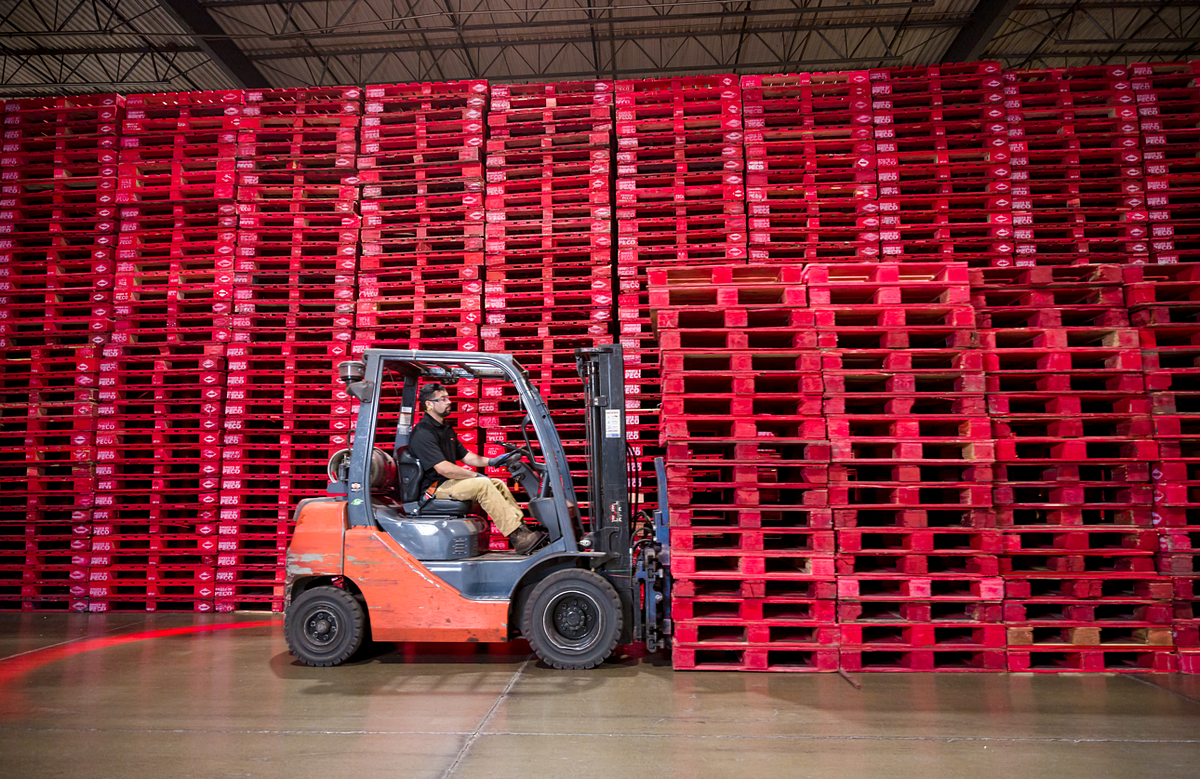
How PECO's Red Pallets Pave a Green Path for Supply Chain Logistics
ITASCA, IL – June 18, 2026 – In an industry defined by constant motion, the humble pallet is often overlooked. Yet, it is the bedrock of the global supply chain. For the sixth consecutive year, Itasca-based PECO Pallet, Inc. has brought this essential component into the sustainability spotlight, earning a coveted spot on Inbound Logistics magazine’s 2026 “Green 75” list. This consistent recognition highlights a deeper story than just an annual award; it showcases a business model where environmental stewardship and operational excellence are not just parallel goals, but two sides of the same coin.
PECO Pallet, a leading North American provider of pooled pallet rental services, supplies its signature red block pallets to major grocery and consumer goods manufacturers. Its continued presence on the Green 75 list, which honors companies for “exceptional environmental stewardship and sustainable logistics,” signals a powerful trend: sustainability is becoming a key competitive differentiator in the logistics sector.
The Business Case for a Circular Supply Chain
At the heart of PECO’s success is its circular business model. Instead of the traditional “buy, use, and dispose” approach to pallets, the company operates a pooling system built on the principles of reuse, repair, and recycling. Customers rent the high-quality pallets, and once goods are delivered, the empty pallets are returned to one of PECO’s over 90 depots across North America. There, they are inspected, cleaned, and repaired before being reintroduced into the supply chain.
This model is not just an environmental initiative; it's a strategic driver of value. “At PECO, sustainability goes hand in hand with the quality, reliability and service our customers depend on,” said Joe Dagnese, PECO’s chief executive officer. “Our operating model is built on consistent investment, strong network stability and disciplined operations that help ensure reliable supply, quality pallets and long-term value for our customers.”
The financial and operational benefits are tangible. A 2016 independent case study funded by the company found that a single distribution center switching to PECO’s block pallets from conventional stringer pallets could realize an estimated $497,500 in annual savings. These savings were driven by greater operational efficiency, such as easier four-way forklift entry, and significant transportation efficiencies, including increased cube utilization in trucks. By moving away from disposable assets and toward a robust, reusable infrastructure, companies can reduce product damage, improve safety, and achieve a more predictable cost structure.
A Deeper Dive into Green Operations
PECO’s commitment to sustainability extends far beyond the core concept of reuse. The company has implemented a suite of initiatives aimed at minimizing its environmental footprint at every stage of its operations. With an inventory of over 20 million pallets, even small efficiencies scale to create a significant impact.
Proactive pallet maintenance is a cornerstone of this strategy. By emphasizing repair over replacement, PECO dramatically extends the lifecycle of each pallet. In 2022 alone, the company recycled and reused over 400,000 units of pallet components. Wood fiber that cannot be reused in pallets is repurposed, not discarded. Through partnerships with companies like Boulware Equipment, PECO ensures that no waste wood from its facilities ends up in a landfill. Instead, it is transformed into valuable materials like landscape mulch, playground surfacing, or biomass fuel.
This focus on waste diversion is yielding impressive results. In 2022, PECO diverted approximately 3,750 tons of material—including wood waste, cardboard, metal, and plastic—from landfills. The company has also formalized its goals, aiming to divert 35% of its waste from landfills by 2035. This disciplined approach to resource management is complemented by transportation optimization, which uses network analysis to reduce empty miles and lower greenhouse gas emissions.
Setting a Standard for Sustainable Logistics
The Inbound Logistics Green 75 award is more than a plaque on the wall. Each year, editors evaluate several hundred nominations to identify the 75 companies that are truly leading the charge. “For Green 75 winners, their commitment to sustainability is driven not just by an altruistic desire to be a good steward of the environment, but as an integral, contributing element of an overall operating philosophy to eliminate waste, reduce costs and build an enduring, successful business,” explained Felecia Stratton, editor and associate publisher of Inbound Logistics.
PECO’s six-year streak demonstrates a sustained and evolving commitment that meets this high bar. The company has moved beyond broad statements to establish concrete, science-based targets. In 2025, after completing a third-party verified Greenhouse Gas (GHG) inventory, PECO set a goal of achieving net-zero emissions by 2050. Its short-term targets, which include reducing absolute Scope 1 and 2 emissions by 55% by 2035, are aligned with the rigorous Science Based Target Initiative (SBTi).
Furthermore, a 2025 Life Cycle Assessment (LCA) provided a stark comparison: when moving 100,000 pounds of product, PECO's reusable block pallet was found to have an estimated eight times lower carbon emissions than an industry-average disposable stringer pallet. This data-driven approach, validated by external bodies like Tunley Environmental and recognized with an EcoVadis Bronze Rating, solidifies the company’s position as a credible leader in the space.
The Future of Pallets in a Greening Industry
PECO Pallet’s success is emblematic of a wider transformation within the logistics and pallet management industry. The demand for sustainability is no longer a niche concern but a core market driver. This is evidenced by the increasing demand for certified sustainable pallet sourcing (FSC and PEFC), the rise of material innovations like recycled plastic pallets offered by competitors, and the integration of technology.
Smart pallets embedded with IoT sensors and RFID tags are emerging, promising real-time tracking that can further enhance efficiency, reduce product loss, and optimize supply chain visibility. While PECO has built its reputation on high-quality wooden block pallets, the entire industry is innovating to meet the dual challenge of performance and sustainability.
Pallet pooling, the model PECO has championed for over 25 years, is now widely seen as a foundational element of a modern, resilient supply chain. It represents a fundamental shift from viewing pallets as a disposable cost to recognizing them as critical, sustainable infrastructure. As supply chains face increasing pressure to become more resilient and responsible, PECO Pallet’s consistent success demonstrates that the path to a more efficient future is paved with sustainable, circular thinking.