
- 103 million people: Improved sanitation and hygiene through LIXIL's SATO initiative
- 3.4 billion people: Lack access to safely managed sanitation globally (WHO/UNICEF)
- 1,000 children daily: Die from preventable diarrheal diseases due to poor sanitation
Experts would likely conclude that LIXIL's market-driven approach to sanitation demonstrates a scalable, sustainable model for global development, proving that private sector innovation can effectively address critical public health challenges.
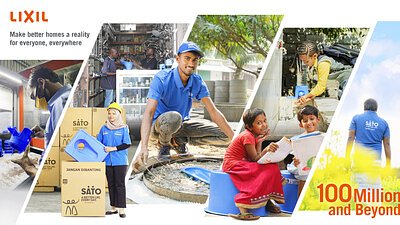
How One Company Used Toilets to Transform 100 Million Lives
TOKYO, JAPAN – February 23, 2026 – Japanese water and housing products giant LIXIL announced today it has surpassed a monumental goal: improving sanitation and hygiene for 103 million people worldwide. The achievement, a core target of its Impact Strategy set in 2016, was realized not through donations, but through a pioneering social business model that is reshaping the fight against one of the world's most persistent and deadly crises.
While the number is staggering, it represents more than a corporate milestone. It marks a significant proof of concept for a market-driven approach to global development, demonstrating that private sector innovation can create sustainable, scalable solutions for communities long left behind.
A Crisis of Staggering Scale
The backdrop to LIXIL's announcement is a global sanitation crisis of devastating proportions. According to the latest data from the WHO/UNICEF Joint Monitoring Programme, approximately 3.4 billion people—nearly half the world's population—still lack access to safely managed sanitation. An estimated 1.7 billion do not have basic handwashing facilities at home, and a staggering 354 million people still practice open defecation.
The human cost of this systemic failure is catastrophic. Every day, more than 1,000 children under the age of five die from preventable diarrheal diseases spread by unsafe water, poor sanitation, and inadequate hygiene. Beyond the immediate health impacts, the lack of a safe, private toilet perpetuates cycles of poverty, keeps girls out of school, and exposes women and children to the risk of violence.
Economically, the losses are measured in the hundreds of billions of dollars annually due to reduced productivity and soaring healthcare costs. Yet, within this crisis lies a powerful economic opportunity: studies show that every dollar invested in sanitation can yield a fivefold return, creating a compelling case for investment that goes beyond pure altruism.
Engineering a Market-Based Solution
At the heart of LIXIL's success is SATO, its innovative social business. Rather than treating the sanitation crisis as a problem to be solved by aid alone, SATO treats it as a market to be developed. The strategy hinges on providing affordable, innovative, and aspirational products that people want to buy.
This was achieved by shipping over 10 million SATO toilet and hand hygiene products across 59 countries, predominantly in sub-Saharan Africa and South and Southeast Asia. The product line is a masterclass in frugal innovation, designed specifically for low-resource environments:
- The SATO Pan: A simple, durable plastic toilet pan that fits over open-pit latrines. Using a clever counter-weighted trap door, it uses less than a liter of water to flush, effectively sealing the pit to eliminate odors and block disease-carrying insects.
- The SATO Tap: Developed during the COVID-19 pandemic, this compact handwashing station uses a unique mechanism to dispense a small, effective amount of water, making frequent handwashing possible even in areas with severe water scarcity.
- SATO SuperStructure: A durable and easy-to-install toilet shelter made from recycled materials, providing the privacy and dignity that are critical for user adoption, especially in humanitarian settings like refugee camps.
"While LIXIL is renowned for high-end innovations, we take equal pride in our affordable SATO solutions," said Kinya Seto, CEO of LIXIL, in a statement. "By establishing a social business, we are addressing the sanitation and hygiene challenges at scale, not only improving health, but empowering families with security and peace of mind they deserve to build their livelihoods and prosper."
The SATO model extends beyond product design. The company actively builds local "sanitation economies" by training masons and plumbers, fostering local manufacturing and distribution networks, and creating business opportunities, particularly for women entrepreneurs. This ensures the solutions are not just delivered but are integrated into a self-sustaining local ecosystem.
The Power of Strategic Collaboration
LIXIL has not acted alone. A cornerstone of its progress is the 'Make a Splash!' partnership with UNICEF, launched in 2018. As UNICEF's first global shared-value partnership in the water, sanitation, and hygiene (WASH) sector, it combines LIXIL's product and supply chain expertise with UNICEF's deep-rooted community engagement and behavior-change programming.
Initially launched in Ethiopia, Kenya, and Tanzania, the partnership's success led to its expansion into India, Indonesia, and Nigeria. By August 2025, the collaboration had already reached over 16 million people, catalyzing millions in government and microfinance investments by proving the viability of the sanitation market. This public-private partnership model creates a powerful synergy, where corporate innovation fuels on-the-ground impact at a scale neither organization could achieve independently. This approach is further bolstered by other collaborations, including a cooperative agreement with USAID to expand market access for affordable sanitation solutions.
A Milestone on a Long Journey
Despite the celebration, LIXIL leadership is clear-eyed about the road ahead. The world is dangerously off track to meet the UN's Sustainable Development Goal of universal sanitation by 2030, requiring a five-fold acceleration of current progress rates.
"Reaching 100 million people is a significant milestone, representing the impact on individuals and communities, and it is also a vital transition point," noted Erin McCusker, Leader of SATO. "The global goal of universal access to safe sanitation and hygiene by 2030 demands unprecedented acceleration."
LIXIL's achievement is less a finish line and more a powerful validation of its model. The challenge now is to scale this market-based approach, navigating complex issues of governance, fragmented supply chains, and the deep-seated behavioral patterns that perpetuate the crisis. The company has committed to setting new, more ambitious targets for 2030, signaling its intent to continue playing a catalytic role.
For the 103 million people whose lives have been improved, the impact is not abstract. It is the dignity of a private toilet, the safety of a child protected from disease, and the opportunity for a family to build a healthier, more prosperous future. LIXIL's journey proves that the business of doing good can also be good business, offering a blueprint for how corporate power can be harnessed to tackle humanity's greatest challenges.