
- Healthcare workers are 5 times more likely to experience workplace violence than employees in any other industry (U.S. Bureau of Labor Statistics).
- 73% of all nonfatal workplace injuries due to violence in 2018 were in healthcare and social assistance sectors.
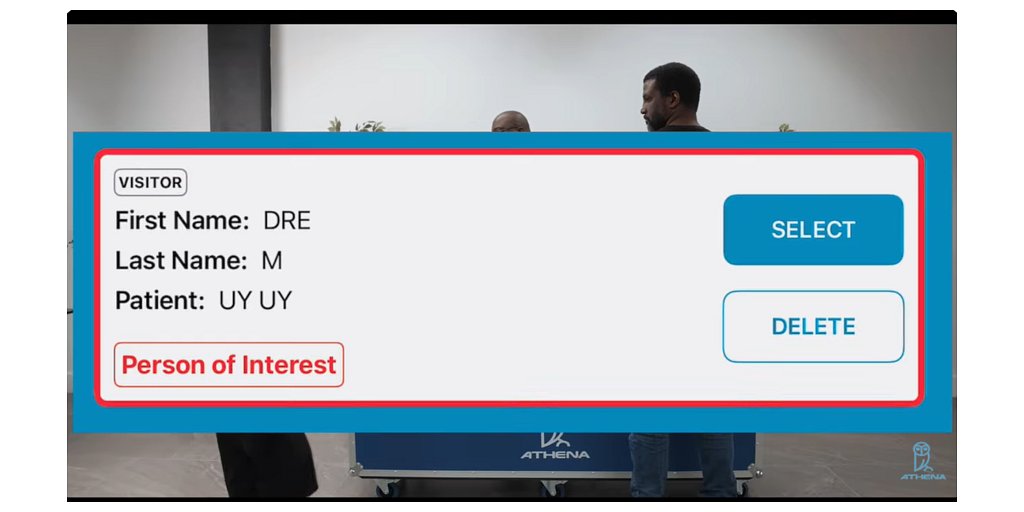
- AI-powered BOLO system automates threat identification by scanning driver’s licenses against a database of high-risk individuals.
Experts agree that AI-driven identification systems like Athena Security’s BOLO technology offer a critical advantage in preventing workplace violence in hospitals, but they must be part of a broader, multi-layered security strategy that includes staff training and clear protocols.
Hospitals Turn to AI to Flag Threats Amidst Rising Violence
AUSTIN, TX – January 21, 2026 – As American hospitals grapple with an escalating crisis of workplace violence, a new wave of technology is being deployed to secure their front lines. Athena Security, an Austin-based AI firm, has launched an automated “Be On the Lookout” (BOLO) system designed to instantly identify high-risk individuals the moment they attempt to enter a facility. By replacing manual paper logs with real-time driver’s license scanning, the technology aims to give security teams a critical head start in preventing threats before they escalate.
“This is exactly the kind of innovation hospitals need in an era where threats can escalate in seconds,” said Lisa Falzone, Co-Founder and President of Athena Security, in a press release. “Our BOLO / POI technology eliminates the vulnerabilities of outdated methods and gives security teams a real-time advantage that saves lives and reduces administrative burden.”
A System Under Siege
The need for such innovation is stark. According to the U.S. Bureau of Labor Statistics, healthcare workers are five times more likely to experience workplace violence than employees in any other industry. Data from 2018 revealed that healthcare and social assistance workers accounted for a staggering 73% of all nonfatal workplace injuries due to violence. This trend has not abated, with nurses and hospital staff reporting a significant increase in both verbal abuse and physical assaults since the pandemic.
This constant threat contributes to widespread burnout, staff turnover, and a culture of underreporting. A 2022 peer-reviewed study highlighted that the cumbersome, manual process of filing incident reports often deters busy clinical and security staff from documenting all but the most severe events. This creates dangerous gaps in safety data, leaving hospitals unable to accurately track patterns or identify repeat offenders.
For decades, the primary tool for flagging a problematic individual has been a binder of photos behind a security desk or a shared email—methods that rely on memory and are prone to human error. In a high-traffic, high-stress environment like an emergency department, these manual systems are easily overwhelmed.
“Paper lists and manual reporting simply cannot keep pace with modern threats,” stated Chris Ciabarra, Co-Founder and CTO of Athena Security. “Violent incidents in hospitals are under-reported largely because teams are overwhelmed by documentation requirements. Automating identification, alerting, and documentation in real time gives hospitals a chance to respond in the way threats actually occur—suddenly and without warning.”
How the AI Gatekeeper Works
Athena Security’s system directly targets the vulnerabilities of these manual processes. Integrated into a hospital’s visitor management system (VMS), the technology works at points of entry. When a visitor presents their driver’s license, a scanner captures the information. The system then instantly checks this data against the hospital’s internal BOLO list—a curated database of individuals who may have been banned for prior violence, threats, or other restricted behaviors.
The system can also be configured to check relevant external databases for additional threat intelligence. If a match is found, an immediate, discreet alert is sent to security personnel, access control staff, and relevant clinical leadership. This alert can include contextual information entered by officers, such as notes on the individual's prior behavior, enabling a more informed and targeted response.
By automating this process, the system creates a consistent, digitized log of visitor entries and flagged events, addressing the chronic issue of incomplete reporting. This aligns with recommendations like the U.S. Department of Homeland Security's Best Practice 15.4.5, which calls for robust credentialing programs to manage building access. The system is also designed with offline functionality, ensuring that BOLO searches and alerts continue even if a hospital’s network connection is temporarily lost.
The Surveillance Paradox: Safety vs. Privacy
While the promise of a safer environment for healthcare workers and patients is compelling, the deployment of such advanced surveillance technology in a sensitive setting like a hospital raises significant ethical and privacy questions. The collection of personally identifiable information (PII) from every visitor’s driver’s license—including name, date of birth, and address—is a major point of concern for privacy advocates.
“There is a delicate balance to strike,” noted one healthcare security consultant, who spoke on the condition of anonymity. “Hospitals must be welcoming, accessible places. The challenge is to enhance security without creating a fortress mentality that alienates patients and their families.”
Key questions revolve around data governance. How long is visitor data stored? Who has access to it? What are the precise criteria for placing an individual on a “Person of Interest” list? Without transparent policies and a clear process for individuals to challenge their inclusion on such a list, there is a risk of misidentification and unfair blacklisting. A false positive could wrongfully deny a person access to visit a loved one or even seek care themselves.
Furthermore, while the system as described focuses on ID scanning, the broader trend in security involves AI-powered video analytics and facial recognition. The use of such biometric surveillance in public spaces is a subject of intense debate, with concerns about algorithmic bias, the erosion of anonymity, and the potential for a slide into mass surveillance. Hospitals adopting these technologies will need to navigate a complex web of regulations, including state-specific privacy laws and HIPAA, which, while primarily protecting health information, sets a high standard for data privacy in the healthcare environment.
A Layered Approach to a Complex Problem
Experts agree that technology is not a silver bullet but rather a powerful tool within a comprehensive security strategy. Athena’s BOLO system enters a market where other technology firms are also offering advanced solutions, from AI-powered weapons detection scanners that allow for frictionless entry to integrated cloud platforms that combine video surveillance with access control.
The unique value proposition of a system like Athena's appears to be its specific focus on proactively identifying known human threats at the point of entry, rather than just detecting objects or analyzing events after the fact. However, its effectiveness hinges on more than just the software.
Successful implementation will require extensive staff training, not only for security teams responding to alerts but also for frontline staff managing visitor check-in. Clear protocols for de-escalation and response are paramount. According to the International Association for Healthcare Security and Safety (IAHSS), the most effective security programs are multi-layered, combining physical infrastructure, well-trained personnel, and robust violence prevention policies with cutting-edge technology.
As hospitals continue to be disproportionately affected by violence, administrators face the difficult task of weighing the significant costs and privacy implications of these new systems against their primary duty to protect their staff and patients. The move toward AI-driven identification represents a pivotal shift in this ongoing effort, transforming the hospital entrance from a simple reception desk into an intelligent, proactive line of defense.
Topics & Related
Generative AI
Artificial Intelligence
Telehealth & Digital Health
Data Breaches
Privacy Engineering
Revenue
Software & SaaS
AI & Machine Learning
Health IT
Product Launch
Related Company Pulse