
- HK$850,000 subsidy per animation company under Hong Kong's AI-assisted scheme
- 200% month-over-month growth in AI-assisted animated content (Q1 2026)
- $3.23 billion market value projected for generative AI in animation this year
Experts would likely conclude that Hong Kong's strategic public-private partnership model offers a pragmatic blueprint for leveraging AI in creative industries, balancing innovation with ethical and commercial considerations.
Hong Kong’s AI Animation Gambit: A Blueprint for Creative Leadership?
ANNECY, FRANCE – June 24, 2026
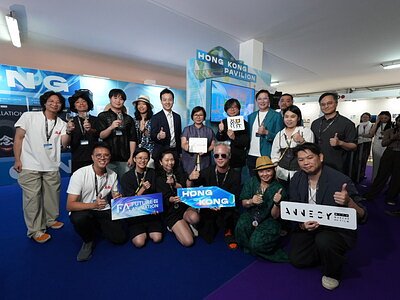
In the picturesque French town of Annecy, home to the world's most prestigious animation festival, a significant business experiment is unfolding. It’s not happening in a boardroom, but in a bustling exhibition stand, where the Hong Kong Digital Entertainment Association (HKDEA) is showcasing the output of its 3rd "Future Animation" scheme. This is more than a cultural showcase; it's a calculated move to position Hong Kong at the vanguard of a global industry being reshaped by artificial intelligence, offering a compelling blueprint for how public-private partnerships can drive innovation and commercial success.
The Strategic Blueprint: More Than Just Cartoons
At the heart of this initiative is a robust industrial strategy. The "Future Animation – AI-Assisted Animation Production Support Scheme," sponsored by the government's newly established Cultural and Creative Industries Development Agency (CCIDA), is a targeted intervention designed to build a competitive edge. The scheme provides six local animation companies with a significant subsidy of up to HK$850,000 each, but the support extends far beyond capital.
Selected companies receive expert mentorship, access to interns from local institutions, and critical training on the legal and intellectual property risks associated with emerging AI tools. This comprehensive support structure addresses the key barriers to technology adoption for small and medium-sized creative firms. It's a deliberate effort to de-risk innovation and accelerate the transition to AI-augmented workflows.
Mr. Gabriel Pang, Chairman of HKDEA, articulated the scheme's core business logic, noting that AI can be leveraged "to significantly enhance work efficiency, enabling them to produce works in better quality with limited resources." This perspective moves the conversation about AI in creative fields away from abstract fears of replacement and towards the practical benefits of augmentation. The goal, as stated by the organizers, is clear: foster innovation, nurture exceptional works, and, crucially, open up new business opportunities. The establishment of the CCIDA in June 2024, an evolution of the former Create Hong Kong, signals a more industrialized and globally-minded approach, aligning with China's 14th Five-Year Plan to develop Hong Kong as a major international cultural exchange hub.
Navigating the Global AI Wave
Hong Kong's initiative is not happening in a vacuum. It is a timely and strategic response to a seismic shift in the global animation industry. The first quarter of 2026 was an explosive inflection point for AI animation, with some market reports indicating a near 200% month-over-month growth in the creation of AI-assisted animated content. The generative AI in animation market is projected to reach $3.23 billion this year, a figure that underscores the immense commercial stakes.
Across the industry, AI is no longer a futuristic concept but a present-day reality. It is being integrated to automate labor-intensive tasks like rotoscoping, in-betweening, and background generation, freeing up human artists to focus on higher-value creative work like storytelling, character performance, and artistic direction. Real-time rendering engines, often coupled with AI, are becoming standard, collapsing production timelines and allowing for rapid creative iteration.
However, this technological gold rush comes with challenges. Ethical concerns about data sourcing, intellectual property, and potential job displacement are subjects of intense debate in studios worldwide. The Hong Kong scheme's inclusion of training on legal risks and IP is a pragmatic acknowledgement of this complex landscape. By equipping its local studios with not just the tools but also the knowledge to navigate these issues, the initiative is fostering a more resilient and responsible ecosystem. It positions its participants not merely as users of technology, but as informed pioneers in its application.
The Creative Crucible: Where Algorithm Meets Artistry
Any strategy focused on creative output is ultimately judged by the work itself. The six projects being showcased in Annecy demonstrate a remarkable breadth of narrative and artistic ambition, refuting the notion that AI leads to a homogenization of style. They reveal how technology can be a powerful tool for unique storytelling.
Take 'REFRAME' by eMotionLAB LTD., a fascinatingly meta-narrative about a therapist who must enter a patient's subconscious to delete corrupted AI-generated memories. The story itself is a commentary on the very technology used to create it, exploring themes of memory, identity, and digital fallibility. At the other end of the spectrum, 'Full Throttle Kitchen' by Fanflare Creative Limited tells a deeply human story of a chef reconnecting with her family's legacy, a tale where technology likely serves as an invisible hand in rendering magical dreamscapes and mouth-watering culinary creations.
Other projects like 'Tuen Mun Vs. Tin Shui Wai' by Newgen Creativity Limited use AI to imagine a post-apocalyptic Hong Kong, turning familiar locations into a playground for a chaotic chase between robots and an alien. 'Odium ZERO' by Taproot Studio Limited explores a world where lies become a pathogen, a story of truth and redemption in a collapsing society. These synopses suggest that the animators are using AI not as a crutch, but as a lens to explore complex themes—from psychological struggle in 'Cirkillation' to the nature of immortality in 'Airbag'—with visual styles that would be difficult or cost-prohibitive to achieve through traditional means.
From Local Subsidy to Global Stage
The true test of Hong Kong's AI animation gambit lies at the International Animation Film Market (Mifa), the business-focused arm of the Annecy festival. The meticulously organized "Hong Kong Pavilion" is a platform for commerce. The "Hong Kong Partner Pitches," which took place on June 23rd, provided the six companies with a direct line to international industry professionals, investors, and potential co-production partners.
The presence of high-level officials, including Miss Yvonne Ip, Assistant Commissioner for CCIDA, and representatives from Hong Kong's Economic and Trade Office, sends a clear signal to the global market: Hong Kong is serious about its creative industries and is backing them with state support. This is about converting creative and technological prowess into exportable intellectual property and long-term business relationships. For the leaders of these six studios, the real measure of success will be the conversations and contracts that follow their time on this prestigious international stage.