
- $3.6 billion: Projected market size for silicon anode batteries by 2030, up from $357 million in 2024. - 10x: Silicon's potential to hold more lithium ions than graphite, boosting battery energy density. - 170+: Number of granted patents held by Nexeon for its silicon anode technology.
Experts view Honda's investment in Nexeon as a strategic move to secure cutting-edge silicon anode technology, which is critical for overcoming EV range and charging limitations, and positioning Honda competitively in the global electrification race.
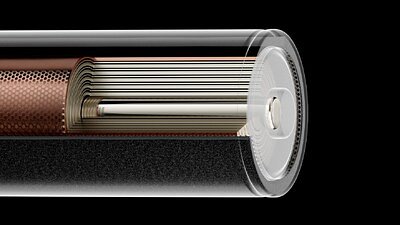
Honda Backs Nexeon to Power Next-Gen EVs with Silicon Anode Tech
OXFORD, England – May 28, 2026 – In a significant move to secure its electric future, Honda Motor Co., Ltd. has made a strategic investment in Nexeon, a British pioneer in advanced silicon anode materials. The investment, made through Honda's global innovation arm, Honda Xcelerator Ventures, signals a major vote of confidence in a technology poised to solve some of the biggest challenges facing electric vehicles (EVs): range anxiety and long charging times.
While the financial details remain undisclosed, the partnership is a clear indicator of the automotive industry's intense race to develop and control next-generation battery technology. By backing Nexeon, Honda is placing a strategic bet that silicon will be a key ingredient in the batteries that power its future EV lineup, including its ambitious global "0 Series" set to launch in 2026.
"We are pleased to welcome Honda as a shareholder as we enter an exciting phase and commercialise our technology," said Dr. Scott Brown, CEO of Nexeon, in a statement. He noted the investment is not only a validation of their technology but also "a clear endorsement of the strategic role that Nexeon can play in the global transition to electrification."
The Silicon Anode Revolution
For decades, graphite has been the reliable workhorse for the anode (the negative electrode) in lithium-ion batteries. However, its energy storage capacity has approached its theoretical limits. This is where silicon comes in. On a chemical level, silicon can hold over ten times more lithium ions than graphite, translating directly into batteries with significantly higher energy density.
For an EV driver, this breakthrough means several things: a much longer range on a single charge, faster charging speeds that could slash wait times at charging stations, and potentially smaller, lighter, and more cost-effective battery packs. These improvements are seen as critical for accelerating the mass adoption of electric vehicles.
However, silicon has a well-known Achilles' heel: it swells by up to 300% in volume as it absorbs lithium ions during charging. This expansion and contraction can physically break down the anode, causing rapid battery degradation and a short cycle life. The core of Nexeon's innovation lies in its proprietary methods for structuring silicon materials to manage this expansion. With a portfolio of over 170 granted patents, the company has developed advanced silicon-carbon composites and nanostructures that provide the space for silicon to expand without damaging the battery, ensuring both high performance and long-term durability.
Honda’s Multi-Pronged Battery Strategy
Honda's investment in Nexeon is not an isolated event but a calculated piece of a much larger and more complex electrification strategy. The automaker has set a goal for EVs and fuel-cell electric vehicles (FCEVs) to constitute 100% of its sales by 2040 and plans to produce around two million EVs annually by 2030. To achieve this, it is building a resilient and technologically advanced battery supply chain from multiple angles.
First, the company is pursuing partnerships for current-generation lithium-ion batteries, including a joint venture with LG Energy Solution for a 40 GWh plant in North America and a collaboration with GS Yuasa in Japan. Simultaneously, it is making a bold push into future technologies, investing heavily in the development of its own all-solid-state batteries, with a demonstration line already operational.
This new investment in a materials innovator like Nexeon adds a crucial third pillar to its strategy: securing access to cutting-edge components that can enhance its near- and mid-term battery performance. By fostering a relationship with Nexeon, Honda not only gains insight into a critical emerging technology but also positions itself as a potential priority customer as Nexeon scales up production. This move helps de-risk its supply chain and provides a competitive edge against rivals who are also scrambling to secure deals with leading material suppliers.
A Burgeoning Market for Advanced Materials
The Honda-Nexeon deal unfolds against the backdrop of a booming market for silicon anode materials. Driven by insatiable demand from the EV and consumer electronics sectors, the market is projected to experience explosive growth. Market research forecasts the global silicon anode battery market to surge from around $357 million in 2024 to over $3.6 billion by 2030, representing a compound annual growth rate of over 50%. Total venture funding in the space has already surpassed $4.5 billion.
Nexeon is a key contender in this high-stakes field, competing with other well-funded U.S.-based firms like Sila Nanotechnologies and Group14 Technologies. The race is on to scale production, reduce costs, and secure long-term contracts with major battery manufacturers and automotive OEMs. Nexeon has already made significant strides, having commissioned its first volume production facility in South Korea, strategically positioning it to supply the massive Asian battery manufacturing ecosystem.
From UK Innovation to Global Highways
Nexeon's journey from its headquarters in Oxfordshire to becoming a strategic partner for a global automotive giant like Honda highlights the United Kingdom's role as an important hub for deep-tech and green energy innovation. The investment underscores how regional expertise in materials science can have a global impact on the transition to a sustainable economy.
The collaboration fostered by Honda Xcelerator Ventures typically extends beyond mere financial backing, often leading to joint development projects and technology integration. It is highly probable that this investment will pave the way for Nexeon's silicon anode materials to be tested, validated, and ultimately designed into the battery packs for Honda’s future electric vehicles.
As automakers push the boundaries of EV performance, the underlying battery chemistry becomes the primary battleground for competitive advantage. By aligning with Nexeon, Honda is not just investing in a promising startup; it is investing in the potential for a 600-mile range EV that charges in minutes, turning what was once a futuristic concept into a tangible engineering goal.