
- 1,000+ submissions from nearly 60 countries in the inaugural 2024 festival
- 250,000 participants engaged in Reply Challenges program worldwide
- September 2026 premiere in Venice, coinciding with the world's oldest film festival
Experts view the festival as a pivotal moment in Hollywood's evolving relationship with AI, signaling a shift from skepticism to an exploratory embrace of AI as a collaborative tool in filmmaking.
Hollywood's New Guard: Top Directors Back AI Film Festival
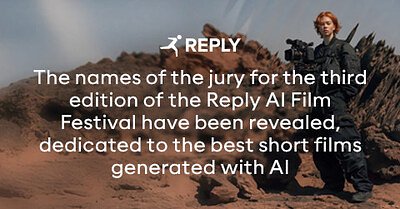
CHICAGO, IL – April 29, 2026 – A clear signal of artificial intelligence's deepening integration into mainstream filmmaking has arrived with the announcement of a star-studded jury for the third annual Reply AI Film Festival. The panel, featuring Academy Award® winner Gabriele Salvatores alongside celebrated directors Rob Minkoff (The Lion King) and Catherine Hardwicke (Twilight), lends significant Hollywood credibility to a competition dedicated to films crafted with AI tools.
This move comes as the creative industries grapple with the transformative, and often disruptive, potential of AI. The festival, organized by the international technology group Reply, positions itself at the forefront of this new cinematic frontier, encouraging filmmakers to explore AI not as a replacement for human creativity, but as a powerful new collaborator.
An A-List Endorsement for a New Cinematic Frontier
The composition of the jury is perhaps the most telling aspect of the festival's growing influence. Led by Gabriele Salvatores, the Italian director who won an Oscar for Mediterraneo, the panel represents a bridge between traditional filmmaking prestige and the cutting edge of technology.
"I am delighted to join the Reply AI Film Festival and contribute to an initiative that looks to the future of cinematic language with curiosity and openness," Salvatores commented in the official announcement. He emphasized that generative AI tools, "when placed in service of an authentic vision, can further enhance the talent, sensibility, and creative perspective of the director."
Joining him are figures who have shaped modern cinema. Rob Minkoff, co-director of the animated classic The Lion King, has publicly shared nuanced views on AI. While acknowledging its potential to democratize content creation, he has stressed that true creative breakthroughs will still rely on unique human vision. Minkoff sees AI as a tool that could streamline production and potentially usher in a "Renaissance of creativity," allowing more diverse stories to be told. The jury also includes Catherine Hardwicke, director of the global phenomenon Twilight; Jed Weintrob, director and partner at 30 Ninjas; and Giacomo Mineo, the VFX supervisor behind blockbusters like Oppenheimer.
The presence of these established names sends a powerful message to an industry still navigating its relationship with AI, suggesting a shift from skepticism towards a more open, exploratory embrace of the technology's creative potential.
"Imaginatio Nova": Exploring the Human-AI Collaboration
The theme for the 2026 festival is "Imaginatio Nova," Latin for "New Imagination." It serves as an invitation for creators to explore how human ingenuity can be augmented and renewed through technology. The competition is not merely about showcasing what AI can do, but what filmmakers can do with AI.
Submissions, due by June 1, 2026, will be judged on creativity, production quality, and the innovative integration of AI across the filmmaking pipeline—from screenwriting and storyboarding to visual effects and post-production. This marks the festival's third edition, building on a foundation of significant global interest. The inaugural event in 2024, themed "Synthetic Stories, Human Hearts," attracted over 1,000 submissions from nearly 60 countries, demonstrating a burgeoning community of artists eager to experiment with these new tools.
Finalists will see their work premiered at a special event in Venice this September, held in collaboration with Mastercard, where the winners will be announced. This prestigious venue, coinciding with the world's oldest film festival, further cements the initiative's place within the serious cinematic landscape.
Beyond the Screen: AI for Good and Strategic Vision
The festival's ambitions extend beyond artistic exploration. It features two significant special prizes: the Reply AI Studios Grand Prix for technical excellence and the AI for Good Award. The latter is promoted in collaboration with the International Telecommunication Union (ITU), the United Nations' specialized agency for information and communication technologies.
This award is dedicated to the best short film that highlights the UN's Sustainable Development Goals (SDGs), encouraging filmmakers to use AI to address pressing global issues. The partnership with ITU's "AI for Good" initiative, which aims to identify and scale AI solutions for humanity's greatest challenges, adds a crucial layer of social responsibility. It reframes the conversation around AI in art, pushing it towards purposeful application and ethical consideration.
For the festival's organizer, Reply, this initiative is a key part of a broader strategy. The event is a flagship of the Reply Challenges program, a series of competitions that engage a community of nearly 250,000 participants worldwide in emerging technologies. By fostering a new generation of talent proficient in AI, the tech group not only positions itself as a thought leader but also cultivates a future workforce and client base, demonstrating its deep investment in the AI ecosystem, which is further underscored by its partnership with OpenAI.
Navigating the AI Revolution in Hollywood
The Reply AI Film Festival is not happening in a vacuum. It arrives as Hollywood is in the midst of a profound and often contentious debate about AI's role. The 2023 writers' and actors' strikes brought anxieties about job displacement, intellectual property, and the use of AI to replicate performances to the forefront of industry-wide conversation.
At the same time, a suite of powerful generative AI tools—from video generators like Sora and Runway to voice synthesizers and script assistants—has become widely accessible, democratizing aspects of production that were once prohibitively expensive. This has lowered the barrier to entry for independent creators, enabling small teams to achieve production values previously reserved for major studios.
The festival provides a curated space to explore the positive potential of this revolution. It champions a collaborative model where AI serves as a co-pilot, not the pilot, augmenting the filmmaker's vision rather than supplanting it. As the industry continues to establish new norms and potential regulations—with discussions around mandatory AI disclosure for awards like the Oscars already underway—events like this one serve as a vital testing ground and showcase for what a human-led, AI-assisted future of cinema could look like. The finalist films, to be screened in Venice, will offer a compelling glimpse into that future.
Topics & Related
Software & SaaS
AI & Machine Learning
Generative AI
Large Language Models
ESG
Product Launch
Related Company Pulse