
- Energy Efficiency: Hitachi's air365 Max Pro system achieves an EER up to 5.60 and a COP up to 5.31, reducing seasonal energy use by up to 47%. - Space Optimization: The air365 SideSmart system starts at 1650×1050×420mm, enabling installation in tight spaces like narrow corridors or constrained rooftops. - Retrofit Potential: Hong Kong has over 42,000 existing buildings, making retrofitting a critical challenge for the city's climate goals.
Experts agree that Hitachi's advanced HVAC solutions provide a practical and scalable approach to meeting Hong Kong's net-zero targets, combining superior energy efficiency with flexible installation options for both new and existing buildings.
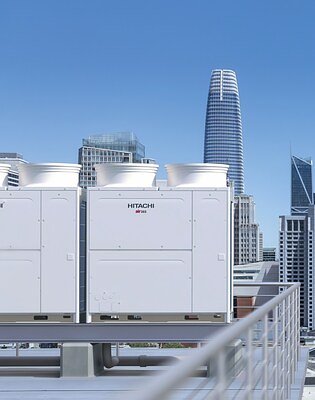
Hitachi's Smart HVAC Tech Targets Hong Kong's Net-Zero Future
HONG KONG – March 23, 2026 – As Hong Kong intensifies its pursuit of net-zero emissions, the city's built environment has become a critical battleground for sustainability. With building regulations tightening and the rigorous BEAM Plus green building framework setting a high bar for performance, developers and engineers face the dual challenge of maximizing energy efficiency while navigating the spatial constraints of one of the world's densest urban landscapes. In response, Hitachi Cooling & Heating has unveiled a new suite of Variable Refrigerant Flow (VRF) solutions engineered to meet these precise demands.
The company, now part of the Bosch Home Comfort Group, has introduced its air365 Max Pro and air365 SideSmart systems, which are designed not only to achieve top-tier energy performance but also to offer unprecedented installation flexibility, providing a crucial toolkit for both new constructions and the vital retrofitting of Hong Kong's vast existing building stock.
Meeting a Higher Standard for Green Buildings
At the heart of Hong Kong's green building strategy is the BEAM Plus assessment scheme, which awards coveted Gold and Platinum ratings to projects demonstrating exceptional environmental performance. Achieving these top tiers is increasingly dependent on the efficiency of a building's core systems, particularly its Heating, Ventilation, and Air Conditioning (HVAC), which can account for 50-70% of a commercial building's electricity consumption.
Hitachi's air365 Max Pro system is positioned to directly address these requirements. Boasting best-in-class energy efficiency ratings with an EER up to 5.60 and a COP up to 5.31, the system is engineered to significantly reduce a building's carbon footprint. Its contribution to BEAM Plus certification goes beyond simple efficiency ratings. The system's advanced SmoothDrive 2.0 technology targets part-load performance—the state in which HVAC systems operate most of the time. By cutting energy consumption by up to 39% at 33% load, the technology delivers a claimed 47% reduction in seasonal energy use and associated CO2 emissions.
These performance metrics are critical for earning credits under the BEAM Plus framework's 'Energy Use' category, which rewards demonstrable reductions in CO2 emissions against established baselines. Furthermore, the system addresses other key assessment criteria. The design reduces refrigerant usage by 10%, a factor that contributes positively to the 'Materials and Waste' category, which scrutinizes the Global Warming Potential (GWP) of refrigerants. By enabling precise temperature control and offering advanced indoor air quality (IAQ) options, the system also supports credits within the 'Health and Wellbeing' category, ensuring that energy efficiency does not come at the expense of occupant comfort.
Engineering for a City of Constraints
While the air365 Max Pro tackles the challenge of energy performance, its counterpart, the air365 SideSmart, addresses Hong Kong's most famous constraint: space. Described as the world's first slim modular VRF, the SideSmart system offers a compact architecture starting at just 1650×1050×420mm. This allows a single 18HP module to match the capacity of a much larger conventional top-discharge unit.
This innovation is particularly significant for Hong Kong's immense retrofit market. With over 42,000 existing buildings, many of which are decades old, upgrading to modern, efficient systems is essential for the city's climate goals. However, these retrofits are often hampered by tight plant rooms, low ceiling clearances, and structural limitations that make installing bulky modern equipment impossible without costly and disruptive alterations.
The modular design of air365 SideSmart, which can be interconnected to deliver up to 72HP (200kW cooling capacity), provides architects and engineers with a flexible, scalable solution. Its slim profile allows it to be installed in previously unusable spaces, from narrow service corridors to constrained rooftop areas. International case studies underscore this adaptability. At a Sambo Motors facility in Mexico, the modular units were transported to the rooftop in a standard elevator, eliminating the need for expensive cranes. In a Colombian bank retrofit, the system was deployed to overcome airflow limits and provide precise zone control within a confined shopping mall location.
These examples mirror the challenges faced daily in Hong Kong, making the technology a promising solution for upgrading everything from government buildings and hospitals to Class A commercial towers and shopping malls where maximizing usable, leasable space is a primary financial driver.
The Competitive Edge of Efficiency
The push for greener buildings in Hong Kong is not solely driven by regulation; it is also a matter of economic reality. In a competitive property market, operational costs and green credentials are key differentiators. Adopting high-performance HVAC systems presents a compelling business case for building owners and investors.
The VRF market is fiercely competitive, with major players like Daikin, Mitsubishi Electric, and LG all offering advanced, energy-efficient solutions. While direct comparisons of efficiency ratings can be complex due to varying testing standards, Hitachi's stated peak EER of 5.60 and COP of 5.31 place its air365 Max Pro at the top end of the market. However, its most significant competitive advantage may lie in its superior part-load performance, an area of increasing focus as it more accurately reflects real-world energy consumption.
For building operators, the long-term financial benefits are substantial. The claimed 47% reduction in seasonal energy use translates directly into lower utility bills, reducing the building's operational expenditure over its lifecycle. Features like NFC-enabled commissioning with airCloud Tap, IoT monitoring, and streamlined maintenance tools further reduce costs by simplifying installation and ongoing management. For developers and landlords, a high BEAM Plus rating, facilitated by such technology, can lead to increased property values, higher rental rates, and greater appeal to corporate tenants with their own sustainability mandates.
As Hong Kong moves forward with its ambitious climate action plan, the alignment of technological innovation with regulatory priorities and real-world constraints will be paramount. Through solutions that address both energy performance and spatial limitations, companies are providing the practical tools needed to transform the city's iconic skyline into a model of sustainable urban development. This synergy between advanced engineering and forward-thinking policy is creating a viable pathway for scaling net-zero-ready infrastructure across both new developments and Hong Kong's existing urban assets.