
- 11 Most Endangered Historic Places: The National Trust for Historic Preservation has identified 11 sites at risk, each receiving a $25,000 grant to aid preservation efforts.
- 95% Success Rate: The '11 Most Endangered' list has saved or secured a positive future for over 95% of the 350+ sites highlighted since 1988.
- $10 Million Backlog: The Women's Rights National Historical Park faces a deferred maintenance backlog exceeding $10 million.
Experts emphasize that preserving these endangered historic sites is crucial to maintaining an accurate and inclusive narrative of American history, particularly as the nation approaches its 250th anniversary.
History Under Siege: Endangered Sites Tell Story of America's 250th
WASHINGTON, DC – May 20, 2026 – As the United States prepares to commemorate the 250th anniversary of its founding, the National Trust for Historic Preservation today unveiled a stark reminder that the nation's story is not only still being written, but is actively at risk of being erased. The 2026 list of America's 11 Most Endangered Historic Places focuses on sites that embody the country's long, often fraught journey toward its foundational ideal: that all people are created equal.
From a Jim Crow-era hotel in Alabama to the site of the Stonewall Uprising in New York, the list highlights places facing threats that range from physical neglect and development pressures to deliberate political and ideological battles over historical truth. To catalyze preservation efforts, the National Trust announced that each site will receive a one-time grant of $25,000.
"Even as the American people prepare to commemorate the nation's 250th anniversary, consequential historic places are at risk, some through intentional erasure, others from short-sighted development plans, and still others from deterioration or neglect," said Carol Quillen, President and CEO of the National Trust for Historic Preservation. "This year, we honor our Declaration of Independence and the living power of its aspirations by highlighting at-risk sites where the fight for equality happened and by recognizing the heroes whose commitment, resilience, and moral courage can inspire us today to continue to build a more perfect union."
A Battle Over Historical Truth
While many sites on the annual list face familiar preservation challenges, this year's announcement underscores a growing concern: the intentional alteration of historical narratives at federally protected sites. Two locations on the list, the President's House Site in Philadelphia and the Stonewall National Monument in New York, are endangered not by bulldozers, but by federal actions aimed at sanitizing their complex histories.
In Philadelphia, at the very site where Presidents George Washington and John Adams governed, the National Park Service removed interpretive panels in January 2026 that detailed the lives of the nine Africans enslaved by Washington at the residence. The outdoor exhibit, which detailed the painful contradiction of a nation founded on liberty while being built by enslaved labor, was altered following a Trump administration executive order to remove content that could be seen as disparaging to past Americans. The move sparked a lawsuit from the City of Philadelphia and condemnation from historical groups who accuse the government of attempting to whitewash history. The Preservation Alliance for Greater Philadelphia will use its grant to develop a mobile digital exhibit to ensure the stories of the enslaved, including those like Ona Judge and Hercules who self-emancipated from the site, are not silenced.
A similar struggle is unfolding at the Stonewall National Monument, the nation's first monument dedicated to LGBTQ+ history. In February 2025, the National Park Service, under federal directives, removed the terms "Transgender" and "Queer" from the monument's official website and took down a key historical study of LGBTQ America. These actions were widely seen as a direct attack on the integrity of public history and an attempt to erase the contributions of transgender individuals to the LGBTQ+ rights movement. Sustained advocacy is now deemed critical to ensure the full, inclusive history of the 1969 Stonewall Uprising remains publicly visible.
Crumbling Walls and Encroaching Threats
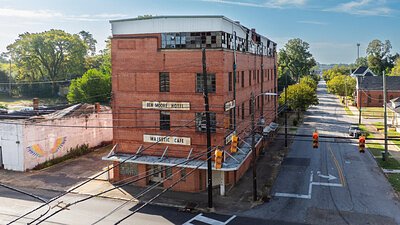
Beyond the battle over interpretation, the list features numerous sites facing more traditional, yet equally urgent, threats of decay and development. In Montgomery, Alabama, the Ben Moore Hotel stands as a hollowed-out but vital landmark. Once a cultural hub and safe haven for Black Americans, including Civil Rights leaders, during the Jim Crow era, the hotel now suffers from prolonged vacancy and structural deterioration. Its inclusion on the list aims to draw funding and expertise to save it from collapse and the pressures of neighborhood development.
In California, two sites speak to the complicated history of immigration and civil rights. The Tule Lake Segregation Center, once a maximum-security prison for Japanese Americans who protested their unjust incarceration during World War II, is sacred ground for survivors and their descendants. Yet, only a small fraction of the 1,100-acre site is protected, and a proposed airfield fence threatens to permanently scar the landscape where thousands fought for their rights as citizens. Similarly, the Angel Island Immigration Station, the West Coast's Ellis Island, faces a combination of physical, environmental, and economic threats that jeopardize its ability to tell the stories of the many Asian and Pacific immigrants who faced detention and interrogation there.
Across the country, the story is the same. The Detroit Association of Women's Clubs, a historic headquarters for Black women activists, was closed after burst pipes caused extensive damage. In rural Texas, the adobe walls of El Corazón Sagrado de la Iglesia de Jesús, a historic church for Mexican American communities, are threatened by the potential construction of a U.S. border wall just a few hundred yards away.
The Power of a List
Since 1988, the National Trust's "11 Most Endangered" list has proven to be a remarkably effective tool. With a success rate of over 95% in saving or creating a positive path forward for the more than 350 sites it has highlighted, inclusion on the list is far more than a simple designation. It serves as a national bullhorn for local advocates, generating media attention and public pressure that can attract new funding, rally community support, and influence policy decisions.
The $25,000 grants, while a small fraction of the total funds needed for multi-million dollar restoration projects, act as a critical catalyst. For sites like the Women's Rights National Historical Park in Seneca Falls, facing a deferred maintenance backlog of over $10 million, or the Swansea Friends Meeting House in Massachusetts, closed for years and requiring significant rehabilitation, the grant provides immediate resources for planning, stabilization, or advocacy.
As the nation moves toward its semiquincentennial, the 2026 list is a powerful declaration that preserving the past is not a passive act. It is an active choice to confront the entirety of the American story—its triumphs, its contradictions, and its ongoing struggles. The fate of these 11 places now rests on whether the national spotlight can be converted into the local action needed to ensure their stories are told for generations to come.