
- Auction Date: June 21, 2026
- High-Value Artifacts: Includes Egyptian red quartzite statue, Graeco-Roman Aphrodite statue, and Attic black-figure amphora
- Royal Provenance: 'The Prince Collection' with documented historical ownership
Experts would likely conclude that this auction exemplifies the evolving intersection of historical provenance, rigorous verification, and modern market accessibility in the antiquities trade.
History for Sale: Royal Provenance and the New Rules of the Antiquities Trade
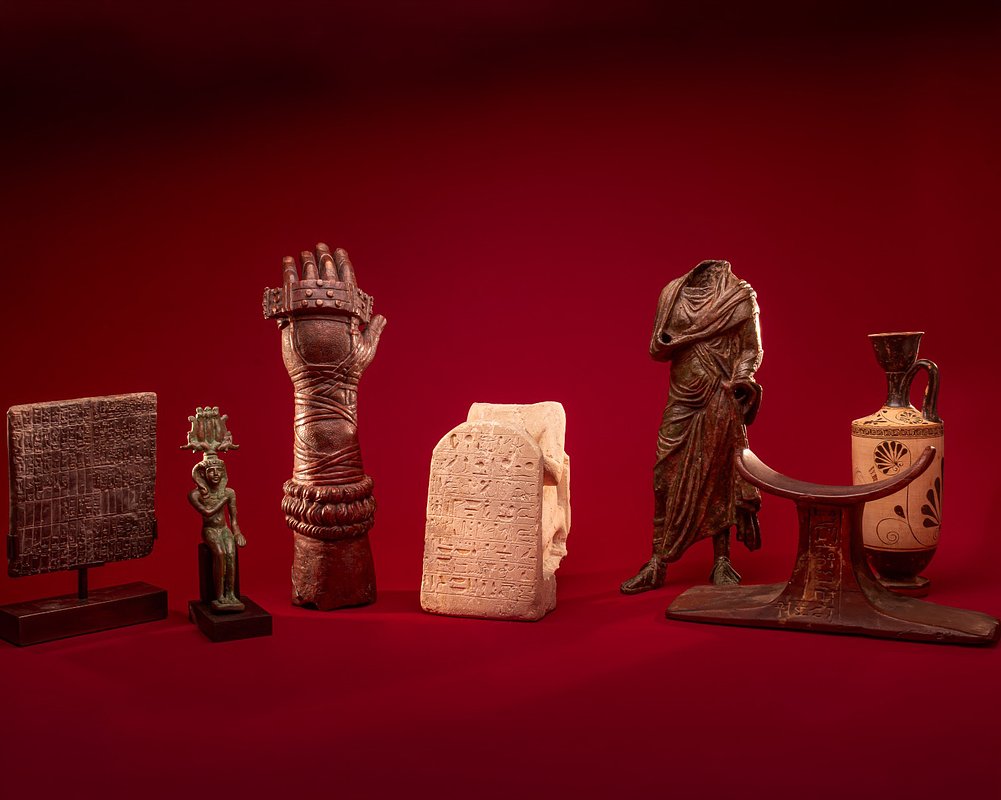
LONDON, UK – June 15, 2026 – On June 21, the polished floors of a Margaret Street showroom will become a temporary nexus of ancient history and modern commerce. Apollo Art Auctions, a specialist house that has carved out a significant niche over the last decade, is preparing to bring its “Fine Ancient Art & Antiquities – The Prince Collection” sale under the hammer. The auction promises a trove of museum-quality artifacts, but it is the whisper of “direct royal ownership” attached to its headlining collection that elevates the event from a mere transaction to a significant market bellwether. In a global landscape increasingly focused on de-risking and transparency, this sale offers a compelling case study in how the world’s oldest assets are being valued, verified, and sold in 2026.
The Allure of Provenance
The value of an antiquity is a complex algorithm of rarity, condition, and aesthetics. Yet, the most powerful multiplier is its story. Provenance—the documented history of an object's ownership—is the bedrock upon which trust and value are built. Apollo’s upcoming sale is a masterclass in leveraging this principle. The auction draws from a series of celebrated European collections, including the Kofler-Truniger holdings from Lucerne and artifacts once owned by Prof. Dr. Martin Eduard Winkler, whose collection seeded a museum.
However, the centerpiece is 'The Prince Collection,' a vast assemblage reportedly formed between the 1990s and 2014. While the identity of the royal collector remains confidential, the auction house emphasizes that the name refers to the historical ownership of the artworks themselves. This distinction is critical; it suggests a lineage that predates the modern collection, adding layers of historical gravity. Highlight lots serve as potent examples. Lot 771, an Egyptian red quartzite block statue from the reign of Amenhotep III, comes with a documented journey through collections in Spain, Germany, the United States, and the United Kingdom. Its exhibition in Paris in 2002 and an accompanying report from Colnaghi, one of the world's oldest and most respected art galleries, transform it from a stone carving into a cultural artifact with a verifiable biography.
Similarly, a Graeco-Roman marble statue of Aphrodite (Lot 880) and an Attic black-figure neck amphora attributed to the Lysippides Painter (Lot 845) are not just presented as beautiful objects. They are offered as pieces of a larger historical narrative. This meticulous curation demonstrates a core strategy for competitive advantage in the high-end collectibles market: the story is the asset. In an age of digital ephemera, the tangible, documented journey of an object through time offers a unique and powerful form of value.
The Burden of Proof in a Turbulent Market
While a compelling story enhances value, the modern antiquities market operates under an unprecedented level of scrutiny. The ghosts of illicitly trafficked cultural property haunt every transaction, making rigorous due diligence not just an ethical imperative but a fundamental business necessity. For auction houses like Apollo, managing this risk is paramount. The strategy is clear: deploy an arsenal of verification tools to build an unimpeachable case for legitimacy.
The inclusion of reports from recognized academic experts is the first line of defense. The authentication for the Aphrodite statue by Professor John Pollini of the University of Southern California is a prime example. A scholar with a Guggenheim Fellowship and a deep history of archaeological fieldwork, Pollini’s name carries significant weight, lending institutional credibility that insulates the transaction from doubt. This reliance on independent, credentialed expertise is a far cry from the days when a dealer's handshake was sufficient. "In this market, a story is only as good as the paper it's written on," noted one market analyst. "Verifiable provenance is the ultimate currency."
Beyond academic opinion, the auction leverages a suite of modern verification instruments. The mention of Art Loss Register (ALR) confirmation letters is particularly significant. The ALR serves as the world's largest private database of stolen and missing art, and checking an item against its records is now a non-negotiable step in responsible trade. The presence of export licenses, original gallery paperwork, and even scientific XRF analyses for material composition further constructs a formidable wall of evidence. This multi-layered approach to validation is the new standard, designed to provide collectors with the confidence required to invest substantial capital. It is the supply chain “de-risking” strategy of the art world, ensuring that an object’s past does not become a liability for its future owner.
A New Generation of Custodians?
Even as it showcases million-dollar artifacts with royal pedigrees, the auction reveals another crucial strategy shaping the future of the market: accessibility. The press release notes that many lots will open with starting bids below their pre-sale estimates. This is a deliberate tactic to lower the barrier to entry, inviting first-time collectors to participate in a market often perceived as exclusive and intimidating. By doing so, Apollo is not merely offloading inventory; it is cultivating its next generation of clients.
This forward-looking approach is mirrored in the sale's operational structure. Bidding is not confined to the London showroom. Instead, it embraces an omnichannel model, available simultaneously through the house's proprietary platform and a host of major online portals like Invaluable, The Saleroom, and LiveAuctioneers. This digital distribution network transforms a local event into a global marketplace, acknowledging that today’s collector is as likely to be bidding from a tablet in Singapore as from a seat in the front row. It’s a necessary evolution for a trade built on tradition, demonstrating that even purveyors of ancient history must innovate to thrive.
Apollo Art Auctions' positive track record and high client satisfaction ratings suggest this blend of rigorous validation and modern accessibility is effective. By providing comprehensive support, from in-house logistics to guidance on the bidding process, the auction house is building a sustainable ecosystem around its sales. The June 21 event, therefore, is more than a simple auction; it is a snapshot of a market in transition, one that is learning to balance the mystique of the past with the transparent, digitally-enabled demands of the future.