
- CES 2026 Showcase: Hisense to unveil next-gen RGB MiniLED technology on January 5, 2026, at Las Vegas Convention Center.
- Market Leadership: Hisense ranks No. 1 globally in the 100-inch+ TV segment (Omdia, Counterpoint Research).
- Industry Shift: Mini-LED TV shipments surpassed OLED TVs in late 2024.
Experts view Hisense's human-centric display evolution as a strategic pivot that aligns with growing consumer demand for wellness-focused technology, positioning the company as a formidable challenger to industry giants like Samsung and LG.
Hisense Challenges TV Giants with Human-Centric Vision at CES 2026
LAS VEGAS, NV – December 18, 2025 – As the tech world prepares to descend on Las Vegas for CES 2026, global electronics giant Hisense has signaled its intent to lead a significant shift in display technology, moving the conversation from raw specifications to human well-being. Under the banner of "Innovating A Brighter Life," the company is set to unveil a new generation of products anchored by an evolution of its RGB MiniLED technology, promising a future where screens are more comfortable to view, more energy-efficient, and better integrated into our lives.
In a pre-show announcement, the Qingdao-based firm declared its vision for a "human-centric display evolution," a strategic pivot that could reshape consumer expectations. The company will hold a press conference on January 5, 2026, to detail its roadmap, followed by a major exhibition at the Las Vegas Convention Center. This push comes as Hisense leverages a period of significant market strength, aiming to translate its dominance in the large-screen segment into broader technological leadership.
The Human-Centric Pivot: More Than Just Pixels
For years, the battle for display supremacy has been waged over metrics like resolution, peak brightness, and color volume. Hisense's new focus suggests a maturation of the market, where user experience and wellness are becoming key differentiators. The company's emphasis on "improved eye comfort" directly addresses growing concerns over Computer Vision Syndrome (CVS), a collection of symptoms like eyestrain and headaches linked to prolonged screen time.
This move aligns with a wider industry trend toward more mindful technology. Display manufacturers are increasingly developing solutions to mitigate the physiological impact of screens. These advancements include ultra-high frequency PWM dimming to eliminate imperceptible flicker, sophisticated algorithms that filter specific wavelengths of harmful blue light without distorting color, and ambient light sensors that automatically adjust screen warmth and brightness. Hisense's forthcoming RGB MiniLED technology is expected to incorporate such features, aiming to make marathon viewing sessions for movies, sports, or gaming less taxing on the eyes.
Beyond eye comfort, the focus on enhanced energy efficiency also strikes a chord with environmentally conscious consumers and responds to tightening global energy standards. Technologies like Mini-LED already offer efficiency gains over traditional LCDs through more precise local dimming, and Hisense's next-generation displays are poised to push this further. By designing technology that is not only powerful but also sustainable, the company is positioning its products as a responsible choice in an increasingly crowded market.
RGB MiniLED: An Industry Battleground
At the heart of Hisense's CES showcase is its latest evolution of RGB MiniLED. The technology utilizes individual red, green, and blue light-emitting diodes in the backlight, offering granular control over light and color that promises next-level performance. In its announcement, Hisense boldly claims to be "The Origin of RGB MiniLED," a statement that positions it as a foundational innovator in the space.
However, the company is stepping onto a fiercely contested battleground. The advancement into what is alternately called "RGB MiniLED" or "Micro RGB" represents a broader industry pursuit of the ultimate display. At the very same event, competitors are set to unveil their own flagship offerings. Samsung is expanding its "Micro RGB TV series," highlighting its own proprietary AI processors and glare-free technology. Likewise, LG will debut its "LG Micro RGB evo," its first foray into the technology, powered by its advanced Alpha 11 AI Processor.
This competitive convergence indicates that while Hisense's claim to be the "origin" is a powerful marketing statement, the development of this technology is a widespread industry effort. The true test will lie in the implementation—the quality of the processing, the effectiveness of the dimming algorithms, and the tangible benefits delivered to the viewer. Hisense's challenge at CES will be to demonstrate that its specific engineering provides a superior, more human-centric experience compared to the formidable offerings from its South Korean rivals.
Beyond the Screen: Building an Integrated Smart Home
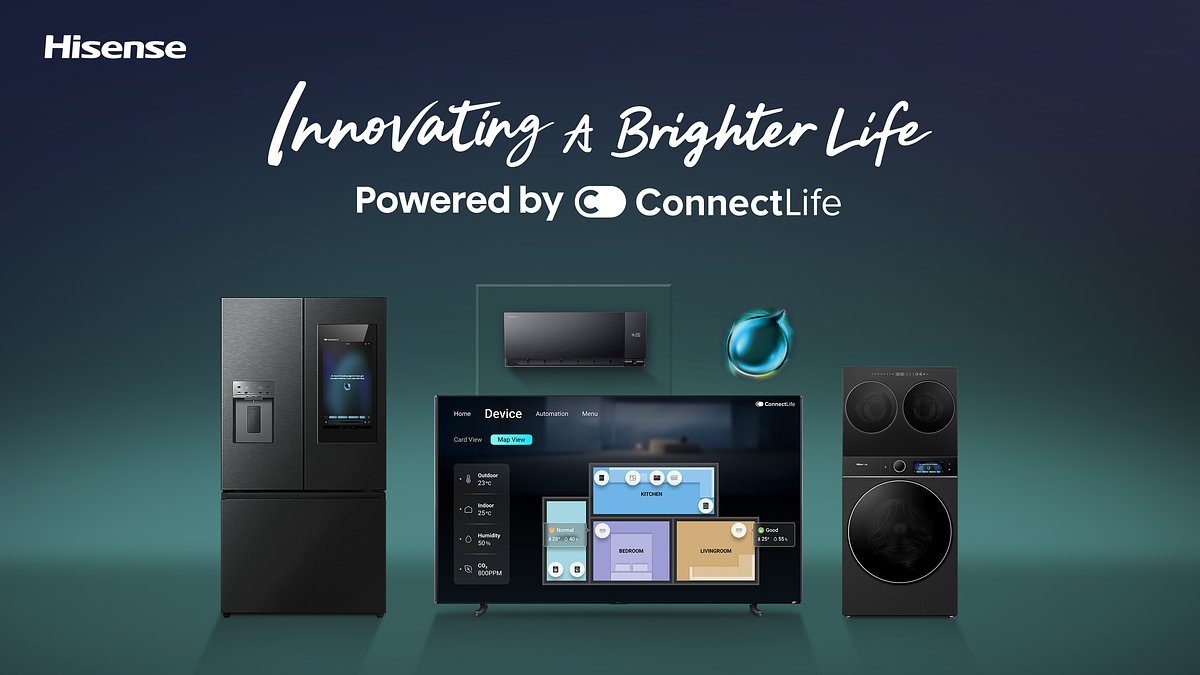
Hisense's vision extends far beyond the television screen. The company will also feature its latest AI-powered home appliances and engineering innovations, illustrating a holistic strategy for the connected home. This approach treats the TV not as an isolated product, but as the central hub of a cohesive ecosystem designed around real human needs. The company's "ConnectLife" platform is central to this strategy, unifying smart appliances across the kitchen, laundry, and living room.
Critically, Hisense is embracing interoperability. The recent announcement of ConnectLife's integration with Google Home is a significant strategic move. By allowing users to control a vast array of third-party smart devices—from lights and sensors to doorbells—alongside its own appliances, Hisense is avoiding the pitfalls of a closed ecosystem. This positions the company as a flexible and powerful player in the smart home space, competing directly with established platforms like Samsung's SmartThings.
This ecosystem play is crucial. As competitors like Samsung also double down on AI-driven appliances and voice-activated companions integrated into their TVs, the ability to offer a seamless, intuitive, and open smart home experience is becoming just as important as picture quality. Hisense's showcase will need to prove that its AI-powered features, such as recipe assistants and automated device interactions, create a genuinely brighter and simpler life for users.
Bolstered by Market Dominance
Hisense's ambitious plans for CES 2026 are not just speculative; they are backed by proven market success. The company's claim of ranking No. 1 globally in the 100-inch and over TV segment is well-supported by independent market research firms, including Omdia and Counterpoint Research, which confirm its leadership in this lucrative, high-growth category for multiple consecutive quarters.
This dominance in the ultra-large screen market provides Hisense with both the capital and the brand credibility to challenge the industry's titans. The market for Mini-LED TVs is surging, having surpassed OLED TV shipments in late 2024, and Hisense is riding that wave. By leveraging its established leadership and manufacturing scale, the company is in a strong position to drive its new technologies into the mainstream.
As the doors open in Las Vegas, Hisense is not just showcasing new products, but presenting a calculated vision for the future of technology in the home. It is a multi-pronged strategy that combines cutting-edge display innovation, a timely philosophy centered on human well-being, and a pragmatic ecosystem approach, all designed to cement its status as a top-tier global technology brand and challenge the industry to follow its human-centric lead.