
- $80 million investment in a 3 GW ingot and wafer production facility in Batang, Indonesia.
- 5 GW total capacity planned, with production starting in Q3 2026.
- 3,000 local jobs expected from SEG’s investment in the Batang Industrial Park.
Experts view SEG Solar’s move as a strategic response to U.S. trade policies, positioning the company to lead the energy transition with a compliant, vertically integrated supply chain.
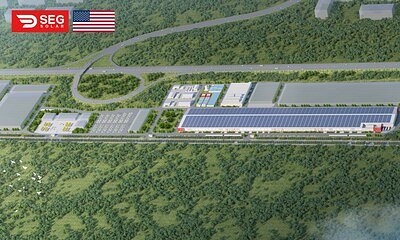
SEG Solar's Indonesian Gambit: A New Anchor for the U.S. Supply Chain
HOUSTON, TX – December 15, 2025 – In a move that signals a significant strategic shift in the global solar supply chain, U.S.-based manufacturer SEG Solar has announced an $80 million investment to construct a 3-gigawatt (GW) ingot and wafer production facility in Batang, Indonesia. While the announcement of a new factory is common in the booming renewables sector, this development is far more than a simple capacity expansion. It represents a calculated response to tightening U.S. trade policies and a direct attempt to build a resilient, vertically integrated supply chain outside of nations deemed “Foreign Entities of Concern” (FEOC).
The facility, slated to begin production in the third quarter of 2026, is the first phase of a larger 5 GW plan. It will be a critical upstream link for SEG, which already operates a solar cell plant in Indonesia and a module assembly factory in Houston, Texas. By establishing this end-to-end manufacturing chain—from raw polysilicon ingots to finished solar panels—SEG is positioning itself to deliver a fully traceable and compliant product to the U.S. market, just as stringent new regulations are set to take effect.
The Geopolitical Blueprint: De-Risking the Solar Supply Chain
At the heart of SEG's Indonesian investment is a complex web of U.S. regulations designed to onshore or “friend-shore” critical clean energy manufacturing. The Inflation Reduction Act (IRA) and the subsequent One Big Beautiful Bill Act (OBBBA) of 2025 have established strict FEOC rules that directly impact eligibility for lucrative federal tax credits. These rules aim to reduce American dependence on supply chains dominated by specific nations, namely China, Russia, Iran, and North Korea.
Under guidance from the Department of Energy, an entity can be designated a FEOC if a covered nation's government holds a 25% or greater stake in its ownership or board seats. Beginning January 1, 2026, solar projects seeking key investment and production tax credits will face mounting pressure to source components from non-FEOC suppliers. The rules mandate that at least 40% of a project's manufactured products must be non-FEOC in 2026, a figure that rises annually. Failure to comply could jeopardize the entire tax credit for a project, creating a powerful market incentive for compliant hardware.
This regulatory landscape has created a significant challenge for the U.S. solar industry. While domestic module assembly capacity is growing rapidly, the upstream supply of components like polysilicon, ingots, wafers, and cells remains heavily concentrated in China, which accounts for over 95% of global wafer production. SEG's strategy directly confronts this bottleneck. By producing ingots and wafers in Indonesia—a nation not on the FEOC list—and processing them into cells at its adjacent facility before shipping them to the U.S. for final module assembly, the company is creating a clear, auditable path to compliance.
“Developing upstream ingot and wafer capacity is essential to completing SEG's integrated manufacturing system,” stated Mr. Jun Zhuge, Founder and Chief Executive Officer of PT SEG Solar Manufaktur. “With complementary production capabilities in the United States and Indonesia, SEG is positioned to deliver a fully traceable and non-FEOC supply chain that meets current and upcoming requirements for the U.S. solar industry.”
Indonesia's Rise as a Green Manufacturing Hub
SEG's decision to anchor its upstream operations in Indonesia is also a testament to the nation's emergence as a strategic hub for renewable energy manufacturing. The facility will be located in the Batang Industrial Park, a sprawling, modern development in Central Java with robust infrastructure and direct access to key transportation routes. Indonesia is actively courting such foreign direct investment with a suite of compelling incentives, including multi-year tax holidays, import duty exemptions for equipment, and streamlined regulatory processes.
This investment is part of a broader trend. Indonesia, which aims for renewables to comprise 23% of its energy mix by 2025, is leveraging its strategic location and supportive policies to attract major players in the green economy. For instance, solar giant LONGi recently partnered with a local energy firm to build a 1.4 GW panel factory elsewhere in Java. These investments are transforming Indonesia from merely a potential market into a key node in the global clean energy manufacturing network.
For the Batang region, the impact is significant. SEG’s total investment in its integrated industrial park is expected to exceed $500 million, ultimately creating over 3,000 local jobs. This not only provides an economic boost but also facilitates technology transfer and develops a skilled workforce in advanced PV manufacturing, aligning with Indonesia's national development goals.
Vertical Integration as a Competitive Moat
In a market characterized by intense price competition and volatile supply chains, SEG Solar’s move toward full vertical integration is a classic strategy to build a competitive moat. By controlling the manufacturing process from ingot to module, the company gains greater control over cost, quality, and supply assurance. This is particularly advantageous in the high-efficiency N-type TOPCon technology sector, where SEG is focusing its efforts.
The company’s existing 5 GW cell facility in Batang, which began its initial 2 GW production phase in May 2025, already boasts an average cell conversion efficiency of 26.4%. The new ingot and wafer plant will feed this operation, ensuring a steady supply of high-quality inputs for its advanced cells. This integration mitigates the risk of sourcing key components from third-party suppliers who may be competitors or subject to geopolitical headwinds.
This strategy has already earned the company recognition as a Tier 1 manufacturer by BloombergNEF and a top brand in the U.S. market. By offering a secure, compliant, and high-performance product, SEG is differentiating itself from competitors who may struggle to navigate the new FEOC landscape. The ability to guarantee a compliant supply chain will likely become a powerful selling point, potentially commanding a premium and securing long-term contracts with U.S. developers who cannot afford the risk of non-compliance.
The construction of the ingot and wafer facility is a critical milestone, enhancing transparency and traceability across the supply chain to meet the strict origin expectations of the U.S. market. As the solar industry continues its rapid expansion, the companies that can master their supply chains and align with shifting policy will be the ones best positioned to lead the energy transition.