
- Qatar's helium supply: Approximately one-third of the world’s helium is produced in Qatar, now disrupted by conflict.
- Helium price surge: Spot prices have skyrocketed by as much as 100% due to supply disruptions.
- Projected demand growth: Global helium demand could double by 2035 due to AI and semiconductor expansion.
Experts warn that the helium shortage poses a critical threat to high-tech industries, particularly semiconductor manufacturing and AI development, necessitating urgent diversification of supply chains to politically stable regions.
Helium Crisis: Mideast Conflict Sparks Hunt for Gas Fueling AI's Future
HOUSTON, TX – March 25, 2026 – A deepening geopolitical crisis in the Middle East is choking off the global supply of a little-known but indispensable resource: helium. The fallout threatens to derail the world’s most advanced industries, from semiconductor manufacturing to artificial intelligence, sparking a frantic global hunt for new, stable sources and turning a spotlight onto the untapped potential of regions like South Africa.
What industry analysts are calling “Helium Shortage 5.0” is being driven by a confluence of supply disruptions and soaring demand. The most acute shock has come from the escalating conflict in the Middle East, which has directly impacted Qatar, a nation responsible for approximately one-third of the world’s helium. With production facilities shuttered and critical shipping lanes like the Strait of Hormuz blocked, a massive portion of the global supply has been effectively removed from the market, causing spot prices to skyrocket by as much as 100% in some cases.
This crisis is compounded by pre-existing vulnerabilities. Russia's ambitious Amur facility, once touted as a major new source, has been plagued by operational setbacks and international sanctions. Simultaneously, the U.S. has transitioned its Federal Helium Reserve to commercial control, ending an era of subsidized supply. The result is a fragile market teetering on the edge, highly dependent on a few production hubs in politically sensitive areas.
Beyond Balloons: The Tech Industry's Achilles' Heel
While commonly associated with party balloons and blimps, helium is a critical, non-substitutable element for the 21st-century economy. Its unique properties—extreme low temperature, high thermal conductivity, and chemical inertness—make it essential for a vast array of high-tech applications.
"If there are stresses on the helium supply chain, one can expect delays in the manufacture of chips and other technologies that have become so important to the growth of AI," said David Casey, CEO of the Australian-based exploration firm D3 Energy Ltd., in a recent statement.
His warning underscores the gas’s central role in the digital revolution. In semiconductor fabrication, helium is vital for cooling silicon wafers during production, providing an inert atmosphere for delicate lithography processes, and enabling plasma etching. Without a stable supply, the production of the very chips that power everything from smartphones to data centers and AI models could grind to a halt. As Casey explained, helium is "critical and irreplaceable in semiconductor manufacturing which is essential to modern life and increasingly important for the growth of AI and quantum computing."
The demand is not just present; it's accelerating. With the chip production boom tracking the explosive growth of AI, some analysts project that global helium demand could double by 2035. The healthcare sector relies on it for cooling the superconducting magnets in MRI and NMR machines, while the aerospace and defense industries depend on it for rocket propulsion systems and advanced aircraft.
"Helium is critical for our high-tech world, and it is 50 to more than 100 times more valuable than natural gas," Casey noted, highlighting the immense economic stakes of the current shortage.
A New Frontier in the Global Helium Hunt
The shockwaves from the Middle East have forced a strategic re-evaluation across the industry. Major consumers and distributors are now urgently seeking to diversify their supply chains away from politically volatile regions. This has ignited a modern-day gold rush, not for precious metals, but for a noble gas trapped deep within the Earth's crust.
"The shock of the global crisis... has definitely called attention to how fragile the helium supply chain is," Casey observed. "The result is that the industry is recognizing the need to look for and develop other sources not associated with, and a byproduct of, LNG operations in other parts of the world that are not as politically sensitive as the Middle East and Russia."
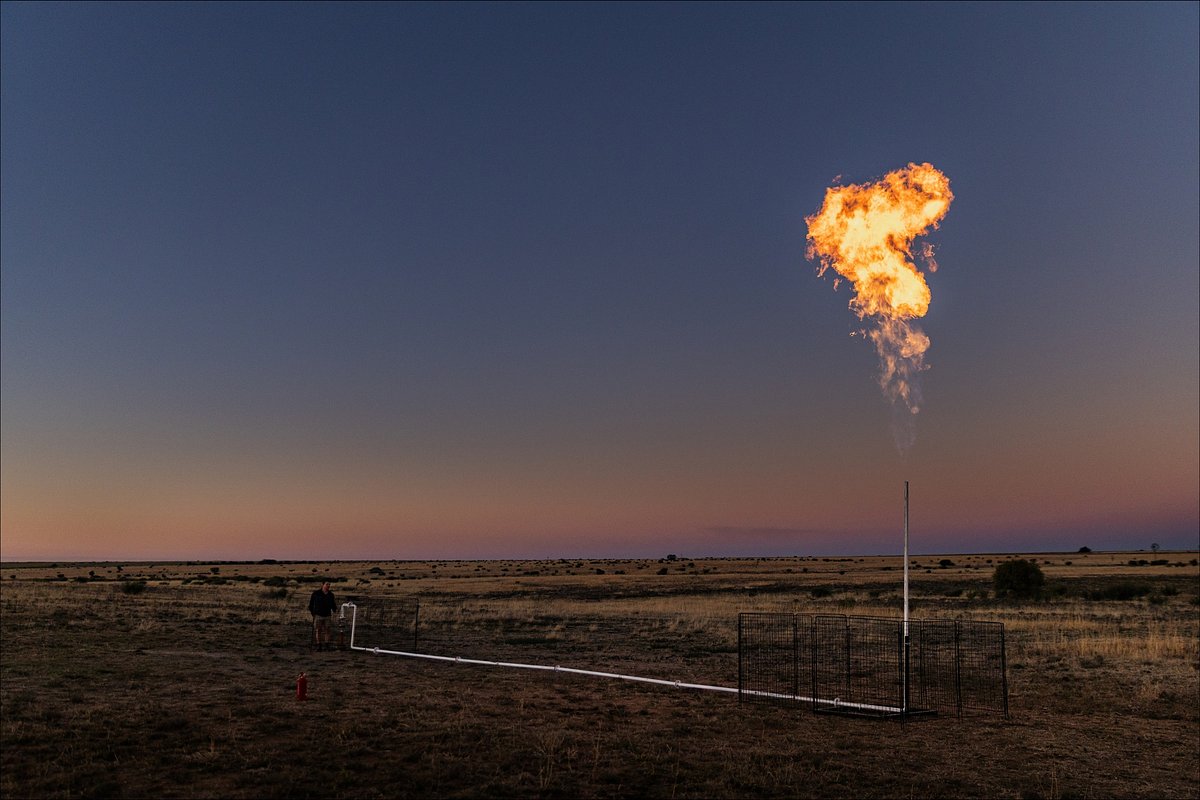
This search is leading companies to explore new geological frontiers in politically stable jurisdictions. The United States and Australia are key areas of focus, but one of the most promising new regions is South Africa’s Free State province, where unique geological conditions have created what some believe are exceptionally rich deposits of helium, independent of LNG production.
South Africa's Potential and D3's Big Bet
At the forefront of this strategic pivot is D3 Energy, which is betting that South Africa can become a new, reliable hub in the global helium network. The company holds six permit areas covering nearly 500,000 acres in the Free State, a region it believes holds a world-class resource.
"We own six permit areas totaling almost 500,000 acres in the Free State South Africa. This area has a unique geological history two billion years in the making and has created what we believe is an exceptional opportunity," Casey affirmed. He pointed to the area's potential for "unprecedented gas regeneration and recharge," a feature that could ensure long-term, sustainable production.
Bolstered by a recent reserve certification and the granting of a Production Right application, D3 Energy hopes to commence construction of a helium and natural gas plant in the Free State next year. While the company is realistic about its immediate impact, the strategic importance of its project is clear.
"Notwithstanding that we have one of the world's largest independently certified pure helium contingent resources in the world, it is obvious we will not be a dominant supplier to the global helium market overnight," Casey stated. "However, given our world class helium grades, and excellent economics, we believe that the Free State of South Africa and our project represent an attractive stable, high-grade, and importantly reliable source of supply for the critical semiconductor industry and AI revolution."
As the world's tech giants face the unnerving prospect of a critical resource bottleneck, the development of projects like D3 Energy's is no longer just a commercial venture. It represents a crucial test of the global economy's ability to adapt to geopolitical shocks and secure the foundational elements of its own future.