
- Record Plasma Temperature: 150 million degrees Celsius, hotter than the sun's core
- First Private D-T Fusion: Achieved by Helion's Polaris prototype
- 2028 Commercial Goal: Microsoft PPA targets fusion power for data centers by 2028
Experts validate Helion's progress as a significant step toward commercial fusion, though caution remains around timelines and peer-reviewed verification.
Helion Hits Record Fusion Temps, Igniting Commercial Power Race
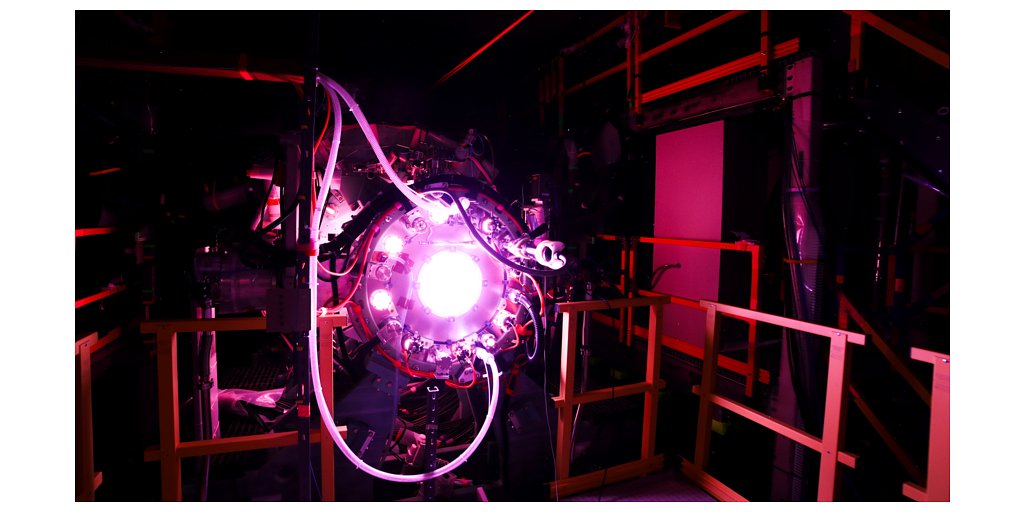
EVERETT, WA – February 13, 2026 – In a significant leap forward for the private sector's quest for limitless clean energy, Washington-based Helion announced today that its Polaris prototype has achieved record-breaking plasma temperatures of 150 million degrees Celsius and successfully demonstrated deuterium-tritium fusion. These milestones, firsts for a privately funded fusion machine, signal an acceleration in the high-stakes race to commercialize fusion power.
The achievements position Helion as a frontrunner in a burgeoning industry aiming to replicate the power of the sun on Earth. The 150 million-degree mark, hotter than the core of the sun, surpasses the 100 million-degree threshold widely considered necessary for a commercially viable fusion reactor. It also breaks the company's own previous industry record set by its sixth-generation prototype, Trenta.
A Validated Leap in Fusion Science
Helion's Polaris prototype, which began operations in late 2024, is the seventh in a series of machines built on a philosophy of rapid iteration. "We believe the surest path to commercializing fusion is building, learning and iterating as quickly as possible," said David Kirtley, co-founder and CEO of Helion, in a statement.
The company’s claims have been met with cautious optimism and validation from experts who have reviewed the data. The successful demonstration of deuterium-tritium (D-T) fusion, a potent fuel mix, was a critical step. "Seeing the data from the Polaris test campaign, including record-setting temperatures and gains from the fuel mix in their system, indicates strong progress," noted Jean Paul Allain, Associate Director for Fusion Energy Sciences in the Department of Energy’s Office of Science.
This progress was further corroborated by independent academic experts. “It is exciting to see evidence of D-T fusion and temperatures exceeding 13 keV or 150 million degrees Celsius,” commented Ryan McBride, a plasma physics expert at the University of Michigan, after reviewing diagnostic data from the company.
Helion’s technology is based on a Field-Reversed Configuration (FRC), where two compact plasma rings are formed and then accelerated to collide and compress at immense temperatures and pressures. A key differentiator in Helion's design is its plan for direct energy conversion. Instead of using the heat from fusion to boil water and turn a steam turbine—the standard in most power plants—Helion aims to capture electricity directly from the plasma's changing magnetic fields, promising a more efficient and compact system.
From Ambitious Lab to Commercial Grid
Beyond the scientific breakthroughs, Helion is making tangible moves toward commercialization. The company has already broken ground on 'Orion,' its first commercial-scale fusion power plant in Malaga, Washington. This facility is central to a landmark power purchase agreement (PPA) with Microsoft, which aims to have the fusion plant supplying electricity to the tech giant’s data centers by 2028.
This PPA is one of the first of its kind and represents a massive vote of confidence from a major corporate energy consumer. For Microsoft, it is a crucial step toward its goal of being carbon negative by 2030. For Helion and the broader fusion industry, it provides critical market validation, signaling to investors and policymakers that fusion is transitioning from a far-off scientific dream to a potentially bankable business venture.
However, the path from today's milestone to powering the grid in 2028 is steep. The Polaris prototype must still achieve its ultimate goal: demonstrating net electricity gain, where the machine produces more energy than it consumes to operate. This crucial "breakeven" milestone, previously targeted for 2024, remains the next major hurdle on the company's ambitious timeline.
The Fuel Dilemma and Unfinished Business
While the recent tests successfully used deuterium-tritium (D-T) fuel—the most common choice for fusion startups due to its lower ignition temperature—Helion’s long-term commercial strategy hinges on a different, more challenging fuel cycle: deuterium-helium-3 (D-He3).
D-He3 fusion is attractive because it is an "aneutronic" reaction, producing far fewer high-energy neutrons than D-T fusion. This significantly reduces material degradation in the reactor and minimizes the creation of long-lived radioactive waste, aligning with the promise of truly "clean" energy. The charged particles produced by D-He3 are also ideal for Helion's direct energy conversion system.
The trade-off is immense. D-He3 requires even higher temperatures, with estimates for optimal commercial operation reaching around 200 million degrees Celsius. Furthermore, Helium-3 is exceptionally rare on Earth. Helion plans to solve this by producing its own He-3 on-site through auxiliary deuterium fusion reactions within its reactors. The current D-T tests, which required Helion to become the first private company to receive regulatory approval to handle tritium, are also providing valuable experience in managing and separating fuel isotopes.
Despite the recent success, some skepticism persists within the wider scientific community, primarily due to a historical lack of peer-reviewed publications from the company detailing its diagnostic methods. While select experts have verified the latest data, a broader scientific consensus awaits more public disclosure. Critics also point to shifting timelines as a common trait among private fusion ventures, noting that past delays were attributed to supply chain issues and funding shortfalls prior to a major investment round in 2021.
A Crowded Field in the Fusion Renaissance
Helion is not operating in a vacuum. The company is a key player in a global "fusion renaissance" fueled by billions of dollars in private investment. It competes against a diverse field of companies, each pursuing different technological paths to the same goal.
Commonwealth Fusion Systems (CFS), a spin-off from MIT, is developing a compact tokamak that leverages powerful high-temperature superconducting magnets. Their approach sticks closer to the mainstream of fusion research but aims for a much smaller and faster-to-build device than government-led projects. Meanwhile, TAE Technologies, another major FRC competitor, is pursuing a steady-state machine with the even more ambitious goal of using hydrogen-boron fuel, which is completely aneutronic but requires even more extreme temperatures.
These private efforts run in parallel to massive public projects like ITER in France, the international collaboration building the world's largest tokamak. While ITER is a research project designed to prove the physics of net energy gain at scale, its slower, more deliberate pace stands in stark contrast to the agile, milestone-driven approach of companies like Helion. As private capital continues to pour into the sector, the race is on to see which technology, and which company, will be the first to successfully deliver on the decades-old promise of clean, abundant energy from a star in a bottle.