
- 50 million Americans experience some degree of hearing loss, highlighting a significant national health priority.
- Over-the-counter (OTC) hearing aids introduced in 2022 to lower costs and increase access, sparking debates on quality control and consumer guidance.
- HLAA convention features real-time captioning, hearing loops, and Auracast™ technology to ensure full accessibility for attendees.
Experts agree that advancements in AI and telehealth are transforming hearing care, but systemic barriers and policy challenges remain critical to ensuring equitable access for all.
Hearing Health's Future: AI, Advocacy, and Community Converge
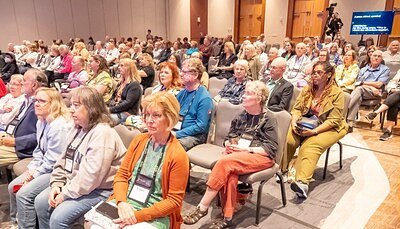
LOUISVILLE, KY – May 04, 2026 – This June, Louisville will become the epicenter of the hearing health world as the Hearing Loss Association of America (HLAA) convenes its 41st annual convention. From June 10-12, thousands of attendees—ranging from leading scientists and tech innovators to disability-rights advocates and individuals living with hearing loss—will gather to explore a future where hearing care transcends simple amplification and becomes a deeply integrated and accessible part of modern life. With over 50 million Americans experiencing some degree of hearing loss, the event underscores a national health priority that is increasingly shaped by advances in technology, shifts in public policy, and the profound power of community.
The AI Revolution in Hearing
A central focus of the convention is the transformative potential of artificial intelligence, which promises to redefine what hearing aids and assistive technologies can do. The event's Research Symposium, supported by the National Institute on Deafness and Other Communication Disorders, will feature pioneers who are moving hearing health far beyond its traditional boundaries.
One of the key challenges AI aims to solve is the "cocktail party problem," where current hearing aids struggle to isolate speech in noisy environments. Dr. Nicholas Lesica, a Professor of Neuroengineering at University College London, is at the forefront of this effort. His research uses deep learning and large-scale electrophysiology to understand how the brain processes sound and how hearing loss distorts it. Dr. Lesica's work aims to create next-generation devices that can intelligently separate sound sources, noting that today’s technology often "butchers music" and provides limited benefits in complex settings. The goal is to develop algorithms that address the nuanced neural distortions of hearing loss, not just turn up the volume.
This technological leap is complemented by a focus on accessibility. Dr. Samantha Kleindienst Robler, an audiology clinician scientist from the University of Arkansas for Medical Sciences, is a nationally recognized expert in using telehealth to bridge care gaps. Her work, such as the "Hearing Norton Sound" project in rural Alaska, demonstrates how telemedicine can dramatically increase access to follow-up care for children. At the convention, she will discuss how technology can create sustainable healthcare delivery models, ensuring that advancements in hearing health reach underserved and rural communities.
The intersection of technology and public health policy is another critical area of discussion. Dr. Jan Blustein of New York University's Grossman School of Medicine will bring her expertise on the broader consequences of hearing loss on health and quality of life. Her research explores everything from the stigma of hearing loss to the real-world impact of policy changes, such as the move toward over-the-counter (OTC) hearing aids, providing a crucial link between cutting-edge innovation and its practical application for millions of older Americans.
The Fight for Access and Equity
While technology opens new doors, the convention also serves as a critical forum for addressing the systemic barriers that prevent many from accessing care. The fight for comprehensive hearing health policy remains a central theme, with advocates and community leaders discussing strategies to shape the political landscape at both federal and state levels.
A major topic of discussion will be the ongoing ripple effects of the FDA's 2022 ruling that established a category for OTC hearing aids. While celebrated for its potential to lower costs and increase access, the policy has sparked debates about quality control, the need for consumer guidance, and the role of professional audiologists in a direct-to-consumer market. The convention will provide a platform for stakeholders to dissect these issues and chart a path forward that balances accessibility with safety and efficacy.
Beyond the OTC market, the push for comprehensive insurance coverage for hearing aids and related services remains a top priority for advocates. Currently, coverage is a patchwork across the country, with many states mandating it for children but few for adults, leaving millions to bear the significant out-of-pocket costs. Sessions and workshops will focus on legislative strategies and grassroots campaigns aimed at making hearing care an integral part of standard health insurance plans nationwide.
This advocacy extends to the very fabric of public life. Discussions will also center on strengthening and expanding communication access standards under the Americans with Disabilities Act (ADA). The goal is to ensure that public spaces, healthcare facilities, and workplaces are equipped with modern assistive technologies, making society more inclusive for people with hearing loss.
A Lifeline of Community and Connection
Perhaps the most vital aspect of the HLAA convention is the human element. For many attendees, the event is more than a series of workshops and product demonstrations; it is a powerful affirmation of shared experience and a lifeline of support. The gathering brings together veterans coping with service-related hearing loss, professionals navigating their careers, and older adults seeking to maintain their social connections.
These personal stories highlight the profound impact that untreated hearing loss can have on mental health, social engagement, and overall quality of life. Conversely, they also showcase the transformative power of effective treatment and community support. Attendees share strategies for self-advocacy, exchange tips on using new technology, and find solidarity in knowing they are not alone.
This sense of community is the cornerstone of HLAA's mission. With more than 120 chapters across the country and its popular Walk4Hearing events, the organization fosters a year-round network of peer support. This grassroots structure empowers individuals to become advocates not only for themselves but for their entire communities, driving change from the ground up. The convention acts as the annual gathering of this nationwide family, recharging their efforts and reinforcing their collective voice.
A Model of Inclusive Communication
Underscoring its advocacy, the HLAA convention itself is a masterclass in accessible communication. The organization ensures that its own event embodies the standards it fights for in the wider world. Every plenary session and workshop will feature real-time captioning (CART), allowing attendees to read what is being said.
Furthermore, all meeting rooms will be equipped with hearing loops, a technology that transmits audio directly to telecoil-equipped hearing aids and cochlear implants, providing crystal-clear sound without background noise. The event will also feature Auracast™ broadcast audio, a next-generation Bluetooth technology that allows for broad audio sharing in public spaces, further expanding listening options for attendees.
For those who use American Sign Language, ASL interpretation will be available for all major sessions and by request for educational workshops. By prioritizing this comprehensive suite of accessibility tools, the convention does more than just accommodate its attendees; it provides a tangible demonstration of what a truly inclusive environment looks like, setting a benchmark for conferences and public events everywhere. This commitment ensures that every participant, regardless of their level of hearing loss, can engage fully in the vital conversations shaping the future of hearing health.