
- Hanshow's NexShelf enables centimeter-level product location intelligence, automating out-of-stock detection and planogram compliance monitoring.
- Smart Cart integrates real-time pricing, promotions, and self-checkout, reducing shopper friction and enhancing retail media monetization.
- The Store Digital Twin concept aims to transform reactive retail management into predictive, data-driven execution.
Experts view Hanshow's Store Digital Twin as a transformative leap in retail technology, bridging the gap between online and in-store shopping through AI-driven predictive analytics, though implementation challenges and data privacy concerns remain critical considerations.
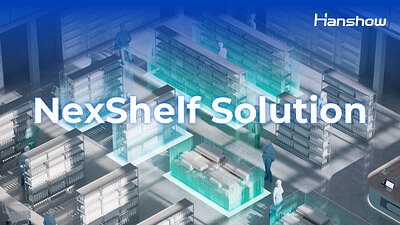
Hanshow's Digital Twin Aims to Build the Predictive Retail Store
DÜSSELDORF, GERMANY – February 23, 2026 – As the retail industry converges on EuroShop 2026, a clear theme is emerging: the physical store is becoming intelligent. Leading this charge is Hanshow, a global provider of digital retail solutions, which is showcasing a comprehensive vision for the future of brick-and-mortar: the Store Digital Twin. The company's latest solutions aim to transform retail from a business of reactive management to one of predictive, data-driven execution, effectively creating a real-time digital mirror of the entire store environment.
At the heart of this vision are two interconnected technologies: NexShelf, an intelligent shelving foundation, and Smart Cart, a connected shopping cart that redefines the customer journey. In an era where retailers grapple with labor shortages, supply chain disruptions, and the high expectations of shoppers accustomed to the ease of e-commerce, the shift toward AI and real-time data is no longer an option, but a necessity. Hanshow's announcement places it squarely at the center of this industry-wide transformation, promising to finally bridge the gap between the vast data of online shopping and the complex reality of the physical aisle.
The Shelf Becomes the Store's Brain
For decades, the simple metal shelf has been the silent, uninstrumented workhorse of retail. Despite its central role in the customer's moment of decision, it has remained one of the least digitized parts of the store. Hanshow's NexShelf solution aims to change this by turning every shelf into a data-gathering, connected digital asset.
This intelligent shelf is built upon Nebular Ultra, the company's next-generation electronic shelf labels (ESLs). These are not merely digital price tags; they act as geo-reference points, working in concert with AI cameras to create a granular, real-time map of the store. This system enables centimeter-level product location intelligence, allowing the store's digital twin to know exactly where every item is. Consequently, it can automatically detect out-of-stocks, flag products that are in the wrong place, and monitor planogram compliance with a precision that manual audits could never achieve.
By making the state of the shelf constantly visible and measurable, NexShelf provides the foundational data layer for the digital twin. This infrastructure is powered by Hanshow’s proprietary HiLPC communication protocol, an efficient, low-power system designed for dense retail environments, ensuring stable data transmission without overburdening store infrastructure. The goal is to provide one of the lowest total costs of ownership for large-scale digitization.
"By making shelf status visible, measurable, and actionable, NexShelf establishes the foundation of the Store Digital Twin," said Philippe Brochard, Chairman of the Advisory Committee at Hanshow, in the company's announcement. "It enables retailers and brands to move from assumptions to facts, and from reactive operations to proactive, data-driven decision-making at scale."
Connecting the Shopper to the Digital World
While NexShelf digitizes the store's physical assets, the Hanshow Smart Cart connects the most vital element: the shopper. By transforming the humble shopping cart into a location-aware, interactive touchpoint, the system completes the 'people' dimension of the digital twin.
As a customer navigates the store, the Smart Cart offers a suite of features that mimic the best of online shopping. It can guide them to items on their list, provide real-time pricing and promotion information, track the items in their basket, and ultimately allow for a seamless self-checkout experience, bypassing traditional queues. This not only reduces friction for the shopper but also frees up store associates for more value-added tasks.
For the retailer, the Smart Cart unlocks a wealth of operational and commercial opportunities. By linking a shopper's real-time location to the live shelf data from NexShelf, it enables powerful, location-based promotions and in-store retail media activations right at the point of decision. This opens up new revenue streams through Retail Media Network monetization, a rapidly growing sector in the industry. Furthermore, integrated AI monitoring and electronic locking mechanisms enhance asset protection and loss prevention without creating a burdensome experience for the customer.
"Smart Cart is redefining the in-store shopping experience by creating a unique, personalized media channel at the point of purchase," noted William Shao, Head of Smart Cart Solutions at Hanshow. "It brings the best of online shopping into physical stores, opening up new possibilities for engagement, efficiency, and retail media monetization."
The Hurdles of Implementation and Data Privacy
While the vision of a fully predictive, AI-driven store is compelling, the path to implementation is paved with significant challenges. The primary hurdle for many retailers is the integration of these new technologies with often-outdated legacy systems. Creating a single, cohesive data model from fragmented sources like POS, inventory, and CRM systems is a complex and costly undertaking. The sheer volume of data generated by thousands of sensors, cameras, and smart carts also demands a robust and scalable infrastructure, often requiring significant investment in cloud and edge computing.
Beyond the technical and financial hurdles lies a more profound societal question: data privacy. The deployment of AI cameras and location-aware smart carts inevitably raises concerns about customer surveillance. Shoppers are increasingly wary of how their data is collected and used, and regulations like GDPR in Europe have set a high bar for consent and transparency.
In response, technology providers are building safeguards into their systems. Hanshow, for instance, highlights its SOC 2 and SOC 3 certifications, which attest to its commitment to data security and privacy. Industry best practices are moving toward processing data at the 'edge'—on the device itself—to anonymize information before it is sent to the cloud. This allows for the analysis of traffic patterns and shopper behavior in aggregate, without tracking individuals. For retailers, the key will be absolute transparency, clearly communicating what data is being collected and for what purpose, ensuring that the quest for efficiency does not come at the cost of customer trust.
By combining intelligent shelf infrastructure with real-time shopper engagement, the Store Digital Twin concept represents a significant leap toward a truly unified commerce experience. It closes the loop between people, products, and physical space, allowing retailers to move beyond simple visibility and into the realm of predictive, AI-powered operations. The technologies on display at EuroShop 2026 suggest that physical stores are on the verge of becoming continuously learning, digitally mirrored environments, forever changing the landscape of retail.
Topics & Related
Artificial Intelligence
Generative AI
Regulation & Compliance
Cloud Migration
Software & SaaS
AI & Machine Learning
Related Company Pulse