
- 14-hour battery life: Halo glasses claim up to 14 hours of battery life under typical use, a significant improvement over competitors.
- $349 price point: The glasses are competitively priced against existing smart glasses offerings.
- On-device AI processing: All visual and audio inputs are processed locally, ensuring user data never leaves the device.
Experts would likely conclude that Halo Glasses represent a significant step forward in wearable privacy, offering a compelling alternative to cloud-dependent models with strong potential to disrupt the smart glasses market.
Halo Glasses Challenge Big Tech with On-Device, Privacy-First AI
LONDON, UK – March 05, 2026 – A strategic alliance between hardware innovator Brilliant Labs, voice AI specialist Neuphonic, and optimization expert TheStage AI is set to redefine the future of wearable technology. The partnership aims to deliver a new generation of smart glasses that processes advanced artificial intelligence directly on the device, challenging the cloud-dependent models of tech giants and placing user privacy at the forefront of the experience.
This collaboration will power Brilliant Labs' forthcoming Halo glasses, a device that promises to keep sensitive, point-of-view data local, eliminating the latency and significant privacy risks associated with sending information to remote servers for analysis. By running complex AI models on the user's hardware, the partnership offers a vision for personal computing where convenience doesn't come at the cost of surveillance.
A New Paradigm for Wearable Privacy
The rise of AI-powered wearables has brought with it a wave of concern over data privacy. Always-on cameras and microphones, hallmarks of devices from major players like Meta and Snap, create a continuous stream of personal data. The conventional approach involves sending this data to the cloud for AI processing, raising questions about who has access to it, how it's used, and whether it's truly secure. Recent investigations have cast doubt on the privacy promises of major platforms, and these concerns are only amplified as AI expands from text to capturing the sights and sounds of our daily lives.
The Brilliant Labs partnership directly confronts this issue. Their architecture ensures that all visual and audio inputs are processed locally on the user's device and paired smartphone. Raw data, such as video from the glasses' camera or audio from a private conversation, is never intended to leave the user's control. Instead, it is converted into encrypted embeddings on-device, providing the benefits of AI without exposing the underlying personal information.
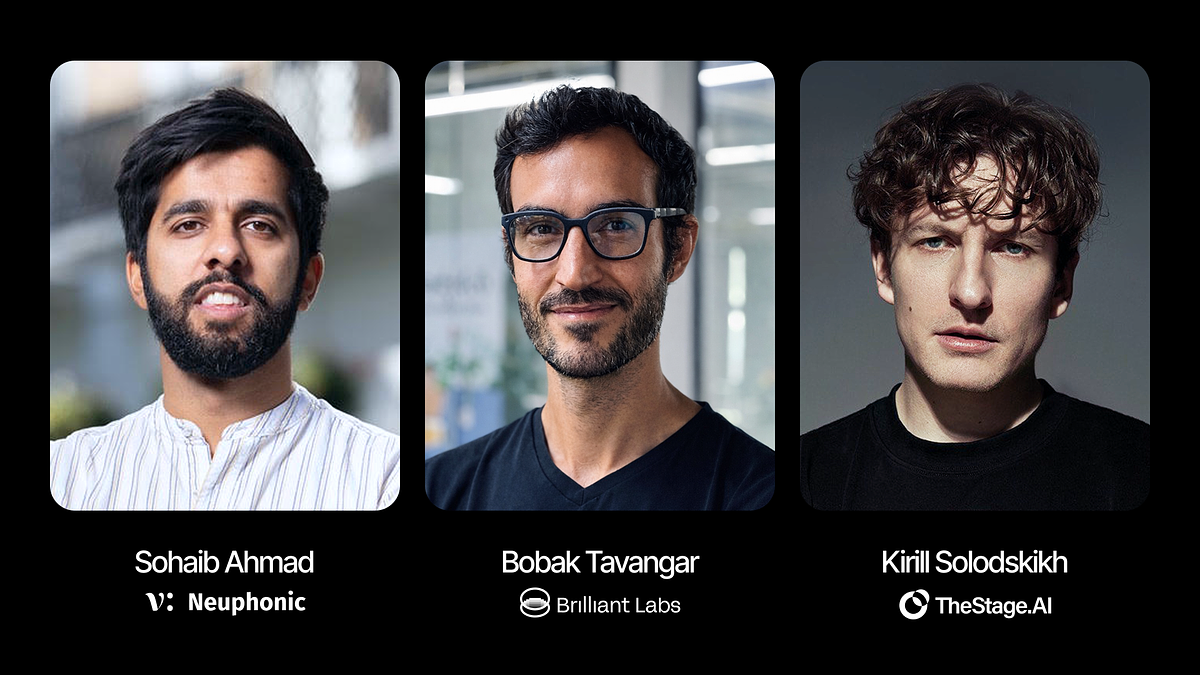
“We believe in a privacy-first future for personal computing. AI glasses are soon going to be everywhere around us: always-on cameras and microphones capturing our lives. That’s either exciting or terrifying, depending on where that data lives and who is monetizing it,” said Bobak Tavangar, CEO of Brilliant Labs. “I don’t want my children growing up in a world where that data is sold to the highest bidder. This partnership shows there’s a better way.”
This privacy-by-design philosophy is further bolstered by a commitment to open-source principles. Brilliant Labs plans to make the hardware and software for Halo available for public scrutiny, fostering a level of transparency that is rare in the consumer tech industry. “By embracing open source, we want people to understand how these systems work, build upon them, and ultimately foster trust. That’s the standard we think the industry should be held to,” Tavangar added.
The Engineering Behind Real-Time, On-Device AI
Achieving real-time conversational AI and image analysis on a slim, power-efficient pair of glasses is a monumental engineering feat. The collaboration leverages the unique strengths of each partner to overcome the computational hurdles of on-device—or "edge"—AI.
Brilliant Labs provides the platform: the Halo glasses. These are not just a frame for a camera and a speaker; they are built around an Alif B1 processor, a chip specifically designed for ultra-low-power AI tasks. This allows the glasses to handle sensor fusion and basic inference while claiming an impressive battery life of up to 14 hours under typical use—a significant leap over competitors.
At the heart of the conversational experience is Neuphonic's technology. Their AI models are engineered to provide the "voice" of the system, running locally to deliver ultra-low-latency text-to-speech and speech recognition. This eliminates the awkward pauses common in cloud-based voice assistants, creating a more natural, human-like interaction. “When you’re having a conversation, speed and privacy are everything. You cannot wait for the cloud to think,” explained Sohaib Ahmad, CEO of Neuphonic. “We’ve unlocked a conversational experience that feels real, immediate, and completely private.”
The crucial bridge between Neuphonic's sophisticated models and Brilliant Labs' hardware is provided by TheStage AI. Running complex AI on a wearable device requires a delicate balance of performance, power consumption, and memory usage. TheStage AI's core technology, ANNA (Automated Neural Networks Accelerator), optimizes Neuphonic's models and other components like transcription and wake-word detection. It ensures these processes run efficiently on the GPU and NPU of a paired smartphone, delivering maximum performance without draining the battery.
“Great hardware and great models need a bridge, and that is what we build,” stated Kirill Solodskikh, CEO at TheStage AI. “Our core technology... optimizes Neuphonic’s models and supporting components... so they run efficiently on a smartphone paired with the glasses.”
Challenging the Titans of Tech
With the Halo glasses, Brilliant Labs is not just launching a new product; it's issuing a direct challenge to the established order of the smart glasses market. By differentiating through privacy, open-source transparency, and on-device performance, the company is betting that a significant segment of consumers is looking for an alternative to the walled gardens of Big Tech.
The Halo glasses are slated to launch with a compelling suite of features. The built-in AI assistant, Noa, will offer context-aware information by seeing and hearing in real time. A private memory feature will index what the user experiences, allowing for later recall and personalized context. An experimental "Vibe Mode" will even let users create custom AI mini-apps using natural language commands.
Priced at an expected $349, the Halo glasses are positioned competitively against existing offerings. This combination of advanced features, a strong privacy stance, and an accessible price point could be a disruptive force in the industry. The open-source nature of the platform is a strategic masterstroke, inviting a community of developers and tech enthusiasts to build upon, scrutinize, and ultimately champion the device, creating a grassroots ecosystem that could rival the massive marketing budgets of incumbents.
This approach appears to be resonating. Initial reception has been positive, with industry watchers praising the device's subtle design, impressive battery claims, and, above all, its commitment to a new, more ethical standard for personal AI. As the market for edge AI in wearables is projected to grow significantly, driven by consumer demand for real-time insights and stronger data protection, this partnership seems perfectly timed to capture the shifting sentiment. The release, planned for the first quarter of 2026, will be a critical test of whether a small consortium of innovators can truly shift the paradigm in an industry long dominated by giants.