
- 64 microphones: The UDL-64 system uses a high-density array of 64 microphones for acoustic detection.
- 200-500 meters range: Single unit detects threats up to 200 meters; networked units extend coverage to 500 meters.
- 50% procurement advantage: U.S.-made systems like UDL-64 receive up to 50% preference in DoD contracts under the Buy American Act.
Experts would likely conclude that Hall Lidar's UDL-64 offers a innovative, passive acoustic solution for drone detection that addresses critical gaps in existing counter-UAS technologies, particularly in adverse conditions or against autonomous drones.
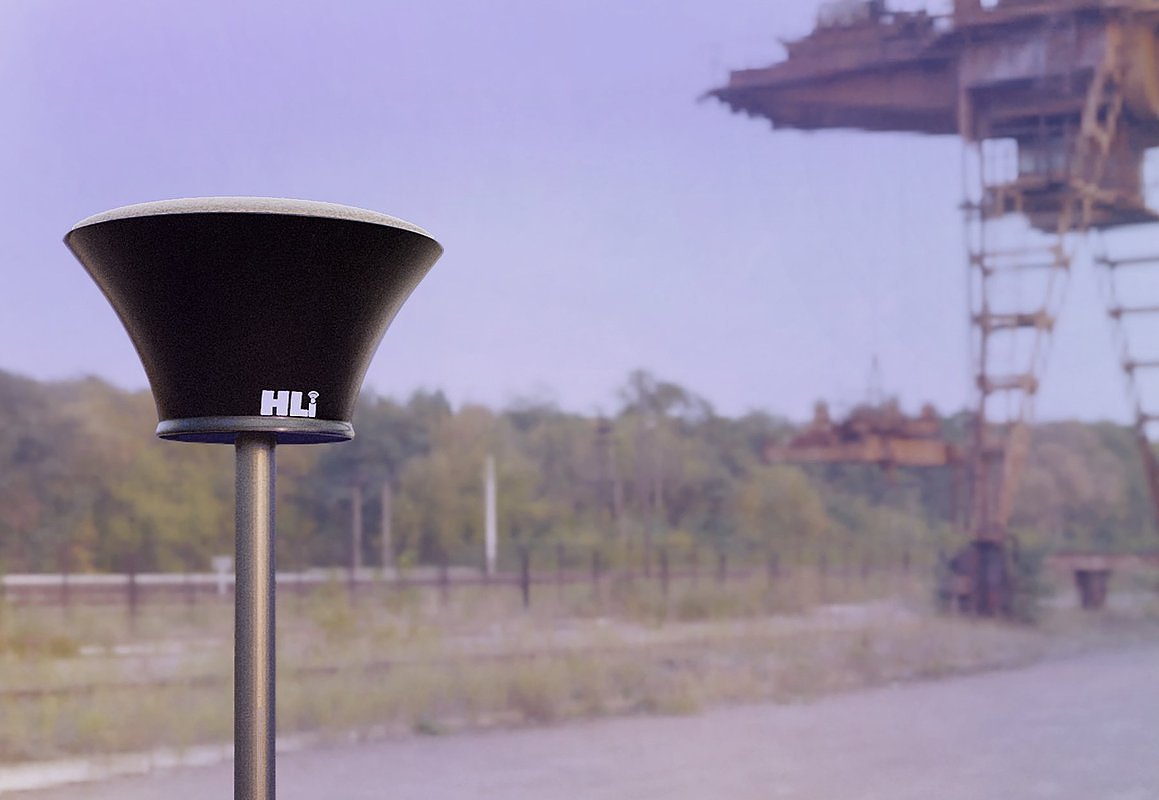
Hall Lidar's New Acoustic AI Aims to Secure American Skies
BOZEMAN, MT – April 16, 2026 – In an era where aerial threats are becoming smaller, quieter, and more autonomous, a Montana-based company founded by a legendary inventor is proposing a new defense: listening. Hall Lidar Inc. yesterday announced the launch of its UDL-64 (Ultimate Drone Listener), an AI-powered acoustic sensing system designed to provide covert, precise detection of unmanned aerial systems (UAS), or drones.
The system marks a significant departure from conventional drone countermeasures, relying not on radio waves or cameras, but on the unique sound signatures produced by drone rotors. By doing so, it aims to solve a critical vulnerability that plagues many existing security platforms.
A New Way of Listening for an Evolving Threat
The proliferation of sophisticated, low-cost drones has created a complex security challenge. Traditional detection methods are increasingly showing their age. Radar systems, the long-standing guardians of the airspace, can be confounded by ground clutter like trees and buildings, often struggling to distinguish a small drone from a bird. Radio frequency (RF) scanners, which search for the communication link between a drone and its pilot, are rendered useless against pre-programmed, autonomous drones that fly 'dark' without emitting any signals.
Optical systems, while useful for verification, are dependent on a clear line of sight and can be hampered by darkness, fog, or other adverse weather conditions.
Hall Lidar’s UDL-64 introduces a fundamentally different approach. Because it relies on the physical sound produced by a drone, it operates independently of RF signals, GPS availability, or visual conditions. At its core is a high-density array of 64 microphones paired with advanced, edge-based AI processing. The platform continuously captures spatial sound data and uses sophisticated algorithms to isolate the distinct acoustic fingerprint of a drone, filtering out a cacophony of environmental noise such as wind, traffic, or urban activity.
Crucially, the system is entirely passive. It emits no signals, making it undetectable to adversaries and immune to electronic spoofing. “Customers should not have to choose between performance and security,” said David Hall, the company's CEO and head scientist, in the announcement. “We‘ve built a system that delivers both—advanced AI-based acoustic detection with the assurance of American manufacturing and supply chain integrity.”
The American-Made Advantage
In the current geopolitical climate, the UDL-64's most powerful feature may not be its technology, but its passport. Hall Lidar emphasizes that the system is fully designed, engineered, and manufactured in the United States. This distinction is far more than a point of patriotic pride; it's a critical strategic advantage in the high-stakes world of defense and critical infrastructure procurement.
Federal agencies and their contractors operate under strict guidelines, most notably the Buy American Act (BAA), which gives significant preference to domestically produced goods. For Department of Defense procurements, this preference can be as high as 50%, meaning a U.S.-made product can win a contract even if it is substantially more expensive than a foreign alternative. This policy is designed to bolster the domestic industrial base and, more importantly, mitigate the national security risks associated with foreign-made hardware, which could contain hidden vulnerabilities or create dependencies on insecure supply chains.
By ensuring a transparent and secure U.S.-based supply chain, Hall Lidar directly addresses these concerns, positioning the UDL-64 as a trusted solution for government agencies, military branches, and operators of critical infrastructure like power plants and airports.
The Vision of a Prolific Inventor
The credibility of these ambitious claims is significantly bolstered by the man behind the company. David Hall is not a newcomer to technological disruption. Widely recognized as the inventor of real-time 3D LiDAR technology, his work laid the foundation for the modern autonomous vehicle industry. His innovations earned him the prestigious "Inventor of the Year" award from the Intellectual Property Owners Education Foundation in 2018, and he holds a portfolio of over 100 patents in fields ranging from high-fidelity audio to marine stabilization and electromagnetic propulsion.
Hall's track record of identifying technological gaps and engineering novel solutions lends substantial weight to Hall Lidar’s entry into the crowded counter-UAS market. The UDL-64 is presented as the culmination of his deep expertise in sensor technology, signal processing, and AI, applied to one of the most pressing security challenges of our time.
Democratizing Advanced Drone Defense
While its technology is sophisticated, the UDL-64 is engineered for operational simplicity and accessibility. The company has highlighted its relatively low cost and flexible design, aiming to broaden access to advanced drone defense beyond elite military units.
The sensor itself is compact and lightweight, approximately 24 inches in diameter, allowing for rapid deployment on a tripod or mast in minutes. It can be powered by batteries, solar panels, or external sources, making it suitable for both mobile security teams and fixed installations. A single unit can provide directional awareness of threats up to 200 meters away, while networking multiple units expands this coverage to roughly 500 meters, providing a full 3D picture of a drone's location, speed, and altitude.
This combination of performance and flexibility opens the door for a wide range of potential users. Civilian airports, energy facilities, transportation hubs, and even large public venues like stadiums could deploy the system to protect against unauthorized drone activity. Its covert nature makes it particularly valuable for scenarios where discretion is essential. As drone threats continue to evolve in scale and sophistication, the ability to reliably detect them is becoming a fundamental requirement for security operations across countless sectors of society.