
- 30% improvement in fuel efficiency targeted for regional aircraft
- 2,000+ hours of incident-free electric flight validated by H55's battery technology
- 20-40% reduction in CO2 emissions and up to 50% noise reduction with hybrid-electric system
Experts view hybrid-electric systems as a crucial transitional step toward fully electric aviation, offering immediate emissions and cost reductions while advancing necessary high-voltage electrical systems.
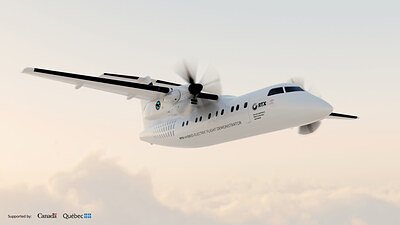
H55's Proven Battery Tech Fuels RTX's Hybrid-Electric Aircraft Ambitions
SION, Switzerland – March 18, 2026 – The push towards a greener era of aviation has taken a significant step forward, as Swiss electric propulsion specialist H55 announced major progress on the RTX Hybrid-Electric Flight Demonstrator. The project, a collaboration between aerospace giants Pratt & Whitney Canada and Collins Aerospace, is leveraging H55's flight-proven battery technology to develop a regional aircraft aiming for a remarkable 30% improvement in fuel efficiency.
This announcement follows a critical milestone achieved in June 2025: the first successful full-power system test of the integrated propulsion system. The test validated the seamless operation of an advanced thermal engine, a 1-megawatt electric motor, and H55’s 200 kWh Energy Storage System (ESS). With ground tests continuing, the project is now advancing toward integrating this groundbreaking technology into a modified De Havilland Canada Dash 8-100 aircraft for flight testing, heralding a new chapter for regional air travel.
The Certification Catalyst
At the heart of this rapid progress is H55's unique approach to its technology. Rather than being a mere component supplier, H55 has provided the project with a certifiable foundation, significantly de-risking and accelerating the development timeline for RTX. This is built on a legacy of rigorous testing and real-world performance, including over 2,000 hours of incident-free electric flight across multiple aircraft platforms.
Pratt & Whitney Canada selected H55's battery architecture as the core compliance and safety baseline for the demonstrator’s propulsion system. This decision was heavily influenced by the system's extensive validation, which includes successfully completing the aviation industry's first regulator-witnessed propulsion battery module certification test sequence in December 2025, supervised by the European Union Aviation Safety Agency (EASA).
"There's a meaningful distinction between being selected as a component supplier and being chosen as a certification foundation," said Rob Solomon, H55's CEO. "Pratt & Whitney Canada didn't just purchase our batteries -- they built their demonstrator's compliance baseline on an architecture that H55 has already flown for more than 2,000 hours without incident and validated through EASA test campaigns. That's what eight years of disciplined certification work makes possible."
The company’s philosophy of being “certifiable by design” is more than a slogan. It involves a multi-layered safety approach, from independent cell characterization and screening to redundant architectures designed to contain worst-case failures like thermal runaway without propagation. This deep-seated commitment to safety, born from the pioneering Solar Impulse project which first circled the globe on solar power, provides the confidence needed for industry leaders to build upon its platform.
A Greener, Quieter Regional Sky
The target of a 30% improvement in fuel efficiency is a game-changer for regional aviation, an industry grappling with thin margins and mounting environmental pressure. This leap in efficiency translates directly into a 20-40% reduction in carbon dioxide emissions and could lower direct operating costs for airlines by as much as 30-50% through reduced fuel burn and maintenance.
The hybrid-electric system is designed for intelligent power management. The electric motor will provide a power boost during energy-intensive phases like takeoff and climb, allowing the thermal engine to be optimized for efficient cruising. This not only saves fuel but also significantly reduces noise pollution—by up to 50%—which could ease operational restrictions at airports near urban centers.
This hybrid approach is widely seen by industry experts as a crucial and pragmatic transitional step toward fully electric aviation. While current battery energy density limits the range of all-electric commercial aircraft, hybrid systems offer an immediate path to lower emissions and costs, while also advancing the high-voltage electrical systems and components necessary for future zero-emission flight.
Scaling Up to a Billion-Dollar Market
This partnership with RTX marks a pivotal strategic leap for H55. The company is successfully scaling its technology from smaller CS23-category aircraft, such as two-seat trainers, to the far larger and more demanding CS25 regional transport category. This move unlocks a significant expansion of H55's addressable market, which is projected to grow exponentially.
Market analyses predict the global hybrid-electric aircraft market could surge from under USD 4 billion in 2026 to well over USD 400 billion by 2050. Regional aircraft are expected to be a dominant segment, making H55's proven scalability a powerful competitive advantage.
Sébastien Demont, H55's CTO and Co-Founder, highlighted the significance of this milestone. "The certifiable battery architecture we developed for CS23 aircraft has proven its scalability: the same cell-level safety philosophy, the same engineering discipline, is now powering a battery system at the heart of a CS25 hybrid-electric demonstrator," he stated. "We are not adapting a concept, we are scaling a proven, validated platform. This is what it means to build technology that is certifiable by design."
This expansion places H55 at the forefront of a burgeoning ecosystem that includes competitors like Sweden's Heart Aerospace and France's VoltAero, all vying to redefine regional air travel.
From Ground Tests to Flight Path
With the initial full-power ground tests complete, the RTX demonstrator program is now moving into its next critical phase. The integrated hybrid-electric propulsion system, currently undergoing further testing in Longueuil, Quebec, is being prepared for installation on the Dash 8-100 testbed. Aircraft modification and flight test operations will be supported by AeroTEC at its facility in Moses Lake, Washington.
The successful flight of this demonstrator will not only validate the performance of the hybrid-electric architecture at a regional scale but also provide invaluable data for the certification of future commercial aircraft. As H55's CEO Rob Solomon added, "Programs like this allow us to demonstrate that the same certifiable battery architecture developed for smaller aircraft can scale toward the regional aviation market. That transition represents a major step in unlocking the commercial potential of electric propulsion."
As the aviation industry charts its course toward a more sustainable future, this collaboration between a nimble technology pioneer and an aerospace titan underscores the growing maturity of electric propulsion. The project serves as a powerful indicator that the era of cleaner, more efficient hybrid-electric regional flight is rapidly moving from the drawing board to the runway.
Topics & Related
AI & Machine Learning
Medical Devices
Venture Capital
Cloud & Infrastructure
Renewable Energy
Aerospace Manufacturing
ESG
Decarbonization
Artificial Intelligence
Machine Learning
Net Zero
Regulatory & Legal
Related Company Pulse