
- 60,000-square-meter site secured: Greenland Mines gains First Right of Refusal on a strategic brownfield site in Helguvík, Iceland.
- 40 MW of renewable energy access: Site offers low-cost, green geothermal/hydroelectric power for mineral refining.
- Potential billion-dollar savings: Competitive electricity costs could yield life-of-mine savings for projects like Skaergaard.
Experts would likely conclude that Greenland Mines' Icelandic play represents a high-stakes but strategically significant move to create a Western-aligned critical metals supply chain, though its success hinges on overcoming substantial execution and environmental challenges.
Greenland Mines' Icelandic Play: Forging a New Critical Metals Corridor
CHARLOTTE, NC – June 10, 2026 – A press release from Greenland Mines Ltd. (Nasdaq: GRML) this week announced a seemingly straightforward industrial agreement in Iceland. But to dismiss it as a simple land deal would be to miss the blueprint for a strategic industrial artery being laid across the North Atlantic. The company has secured a First Right of Refusal (FROR) on a 60,000-square-meter brownfield site in Helguvík, Iceland, positioning it as a potential downstream processing hub for its Greenlandic mineral assets. This isn't just about mining; it's about systems architecture on a geopolitical scale, a move that could reshape a critical segment of the Western world's industrial supply chain.
At the heart of this strategy is the vision for a “North Atlantic Critical Metals Corridor,” a vertically integrated platform connecting upstream mining in Greenland with mid-stream processing in Iceland. For business leaders navigating a world of fractured supply chains and resource nationalism, this development offers a compelling case study in strategic foresight, risk mitigation, and industrial innovation.
The Anatomy of a Strategic Play
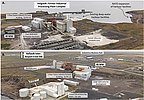
The agreement with Reykjanes Investment grants Greenland Mines a contractual option on the Helguvík industrial complex, a site with a checkered past but immense potential. The lot includes 10,000 square meters of existing buildings, most notably the furnace hall from the defunct United Silicon metal smelter. Rather than building from scratch, Greenland Mines is leveraging sunk capital—repurposing infrastructure to accelerate its path to production.
The true prize, however, isn't the steel and concrete; it's the power. The Helguvík site comes with access to up to 40 MW of electricity from Iceland's grid, which is powered almost entirely by renewable geothermal and hydroelectric sources. For an energy-intensive process like mineral refining, this is a game-changer. Industrial electricity tariffs in Iceland are among the lowest in the Western world, with the company targeting costs potentially below US$0.03 per kilowatt-hour. Compared to processing scenarios in other regions, access to this cheap, green power could translate into life-of-mine savings exceeding a billion dollars for a project the scale of Skaergaard.
This single factor—competitively priced, low-carbon energy—is the economic linchpin of the entire strategy. It transforms the Helguvík site from a mere piece of real estate into a powerful economic engine, potentially unlocking the vast mineral wealth of Greenland Mines’ nearby Skaergaard project. The site's adjacency to a deep-water port and proximity to Keflavík International Airport complete a trifecta of logistical advantages, creating an almost purpose-built hub for a new industrial ecosystem.
From Greenlandic Ore to Western Markets
The Helguvík agreement is the physical manifestation of a larger geopolitical current. Greenland Mines’ strategy creates a geostrategic axis between its upstream assets in Greenland and a processing hub in Iceland, perfectly positioned between European and North American markets. The company’s flagship Skaergaard Project, located on Greenland's east coast, is a mere 30-hour sail from Helguvík. This short, direct shipping route is the corridor's central artery, designed to pump critical metals from mine to market with unprecedented efficiency.
Skaergaard is a globally significant deposit of palladium and gold, along with other critical metals like titanium and vanadium. In a world scrambling to reduce its reliance on Russian palladium and Chinese-dominated rare earth supply chains, developing a stable, Western-aligned source is a matter of economic and national security. By connecting a Greenlandic mine to an Icelandic processing facility, Greenland Mines is building a system that directly addresses this urgent strategic need. It offers a credible alternative for automakers, electronics manufacturers, and defense contractors seeking to de-risk their supply chains.
This move is a practical application of the broader trend toward near-shoring and “friend-shoring.” It demonstrates how strategic partnerships and innovative logistics can build resilience. The North Atlantic corridor represents a new paradigm: leveraging the unique strengths of neighboring, allied nations—Greenland’s mineral resources and Iceland’s green energy—to create a secure and sustainable industrial ecosystem independent of adversarial influence.
The Ghost of Helguvík: A Test of Modern Industry
For all its strategic brilliance, the plan is not without significant risk, chief among them the legacy of the Helguvík site itself. The former United Silicon plant, which began operations in 2016, was shut down amidst significant environmental and operational challenges, including dust and emissions that impacted neighboring communities. The failure left a scar on the local community and a deep-seated skepticism of heavy industry.
Greenland Mines is acutely aware of this history and is framing its proposal as an act of industrial redemption. The company has been vocal in its commitment to a “modern, transparent and low-impact industrial hub.” As President Bo Møller Stensgaard stated, “Our clear objective is that any future activity must be consistent with high environmental performance and long-term, positive relationships with the surrounding communities.”
The company insists it has no intention of reviving the old, problematic operations. Instead, it plans to deploy state-of-the-art technology and controls designed from the outset to meet Iceland’s stringent environmental standards. This makes the Helguvík project a critical test case. Success would not only secure a vital link in the company's supply chain but also create a powerful model for brownfield redevelopment, proving that industrial activity can coexist with ambitious environmental goals. Failure, however, would not only doom the project but also reinforce public opposition, making similar ventures elsewhere more difficult.
Balancing Ambition with Execution
While the strategic vision is compelling, leaders must weigh it against the considerable execution risks. First, the Skaergaard Project, for all its potential, remains in the study phase. No preliminary economic assessment or feasibility study has been completed, meaning its economic viability is not yet formally demonstrated. Second, the logistical chain, while short, is not without challenges. Operating in the harsh North Atlantic requires specialized expertise and carries inherent risks that must be managed and priced into the model.
Furthermore, Greenland Mines itself is a company in transition. Recent late SEC filings and a Nasdaq compliance warning over its share price highlight the financial pressures on the junior developer. While a recent private placement has shored up its balance sheet, the company must execute flawlessly to turn its ambitious blueprint into a profitable reality. The FROR is a savvy, capital-light first step, but the billions in investment required to develop both the mine and the processing facility will require a far greater leap of faith from the market.
This Icelandic gambit, therefore, is a high-stakes play where strategic necessity meets operational reality. It encapsulates the challenges and opportunities of the new industrial age, where success depends not just on what you build, but where you build it, how you power it, and whether you can earn the trust of the communities around you.