
- 98.07% silver recovery from mine tailings
- 99.46% gold recovery from mine tailings
- 35 years of tailings processed from Greens Creek Mine
Experts view this technology as a breakthrough that could transform mine waste into valuable resources while addressing long-term environmental liabilities.
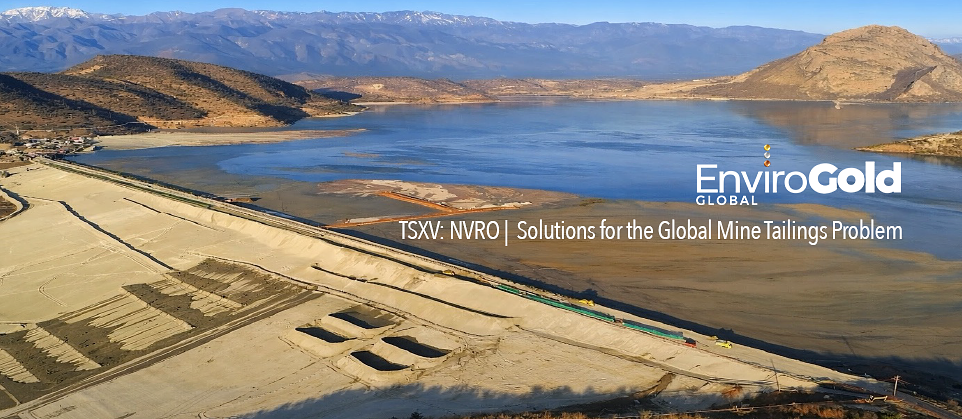
Green Gold Rush: How Mine Waste Could Fuel a Metals Revolution
VANCOUVER, British Columbia – March 02, 2026 – In what could mark a pivotal shift for the global mining industry, clean technology firm EnviroGold Global has announced breakthrough results from a project that aims to turn decades of mine waste into a new source of precious metals. The company revealed that its proprietary technology has successfully extracted nearly all the remaining gold and silver from tailings at one of North America's most significant mines.
EnviroGold confirmed the successful completion of advanced testing on waste material from Hecla Mining Company’s Greens Creek Mine in Alaska. The results were striking: the firm’s NVRO Process™ recovered 98.07% of the silver and 99.46% of the gold locked within the processed tailings. This announcement not only validates the technology but also pulls back the curtain on a previously confidential partnership with Hecla, a major industry player, signaling a powerful endorsement of this innovative approach to resource recovery.
“The test work results clearly demonstrate the NVRO Process™ has the potential to unlock significant metal production from mineralization contained in Greens Creek’s tailings facility, material that was not recovered in prior milling activities over the facility’s 35-year operational history,” said Grant Freeman, Chief Executive Officer of EnviroGold Global, in a statement.
With a bulk sample of the Alaskan tailings now en route to EnviroGold's development facility in Australia for larger-scale trials, the project is moving from the laboratory toward potential commercial reality. This development represents a convergence of environmental remediation and economic opportunity, promising to tackle a legacy environmental issue while simultaneously tapping into a vast, overlooked resource.
The Legacy of Greens Creek
To understand the significance of this project, one must look to the unique context of the Greens Creek Mine. Located within the Admiralty Island National Monument in southeast Alaska, it is one of the largest and lowest-cost primary silver producers in the world. Since beginning operations in 1989, the mine has generated a vast quantity of tailings—the finely ground rock left over after the primary extraction of metals.
For 35 years, this material has been managed on-site using a dry-stack method, which dewaters the tailings to create a more stable, compacted landform. While considered a more environmentally responsible approach than traditional slurry ponds, the tailings pile still represents a long-term management challenge and an environmental liability.
Despite operating under the stringent environmental oversight required within a National Monument, the site has not been without its challenges. Public records from the Environmental Protection Agency (EPA) and the Alaska Department of Environmental Conservation (DEC) have documented issues over the years, including concerns about fugitive dust carrying heavy metals from the tailings pile into the surrounding ecosystem. A 2022 study pointed to elevated lead levels in the adjacent marine environment, and in 2023, Hecla was fined by the EPA for hazardous waste management violations related to lead contamination, which the company has since rectified.
It is this complex legacy—a valuable mining operation in an environmentally sensitive area with inherent long-term liabilities—that makes the prospect of reprocessing so compelling. Rather than simply managing the waste indefinitely, EnviroGold’s technology offers a path to permanently transform it.
A Technological and Environmental Breakthrough
The core of the project lies in EnviroGold Global's NVRO Process™. The recent tests not only demonstrated exceptional gold and silver recovery but also achieved near-complete oxidation of sulfide minerals within the tailings. This is a critical environmental achievement. When sulfide minerals are exposed to air and water, they can create sulfuric acid, leading to acid rock drainage (ARD)—a persistent and toxic form of water pollution that plagues many legacy mine sites worldwide.
By neutralizing these sulfides, the NVRO Process™ not only liberates trapped metals but also transforms the reactive tailings into a geochemically stable, benign material. This end-product, a sand-like aggregate, could potentially be used in construction or for site reclamation, fully closing the loop and embodying the principles of a circular economy.
This dual benefit—extracting economic value while simultaneously mitigating a long-term environmental risk—is at the heart of the growing waste valorization trend in the mining sector. For operators like Hecla, it presents an opportunity to turn a balance-sheet liability and ongoing management cost into a new revenue stream and a demonstrable ESG victory.
A Strategic Alliance for a Sustainable Future
The partnership between a technology innovator like EnviroGold and an established industry giant like Hecla is emblematic of a broader shift occurring across the resource sector. Faced with mounting pressure from investors, regulators, and the public to improve environmental performance, major mining companies are increasingly looking for innovative solutions to clean up their operations and address their historical footprint.
This collaboration serves as a powerful proof-of-concept. It demonstrates a viable business model where environmental stewardship and profitability are not mutually exclusive. For Hecla, successfully reprocessing the Greens Creek tailings could significantly reduce its long-term closure and reclamation obligations, improve its ESG ratings, and strengthen its social license to operate.
Furthermore, the project aligns with the urgent global demand for critical minerals. While the initial focus is on silver and gold, the Greens Creek tailings are known to contain other valuable base and critical metals, including zinc and lead. Unlocking these secondary sources reduces the need for new, disruptive greenfield mining projects and enhances the security of supply chains for metals essential to the green energy transition.
With the bulk sample now heading for pilot-plant optimization (Phase 3) and demonstration-scale processing (Phase 4), the next stages are critical. These trials will refine the operating conditions, validate the quality of the final metal products, and generate the hard engineering data needed for a full-scale techno-economic model. Success in these upcoming phases could pave the way for a final investment decision and the construction of a commercial reprocessing facility at Greens Creek, setting a powerful precedent for the entire mining industry.
Topics & Related
Silver
ESG
Circular Economy
Regulation & Compliance
Related Company Pulse