
- 43% of public-sector employees now use AI, but only 18% believe their governments are deploying it effectively (Q4 2025 study).
- $289 million in Emergency Rental Assistance Program funds processed using Speridian’s AI platform in Arizona.
- Modular AI integration enables incremental modernization without full system replacement.
Experts agree that Speridian’s modular AI approach offers a pragmatic solution for government modernization, allowing agencies to enhance legacy systems incrementally while mitigating risks associated with traditional rip-and-replace projects.
Gov-Tech's Quiet Revolution: AI Without the Rip-and-Replace
ALBUQUERQUE, NM – May 18, 2026 – While public sector agencies face mounting pressure to modernize, the daunting prospect of replacing decades-old, mission-critical IT systems often leads to paralysis. Now, global technology firm Speridian Technologies is championing a different path, announcing that its CaseXellence platform can deliver a modular artificial intelligence layer directly on top of existing government infrastructure—no disruptive overhaul required.
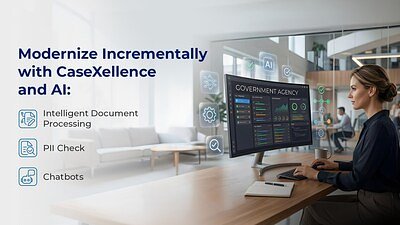
This approach, which integrates capabilities like intelligent document processing, sensitive data detection, and automated chatbots, aims to make government services smarter and faster without the multi-year timelines, budget overruns, and operational risks associated with traditional “rip-and-replace” projects.
A New Modernization Paradigm: Augment, Don't Replace
For years, government IT leaders have been caught between rising citizen expectations for seamless digital services and the reality of entrenched legacy systems, shrinking budgets, and growing caseloads. The conventional solution—a complete system replacement—is a high-stakes gamble that many agencies cannot afford to take.
Speridian's strategy offers a pragmatic alternative. "Government agencies invest years and significant resources in technology, they do not want to keep starting over," said Chief Executive Officer Ali Hasan in the announcement. "Our approach is fundamentally different. We layer proven AI capabilities on top of existing infrastructure so agencies can modernize incrementally, prove value quickly and scale with confidence."
This incremental model reframes AI not as a massive capital expenditure but as an operational efficiency gain. According to Speridian's Chief Technology Officer, Manoj Champanerkar, this method allows agencies to "keep what works and make it smarter." The goal is to augment the capabilities of the current workforce and extend the life of taxpayer-funded systems, rather than discarding them.
This approach taps into a pressing need within the public sector. While a Q4 2025 study found that 43% of public-sector employees now use AI, only 18% believe their governments are deploying it effectively. The gap between adoption and effective implementation highlights the demand for solutions that are easier to integrate and demonstrate immediate value.
From Paper Stacks to Smart Services
The tangible benefits of this modular AI approach are best seen in how it addresses common governmental bottlenecks. Speridian’s AI modules are designed to work behind the scenes, automating manual processes and freeing up staff to focus on more complex constituent needs.
Key modules include:
* Intelligent Document Processing (IDP): For agencies buried in applications, registrations, or regulatory filings, IDP automates the extraction and validation of information from documents, regardless of format. This has been a critical component in projects like the one for the Arizona Department of Economic Security, where Speridian rapidly deployed CaseXellence to help manage over $289 million in Emergency Rental Assistance Program funds during the pandemic, a task that involved processing a massive volume of documents under intense time pressure.
Personally Identifiable Information (PII) Detection: To protect citizen privacy and ensure compliance, this tool intelligently scans documents and free-text fields to flag sensitive data that may have been included in an inappropriate context. This proactive check helps prevent accidental data exposure in public records or internal workflows.
Chatbots: With built-in guardrails to ensure responses are grounded in agency policy, these bots can provide 24/7 support, answer common questions about case status or next steps, and guide users through complex filing processes, significantly reducing the burden on call centers and agency staff.
Real-world implementations are already demonstrating the platform's value. The New Mexico Workers' Compensation Administration is using CaseXellence to streamline its case management system, while the State of Nevada has adopted it to improve the efficiency of its Commercial Recordings division. These examples showcase a growing trend of leveraging targeted AI to solve specific operational challenges, yielding measurable improvements in service delivery.
The Technical Underpinnings of a Seamless Integration
The claim of integrating advanced AI with potentially decades-old systems without a full replacement hinges on a modern architectural principle: API-led connectivity. An Application Programming Interface (API) acts as a secure, standardized bridge that allows different software systems to communicate and share data without altering their core programming.
By building a robust API layer, Speridian's platform can interact with a legacy system's data and functions without being deeply embedded within its old code. The AI modules operate on top of this layer, reading information from the legacy system and feeding processed results back in. This strategy aligns with proven IT modernization techniques, such as the “Strangler Fig Pattern,” where new, flexible services are gradually built around a legacy core until they eventually supersede its functions, all with minimal disruption to daily operations.
Furthermore, CaseXellence is built as a low-code platform, which uses visual development tools and pre-built components to accelerate the creation and deployment of these AI-powered applications. This drastically reduces development time and allows agencies to become more agile in responding to new policy mandates or constituent needs.
Navigating the Ethical Maze of Public Sector AI
As with any deployment of AI in government, particularly one that handles sensitive citizen data, the ethical and security implications are significant. Speridian's focus on a PII detection module shows an awareness of privacy concerns, but successful implementation requires more than a single tool.
Agencies adopting such technologies must navigate a complex landscape of risks, including:
* Algorithmic Bias: AI models trained on historical data may inadvertently learn and perpetuate existing societal biases, leading to inequitable outcomes in areas like social benefit eligibility or licensing.
* Data Security: The APIs connecting legacy systems to modern AI services create new potential entry points for malicious actors. Securing these connections and the data that flows through them is paramount.
* Transparency and Accountability: When an AI system influences a decision affecting a citizen, there must be a clear audit trail and an understandable explanation for how that decision was reached. The “black box” nature of some AI models can challenge this fundamental requirement of public service.
Addressing these challenges requires a commitment to responsible AI principles, including rigorous testing for bias, continuous security monitoring, and maintaining meaningful human oversight. Frameworks like the NIST AI Risk Management Framework are becoming essential guides for public agencies to ensure that the pursuit of efficiency does not come at the cost of fairness, privacy, or public trust.
By offering a modular, incremental path to modernization, this new approach allows agencies to introduce AI in a controlled manner, learning and adapting as they go. This strategy could serve as a blueprint for how government agencies across the country tackle the monumental task of modernization in the years to come.