
- 16 years of operation: The Teen Fitness program has been running since 2010, providing over a million free memberships.
- 400,000+ workouts in 2023: Summer 2025 was the program's "most successful year ever," surpassing nearly 80,000 teen registrations.
- 37% of youth active: Only 37% of Canadian youth met physical activity guidelines in 2020, down from 51% two years prior.
Experts would likely conclude that GoodLife's Teen Fitness program is a masterfully executed long-term strategy that combines corporate social responsibility with a savvy customer acquisition funnel, securing brand loyalty for future generations.
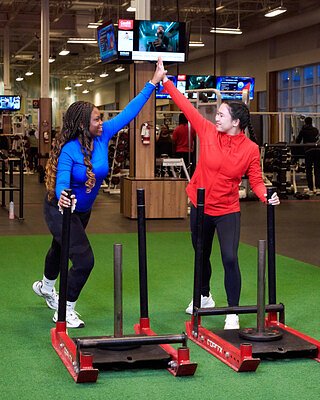
GoodLife's Teen Fitness: A Masterclass in Brand Loyalty & Social Impact
LONDON, ON – June 02, 2026 – As summer approaches, GoodLife Fitness has once again rolled out its annual Teen Fitness program, a now-familiar press release announcing free gym access for nearly every 12-to-17-year-old in the country. On the surface, it’s a feel-good story of corporate generosity, offering a positive outlet for youth during the school break.
But for those of us watching the intersection of innovation and the bottom line, this program, now in its 16th year, is far more than a simple act of charity. It is one of the most sophisticated, long-term customer acquisition and brand-building strategies in Canadian business today. While other companies spend billions on fleeting digital ads, GoodLife is playing a different game—investing in the health of a generation to secure its own financial future. This isn't just about building muscle; it's about building a moat.
The Anatomy of a Winning Initiative
First, let's examine the mechanics. From early July to September, teens can register online (with parental consent) and gain access to nearly 200 GoodLife clubs across Canada, seven days a week. The access is restricted to off-peak hours, typically 8 a.m. to 4 p.m., with a two-hour daily limit. This is a crucial detail. By channeling teens into underutilized daytime slots, GoodLife minimizes disruption to its full-paying adult members and maximizes the efficiency of its physical assets. The marginal cost of one more teen on a treadmill at 11 a.m. on a Tuesday is functionally zero.
What teens receive, however, is far from a zero-value proposition. They get access to a full suite of strength-training equipment, group fitness classes like the popular Les Mills programs, and a digital library of workouts. As 14-year-old Indie V.H. from London noted, the value is tangible: "Last year, the GoodLife staff showed me how to use the machines and helped me learn some workouts to improve my dancing." This isn’t just unsupervised access; it’s a guided introduction to the world of fitness.
The program's success is undeniable. While GoodLife, a private company, is coy with precise figures, it confirmed that summer 2025 was its "most successful year ever," likely surpassing the nearly 80,000 teens who registered and logged over 400,000 workouts in 2023. Since its inception in 2010, the program has provided over a million free memberships—a staggering scale of engagement.
Investing in Public Good and the Bottom Line
GoodLife’s timing and mission alignment are impeccable. The program was launched as a response to growing concerns about youth inactivity, a problem that has only intensified. Statistics Canada data from 2020 showed that only 37% of youth met national physical activity guidelines, a sharp drop from 51% just two years prior. By positioning itself as a core part of the solution, GoodLife transcends its role as a mere service provider.
"Teens today truly understand the benefits of fitness," said Tracy Matthews, GoodLife's senior vice president of experience and safety, in the company’s recent announcement. She points to teens wanting to "feel stronger, more confident, improve in sports, or simply stay connected to friends." This narrative perfectly frames the gym as an essential tool for both physical and mental well-being, a message that resonates deeply with parents and public health advocates alike.
This isn't just good public relations; it's a strategic alignment with national priorities. By tackling a documented public health issue, GoodLife generates immense brand equity. It becomes a partner in community health, earning a level of trust and goodwill that traditional advertising cannot buy. The program provides the content for a powerful corporate social responsibility story, but its impact goes much deeper, embedding the brand into the very fabric of community life.
The Long Game: Cultivating a Generation of Customers
Herein lies the brilliance of the strategy from a business perspective. The Teen Fitness program is a powerful, patient, and incredibly effective customer acquisition funnel. The investment is front-loaded, but the potential returns are exponential.
First, consider the concept of brand imprinting. For hundreds of thousands of Canadians, GoodLife is their first-ever gym experience. It's where they learn to lift a weight, join a class, and build confidence. When these teens turn 18 and begin making their own purchasing decisions, GoodLife is not just an option; it is the default, familiar, and trusted option. The friction of choosing a competitor is significantly higher when one brand has already invested in you for free for several summers.
Second, the program serves as a talent pipeline. Look no further than the story of Caroll Ianculescu, a divisional manager in Pickering who started as a teen in the program a decade ago. She credits the initiative for giving her the confidence that led to her career. GoodLife is not just creating customers; it's creating its own future leaders, employees who are deeply and authentically connected to the company’s mission.
Third, there is the competitive moat. By launching this program nationwide in 2010, GoodLife established a significant first-mover advantage. While competitors like Planet Fitness have similar programs in the U.S., GoodLife has owned this narrative in Canada for over 16 years. Any competitor launching a similar program now would be seen as a follower, not a leader.
Finally, the program creates a powerful network effect. Teens rarely go to the gym alone. They go with friends. One teen's positive experience, amplified on social media and through word-of-mouth, organically markets the program to their entire social circle. As one former participant noted, "It’s so much fun when everyone can make it. It makes my workouts feel like something I get to do, not something I have to do." This transforms a solitary activity into a social event, hard-wiring the brand to positive peer experiences.
While the press release focuses on altruism, the Teen Fitness program is a masterclass in strategic foresight. It recognizes that the most valuable customer is a lifelong one, and that relationship can begin long before the first membership fee is ever paid. GoodLife is not just giving away gym time; it’s building habits, fostering community, and securing its market leadership for the next generation. It’s a long-term bet on the future of fitness, and by all accounts, it is paying off handsomely.