
- 42% of startups fail due to building products with no market need
- SIGNAL Method replaces Agile sprints with milestone-driven delivery
- Storm platform aims to democratize product development for non-technical founders
Experts agree that while AI accelerates software development, human strategic oversight remains critical to ensure products meet real market needs.
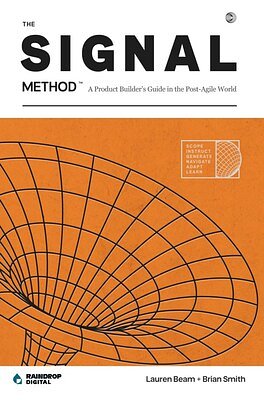
Goodbye Agile? New SIGNAL Method Arrives for the AI Era
SEATTLE, WA – April 07, 2026 – As artificial intelligence continues to reshape industries, its impact is forcing a reckoning within the software development world itself. Today, Seattle-based digital product studio Raindrop Digital cast a direct challenge to decades of established practice with the launch of The SIGNAL Method, a product development framework it bills as the first true post-Agile system for teams building in the AI era.
The announcement, accompanied by a book and a forthcoming AI-powered platform, argues that the principles underpinning popular methodologies like Scrum and Agile are becoming obsolete. With AI collapsing the cost and time of software creation, the company contends that the core challenge is no longer about managing engineering capacity, but about ensuring the right product is being built in the first place.
The Post-Agile Proposition
For years, Agile has been the dominant philosophy, breaking down complex projects into manageable, iterative sprints. But its foundational assumptions—that building software is slow, expensive, and a human-driven manual process—are being eroded by AI tools that can generate code, architecture, and tests in minutes. This shift has led to a growing industry discussion about a “post-Agile” era, where the old ceremonies may create more friction than value.
Raindrop Digital’s founders argue they have the answer. They assert that the primary bottleneck in product development has migrated.
“It used to be engineering capacity,” said Brian Smith, Co-Founder of Raindrop Digital, in the company’s announcement. “Now the bottleneck is product thinking. Do we know what to build? Do we know who it’s for? Can we write an instruction clear enough that any worker, human or AI, will produce exactly what we intend?”
This sentiment reflects a broader industry concern. Research shows that while AI can dramatically boost productivity, it also introduces the risk of producing the wrong thing at an unprecedented speed. Experts warn of an “accountability gap” and an “illusion of productivity” if human strategic oversight is diminished. The rigid structure of two-week sprints, story point estimations, and backlog grooming can feel cumbersome for small, AI-augmented teams working on tasks that may only take a day or two.
Inside The SIGNAL Method
The SIGNAL Method proposes a complete overhaul, replacing Agile's familiar ceremonies with a new set of components. The framework is built around a six-part acronym: Scope, Instruct, Generate, Navigate, Adapt, and Learn.
Instead of time-boxed sprints, SIGNAL uses milestone-driven delivery. The emphasis is on defining a meaningful outcome, not just filling a two-week container with tasks. Perhaps the most significant departure is the replacement of “user stories” with “precise build prompts.” The goal is to create instructions so clear and unambiguous that they can be executed flawlessly by any “worker,” whether a junior developer, an offshore team, or an AI agent.
Central to its feedback loop is the “signal queue,” a system designed to continuously capture and process real-world user feedback into actionable intelligence. This replaces the often-dreaded practice of backlog grooming, aiming for a more dynamic and responsive adaptation process. The ultimate goal, according to the founders, is to create a system that learns and improves with every cycle.
“The goal is not just to build a product. The goal is to build a learning machine,” said Co-Founder Lauren Beam. “A system that ships, observes, adapts, and compounds intelligence over time. The product is the output. The learning is the advantage.”
The Human Advantage in an AI World
While championing a system built for AI integration, Raindrop Digital’s philosophy centers on an unexpectedly human element. The press release highlights a stark statistic: 42% of startups fail not because of technical shortfalls, but because they build something for which there is no market need. With AI accelerating the build process, the potential to rapidly create unwanted products has never been higher.
This is where the human role becomes more critical, not less. The SIGNAL Method is designed to govern the immense power of AI by focusing human effort on strategy, user understanding, and precise communication.
“The human advantage doesn't shrink as AI gets better. It becomes the only thing that matters,” stated Beam. “Three years from now, the question won't be 'are you using AI?' Everyone will be. The question will be 'do you understand your users well enough to build something they can't live without?'”
This perspective aligns with expert analysis suggesting that as AI handles more of the rote execution, the premium on human creativity, critical thinking, and strategic insight will soar. The most valuable professionals will be those who can ask the right questions and provide the clear direction that guides AI tools toward valuable outcomes.
Democratizing Development with 'Storm'
Beyond the methodology, Raindrop Digital is developing Storm, an AI-powered product lifecycle management platform built on The SIGNAL Method. Storm’s stated mission is to democratize product development by specifically targeting non-technical founders—entrepreneurs who have product vision but lack the engineering background to build it themselves.
The platform aims to provide AI-driven guidance through the entire product journey, from concept validation and scoping to market launch. While the market for AI-assisted tools is crowded, with no-code platforms and project management suites all integrating AI, Storm’s differentiation appears to be its foundation in a holistic, opinionated methodology. It isn’t just a tool, but a guided system designed to instill the principles of the SIGNAL framework.
By making the full methodology available for free and the book available for purchase, Raindrop Digital is inviting the industry to test its post-Agile thesis. The company encourages teams to adopt and adapt the framework to their own needs.
As the authors state in their closing remarks, “The methodology is open. Adopt it. Adapt it. Make it your own. Teach it to your team. Build something worth building.”