
- 200,000 individuals across 22 countries are being tracked for five years in the Global Flourishing Study (GFS).
- The study challenges conventional wisdom, showing that strong social relationships, marriage, and community involvement (particularly in religious contexts) are more powerful predictors of well-being than higher national GDP.
- World Vision's 'Hope and God's Love Measure' assesses six signs of hope in children, including compassion, resilience, and purpose.
Experts agree that measurable science and empirical evidence are crucial to understanding and fostering children's well-being, emphasizing the importance of adult healing and intergenerational trauma prevention in creating a holistic framework for child flourishing.
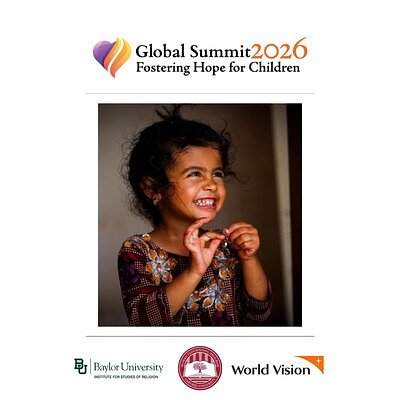
Global Leaders Convene in Rome to Scientifically Measure Children's Hope
ROME – June 01, 2026 – A landmark global summit convening this week near the Vatican aims to answer one of humanity's most vital questions: what does it take for children to truly flourish? The Global Summit 2026: Fostering Hope for Children, held from June 3–5, is assembling an unprecedented coalition of faith leaders, academic institutions, and humanitarian organizations to transform the conversation about child well-being from a matter of aspiration to one of measurable science.
Co-hosted by World Vision International and the Society for Global Flourishing, the event at the Pontificium Patristicum Augustinianum brings together founding partners from Harvard University, Baylor University, and Gallup. The summit's named sponsor, the STAR Network Foundation, is introducing a critical and often-overlooked dimension to the dialogue: the direct link between the healing of adult trauma survivors and the well-being of the next generation.
"Children flourish in the families that surround them, and those families flourish only when adults have access to healing," said Dr. Jamie Huysman, Founder of the STAR Network Foundation, in a statement. "The science of Adverse Childhood Experiences has been clear for thirty years. STAR Network is proud to sponsor a Summit that finally connects that science to global action."
The Science of Flourishing Takes Center Stage
Moving beyond traditional metrics of poverty and education, the summit is built upon a rigorous scientific foundation aimed at quantifying the components of a well-lived life. Central to this effort is the work of Harvard University's Human Flourishing Program, which has developed a six-domain framework to define and measure flourishing. This model encompasses happiness and life satisfaction; physical and mental health; meaning and purpose; character and virtue; close social relationships; and financial and material stability.
This framework provides the intellectual architecture for the Global Flourishing Study (GFS), the most comprehensive longitudinal study of its kind ever attempted. Coordinated by Gallup with partners including Harvard and Baylor University, the GFS is tracking over 200,000 individuals across 22 countries for five years. Initial findings from the study's first waves have already challenged conventional wisdom, suggesting, for instance, that higher national GDP does not necessarily correlate with higher overall flourishing. Instead, factors like strong social relationships, marriage, and community involvement—particularly within religious contexts—appear to be more powerful predictors of well-being. This data provides a crucial backdrop for the summit, grounding policy discussions in empirical evidence of what truly helps people thrive.
From Adult Scars to Children's Stars
The sponsorship by the STAR Network Foundation injects a vital perspective into this data-driven approach, focusing on the intergenerational transmission of trauma and healing. The foundation's work is dedicated to supporting Survivors of Toxic Abusive Relationships (STARs) through its peer-led TAR Anon® fellowship, which reaches individuals in over 60 countries at no cost.
The summit's agenda is deeply informed by decades of research into Adverse Childhood Experiences (ACEs)—potentially traumatic events in childhood such as abuse, neglect, and household dysfunction. Landmark studies by the CDC have established a powerful dose-response link between the number of ACEs a person suffers and their risk for chronic disease, mental illness, and substance misuse later in life.
However, emerging research on Protective and Compensatory Experiences (PACEs) offers a roadmap for resilience. These positive experiences—such as having a supportive mentor, feeling safe at home, or being part of a group—can buffer and mitigate the long-term damage of ACEs. STAR Network's focus on helping adults heal from their own trauma is a direct application of this principle. By empowering adult survivors to build stable, healthy lives, the foundation argues that they create the very PACEs that protect the next generation, effectively breaking cycles of intergenerational trauma. This approach shifts the focus from an isolated view of child welfare to a holistic, family-centered model where adult healing is recognized as a prerequisite for children's flourishing.
A Global Coalition for Measurable Hope
The summit's ambitious agenda is matched by the gravity of its participants. Attendees include H.E. Dr. Fatima Maada Bio, the First Lady of Sierra Leone; Rima Salah, PhD, Chair of the Early Childhood Peace Consortium; and Edgar Sandoval, Sr., President and CEO of World Vision U.S. A Papal General Audience with Pope Leo XIV is also among the summit's highlights, signaling a powerful moral and spiritual commitment to the initiative's goals.
A key moment will be the debut of World Vision's 'Hope and God's Love Measure.' Developed in collaboration with researchers at Harvard and Duke University, this scientifically validated instrument is the first of its kind designed to assess the spiritual well-being of children. Based on interviews with hundreds of children across eight countries, the tool measures six signs of hope—including compassion, resilience, and purpose—to help caregivers, schools, and faith partners better nurture children's inner lives. This innovative measure exemplifies the summit's core theme: making abstract concepts like 'hope' and 'love' tangible, trackable, and ultimately, cultivable.
This convergence of science, faith, and policy represents a potential paradigm shift in global development. "When First Ladies, faith leaders, humanitarians, and the world's leading universities gather in Rome for the flourishing of children, the world should pay attention," stated John S. Hamel, Jr., Vice Chairman of the STAR Network Foundation's board. "The Global Summit 2026 makes hope, dignity, and love measurable — and global."
As the world grapples with complex crises that disproportionately affect the young, the leaders gathered in Rome are betting that the path to a better future lies in a deeper, more scientific understanding of the human heart. By bringing the tools of data science to bear on the timeless pursuit of well-being, the summit aims not just to talk about hope, but to build a global framework for delivering it.