
- 0.015% false positive rate for PDFs, with similarly low rates for DOCX and XLSX files
- Predictive threat intelligence to identify zero-day attacks without prior knowledge of specific threats
- Self-contained analysis enabling operation in offline and air-gapped environments
Experts would likely conclude that Glasswall Foresight represents a significant advancement in proactive cybersecurity, offering a unique, AI-driven approach to predicting zero-day file attacks with high accuracy and low false positives, particularly in environments where traditional methods fall short.
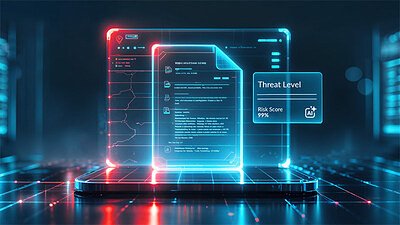
Glasswall Unveils AI 'Foresight' to Predict Zero-Day File Attacks
WASHINGTON, March 10, 2026 – Cybersecurity firm Glasswall today announced a significant advancement in the fight against file-based malware with the launch of Glasswall Foresight. The new artificial intelligence-powered solution provides predictive threat intelligence, designed to give organizations the ability to see and stop unknown, zero-day attacks before they can execute. By integrating machine learning with its established Content Disarm and Reconstruction (CDR) technology, Glasswall is introducing what it calls a new class of threat intelligence that operates on a fundamentally different principle than most security tools on the market.
This launch comes at a time when file-based threats—malware hidden within seemingly innocuous documents like PDFs, Word files, and spreadsheets—remain one of the most successful vectors for cyberattacks against both public and private sector organizations. Foresight aims to shift the defensive paradigm from reactive detection to proactive prediction, offering a glimpse into the malicious potential of a file without ever needing to open it.
A New Paradigm in Threat Intelligence
At the heart of Glasswall Foresight is a unique approach that sidesteps the weaknesses of traditional security methods. Unlike behavioral sandboxing, which analyzes a file by detonating it in a controlled environment, or internet-trained AI models that rely on massive external datasets, Foresight derives its intelligence directly from the file itself. The system is built upon the deep structural analysis generated during Glasswall's core CDR process.
This process, known as deterministic file structure analysis, involves deconstructing a file into its basic components, verifying each part against the manufacturer's known-good specification, and rebuilding a new, clean version of the file. Anything that doesn't conform to the strict, safe standard—such as hidden scripts, unauthorized macros, or malformed code—is discarded. Foresight's AI models were trained on the telemetry from millions of these reconstructions, learning to identify the subtle and complex patterns that indicate a file was crafted with malicious intent.
By analyzing hundreds of thousands of potential indicators, the solution generates a probabilistic classification that reflects the likelihood of a file being malicious. This provides security teams with a contextual risk score, even for threats that have never been seen before. The result is a system that doesn't need to have prior knowledge of a specific threat to identify it as dangerous, a critical capability in the battle against zero-day exploits.
Securing the Unseen: From Air Gaps to the Cloud
The most significant advantage of this architecture is its ability to function where other technologies cannot. Because Foresight's analysis is self-contained and based on the file's structure rather than external feeds or behavioral execution, it operates effectively in offline and air-gapped environments. This is a crucial differentiator for government agencies, defense contractors, and critical infrastructure operators who must protect isolated networks from threats introduced via removable media or other controlled data transfers.
"File-based threats remain one of the most effective and persistent attack vectors facing public and private sector organizations, yet traditional threat intelligence and detection tools struggle to keep pace with unknown and zero-day attacks," said Paul Farrington, Chief Product and Marketing Officer at Glasswall. "With Glasswall Foresight, we are applying machine learning to the deep structural insight generated by our Content Disarm and Reconstruction technology to give security teams a clearer understanding of the hostile file activity entering their environments, including in offline or air-gapped conditions where conventional approaches fall short."
Farrington also noted the high cost and operational burden associated with other advanced techniques. "Many organizations invest heavily in sandboxing infrastructure that is slow, noisy, and expensive. Glasswall's Zero Trust CDR combined with Foresight provides a clear path to reducing both that expenditure and the associated operational overhead."
Transforming Security Operations
For overworked Security Operations Centers (SOCs), the promise of Foresight lies in its potential to dramatically reduce noise and improve efficiency. The company reports an extremely low false positive rate of just 0.015 percent for PDFs, with similarly low rates for other common enterprise formats like DOCX and XLSX. In practice, this means security analysts can spend less time chasing down benign alerts and more time focusing on genuine, high-risk threats.
Integrated directly into Glasswall Meteor, the company's automated file cleaning application, Foresight provides its insights as part of a single, streamlined workflow. Security teams receive a clear risk score for files, enabling them to prioritize high-risk items for investigation. This structured risk data can be surfaced directly into Security Information and Event Management (SIEM) and SOC platforms, enriching investigations and allowing for faster, more confident decision-making.
The goal is to combat analyst fatigue and empower teams to manage the constant deluge of incoming files more effectively. By providing clear, actionable intelligence, the solution helps organizations refine their security policies and respond to the threat landscape with greater agility.
Bolstering the Zero Trust Fortress
The introduction of Foresight represents a significant evolution of the Zero Trust security model. Glasswall's foundational CDR technology already embodies the core principle of "never trust, always verify" by treating every file as a potential threat and sanitizing it by default. The company's technology is trusted in some of the world's most secure environments and is mandated for use as a file filter in Cross Domain Solutions by the NSA.
Foresight extends this principle from simple sanitization to proactive intelligence. It answers a critical question that CDR alone does not: Was the original file malicious? By combining the assurance of a safe, clean file with the knowledge of whether it posed a threat, organizations gain an unprecedented level of visibility. This allows them to not only protect themselves from an immediate attack but also to understand the nature of the threats targeting them.
This deeper understanding enables security teams to refine their Zero Trust policies, strengthen defenses at data ingress points, and maintain a more informed and adaptive security posture. By shifting from a purely reactive stance to one of prediction and prevention, this new class of threat intelligence helps organizations stay ahead of adversaries in an increasingly complex digital world.