
- 12 companies selected for the U.S. Space Force's Space-Based Interceptor (SBI) program, including GITAI USA Inc.
- $3.2 billion in potential contracts awarded under the SBI program
- 2028 target for initial on-orbit interceptor demonstration
Experts agree that the U.S. Space Force's selection of GITAI and other innovative companies reflects a strategic shift toward leveraging commercial robotics and autonomous systems to enhance national defense against advanced missile threats in space.
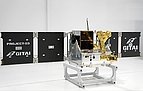
GITAI Robotics Tapped for U.S. Space Force's Interceptor Program
By Michael Bennett
TORRANCE, CA – May 04, 2026 – The U.S. Space Force has selected GITAI USA Inc., a space robotics and satellite platform company, for its high-stakes Space-Based Interceptor (SBI) program. The selection places the U.S.-headquartered firm among an elite group of twelve companies, including defense giants and agile startups, tasked with developing a critical new layer of national defense against advanced missile threats.
This move, part of a competitive evaluation by the Space Systems Command (SSC), underscores a strategic pivot in military procurement, leveraging commercial innovation to counter rapidly evolving geopolitical threats. GITAI's inclusion highlights the growing importance of advanced robotics and in-house manufacturing in the race to secure the ultimate high ground.
A New Shield in Orbit
The SBI program is a cornerstone of the ambitious “Golden Dome for America” defense architecture, a multi-billion-dollar initiative aimed at creating a protective shield against the next generation of aerial threats. The primary objective is to build a proliferated Low Earth Orbit (pLEO) constellation of interceptors capable of neutralizing ballistic, hypersonic, and cruise missiles during any phase of their flight—boost, midcourse, or glide.
According to U.S. defense officials, the speed and maneuverability of modern missiles pose one of the most significant threats to national security. A space-based system offers the promise of persistent, global coverage that ground-based defenses cannot match. The Space Force is aggressively pursuing this capability, with plans to demonstrate an initial on-orbit interceptor by 2028 and achieve full operational status by the mid-2030s.
The urgency is driven by a geopolitical landscape where space has been unequivocally defined as a warfighting domain. As potential adversaries advance their own missile and anti-satellite capabilities, the United States is accelerating its efforts to build a more resilient and responsive defense posture in orbit. The SBI program represents a fundamental shift from terrestrial defense to a proactive, space-based strategy.
The Disruptor's Proven Edge
While GITAI may not be a household name like some of its fellow awardees, the company's selection is no surprise to industry insiders who have tracked its rapid progress. GITAI has distinguished itself through a unique vertically integrated development model, where it designs and manufactures nearly all of its core components—from robotic hardware to flight software and satellite platforms—in-house.
This approach, which mirrors strategies employed by commercial space leaders like SpaceX, allows for accelerated development timelines, tighter quality control, and reduced dependence on complex, and often fragile, global supply chains. The company has already validated this model through a series of increasingly complex and successful on-orbit missions.
In 2021, GITAI's S1 autonomous robot successfully performed in-space assembly and maintenance tasks inside the International Space Station (ISS). This was followed in early 2024 by an even more ambitious mission: its S2 dual-arm robotic system completed a series of complex tasks on the exterior of the ISS, proving its technology was fully operational in the harsh environment of space and achieving a NASA Technology Readiness Level (TRL) of 7.
Further cementing its capabilities, the company successfully launched its own in-house developed satellite, SC1, in late 2024. The mission demonstrated the reliability of its satellite bus technology, a critical component for the SBI program. These proven successes provide tangible evidence that GITAI can deliver the sophisticated and reliable systems the Space Force requires.
A Crowded Field and a New Playbook
GITAI joins a diverse group of companies selected by the Space Systems Command, which is leveraging Other Transaction Authority (OTA) agreements to fast-track the SBI program. The twenty agreements, worth a combined potential of up to $3.2 billion, were awarded to a mix of established defense primes and innovative newcomers.
The list of awardees reads like a who's who of the modern aerospace and defense industry, including Lockheed Martin, Northrop Grumman, Raytheon, and SpaceX, alongside other agile players like Anduril Industries and True Anomaly. This procurement strategy is a deliberate effort by the Pentagon to foster intense competition, drive down costs, and inject commercial-sector agility into a critical national security initiative.
By engaging a broad industrial base, the Space Force is not only hedging its technological bets but also actively reshaping its relationship with industry. The OTA model bypasses some of the bureaucratic hurdles of traditional defense contracting, empowering companies like GITAI to iterate quickly and bring cutting-edge solutions to the forefront. This shift signals that the Pentagon is increasingly willing to look beyond its traditional partners to find the best possible technology, regardless of the company's size or legacy.
The Future is Autonomous
At the heart of the SBI program lies a profound technological challenge: creating a distributed, autonomous network of thousands of satellites that can detect, track, and intercept a target moving at many times the speed of sound. This is where GITAI's expertise in robotics and autonomous systems becomes indispensable.
A future interceptor constellation will require not only the primary kill vehicles but also a host of robotic systems for on-orbit servicing, assembly, and maintenance (ISAM). GITAI's demonstrated robotic arm technology, including its versatile “Inchworm” model, is designed for precisely these kinds of tasks—repairing satellites, assembling larger structures in orbit, and ensuring the long-term health of the constellation.
As the SBI program moves from concept to reality, the integration of advanced robotics and artificial intelligence will be paramount. The ability to autonomously manage and maintain a massive orbital network will be just as crucial as the interceptor technology itself. GITAI's selection is a clear acknowledgment of this reality, placing its advanced robotics at the center of the nation's future defense architecture. This strategic pivot ensures that as the high ground of space becomes more contested, the nation's defense will be increasingly reliant on the speed, innovation, and autonomous capabilities pioneered by a new generation of space technology companies.