
- 11.6 MWp solar array paired with 20 MWh battery capacity
- 4% efficiency boost from DC coupling
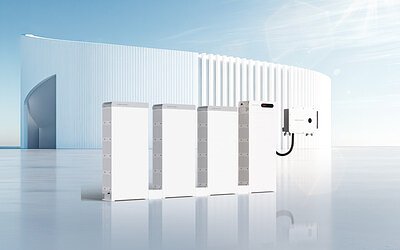
- 1,660 decentralized battery modules in stackable SigenStacks
Experts agree that Germany's DC-coupled solar plant represents a significant advancement in renewable energy efficiency, offering a scalable model for faster, smarter, and more environmentally friendly utility-scale power systems.
Germany's New Solar Blueprint: A DC-Powered Revolution
WEISSACH IM TAL, Germany – April 10, 2026 – On a site in the German state of Baden-Württemberg, a new type of power plant is taking shape that could offer a glimpse into the future of renewable energy. The project in Weissach im Tal, a collaboration between energy innovator Sigenergy, PV specialist Arausol, and distributor Memodo, is on track to become Germany's largest photovoltaic (PV) plant to pair direct current (DC) coupling with decentralized battery storage.
Set for grid connection in July 2026, the facility will feature an 11.6 megawatt-peak (MWp) solar array and a substantial 20 megawatt-hour (MWh) battery capacity. While its solar output is modest compared to Germany's largest solar parks, its innovative architecture is what sets it apart, promising a model for building renewable energy systems that are faster to deploy, more efficient, and better integrated into the national grid.
A New Architecture for Solar Power
The core innovation of the Weissach im Tal project lies in its rejection of conventional design. Instead of large, centralized battery containers and complex AC-coupled systems, the project employs a decentralized and DC-native approach.
The 20 MWh of storage is distributed across 1,660 individual 12 kWh battery modules, which are housed in stackable units called SigenStacks. Developed by Sigenergy, these stacks are installed on mounting racks similar to those used for solar panels. This method avoids the need for heavy cranes and concrete foundations, which are typically required for containerized batteries, thereby preventing soil sealing and reducing environmental impact during construction.
Crucially, the system is DC-coupled. In a traditional AC-coupled solar-plus-storage plant, the DC power from solar panels is converted to AC, then back to DC to charge the batteries, and finally back to AC to be fed into the grid, with energy lost at each conversion. The Weissach im Tal plant eliminates these redundant steps. Solar energy flows as DC power directly into the batteries, with only a single conversion to AC when electricity is discharged to the grid. This streamlined process boosts the system's overall efficiency by at least 4%, a significant margin in the world of utility-scale power generation.
"This project sends a clear message: DC coupling enables utility-scale energy systems to be built faster, smarter, more efficiently, and in a more environmentally friendly way," explained Emanuel Spahrkäs, Senior Account Manager at Sigenergy. "By combining Sigenergy's unique DC-coupled solution with a decentralized battery architecture and Arausol's easy-to-install mounting system, we achieve faster commissioning, higher performance, and lower operating costs."
Easing the Strain on Germany's Grid
The project's design has profound implications for Germany's ambitious energy transition, or Energiewende. As the nation pushes towards a goal of 80% renewable electricity by 2030, its power grids are facing unprecedented strain from the fluctuating nature of wind and solar power. This has led to costly grid congestion and a massive backlog of connection requests for new projects.
In 2024, German grid operators were inundated with nearly 10,000 requests for large battery storage systems, creating a bottleneck that threatens to slow the pace of the transition. The Weissach im Tal project offers a potential solution. By co-locating storage directly with generation and using a decentralized model, the system can help balance power locally, absorbing excess solar energy during peak production times and releasing it when demand is high or the sun isn't shining.
This capability reduces the need for expensive and time-consuming grid expansion. Instead of building more high-voltage power lines to transport electricity across the country, decentralized systems like this one enhance grid stability at a local level. This not only helps integrate more renewables but also has the potential to lower grid-related costs that are ultimately passed on to consumers.
A Partnership Forging the Future
The project's success hinges on a strategic international partnership that leverages specialized expertise. Sigenergy, making its European utility-scale debut, provides the core technology, including the SigenStack batteries, inverters, and AI-powered energy management systems. The company has already proven this model at a 20 MWh project in Bulgaria, which was installed in just 10 days, demonstrating the rapid deployment capabilities of its modular system.
Arausol, a German PV specialist, is responsible for project development, construction management, and providing the mounting substructures from its own facilities. Jaime Arau, CEO and founder of Arausol, highlighted the importance of technological leadership, stating, "As a leading systems integrator and project developer for photovoltaic systems, we are committed to implementing the latest technology. Thanks to its innovative DC coupling, Sigenergy is an ideal partner for realizing this goal."
Rounding out the trio is Memodo, a European distributor that played a key role in structuring the project from its inception. "Our strength lies in actively bringing innovations to the market and supporting projects across the entire value chain," said Jonas Hollweg, Head of Sales at Memodo. The firm's involvement underscores the importance of a collaborative supply chain in translating cutting-edge technology into real-world infrastructure.
As Germany and the world race to build a carbon-neutral energy system, the Weissach im Tal project stands as a powerful case study. It demonstrates that the future of renewable energy is not just about generating more power, but about generating it more intelligently. By integrating generation and storage at a fundamental level, this new blueprint for solar power plants offers a path toward a more resilient, efficient, and cost-effective green grid. The energy industry will be watching closely when it connects to the grid this summer.