
- 90° Articulation: The iREACH IRIS offers up to 90° articulation, surpassing the typical 45°–60° range of conventional staplers.
- $7.8 Billion Market: The global surgical stapler market is projected to exceed $7.8 billion by 2030.
- 40–70% Waste Reduction: The hybrid reusable design could reduce medical waste by 40–70% per procedure.
Experts would likely conclude that the iREACH IRIS represents a significant advancement in surgical stapling technology, offering superior precision, real-time tissue feedback, and enhanced maneuverability that could improve patient outcomes and reduce complications.
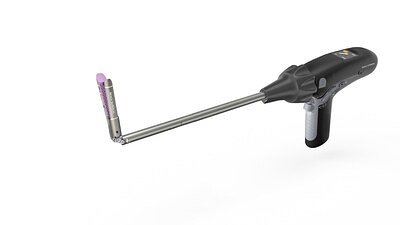
Genesis MedTech Unveils Smart Stapler with 90° Articulation
SINGAPORE – April 14, 2026 – Reach Surgical, the surgical division of Singapore-based Genesis MedTech, has received CE Mark approval for its iREACH IRIS, a next-generation powered stapling platform that promises to equip surgeons with an unprecedented level of real-time data and enhanced maneuverability. The approval opens the door for the device's entry into the European market, challenging established players with features designed to improve surgical precision and patient outcomes.
The iREACH IRIS system introduces two major innovations: a “Real-Time Firing Curve™” that provides live, location-specific feedback on tissue conditions, and a remarkable 90° articulation capability that significantly surpasses the range of many conventional powered staplers. This combination of intelligent feedback and superior access aims to address some of the most persistent challenges in minimally invasive surgery.
A New Era of Surgical Insight
At the core of the iREACH IRIS platform is its ability to provide surgeons with a granular, real-time understanding of tissue interaction during stapling. Unlike conventional devices that offer generalized feedback on the firing process, the Real-Time Firing Curve™ maps the force applied continuously along the entire staple line. This allows surgeons to visually and audibly identify irregularities in tissue compression that might indicate variations in thickness or health, flagging areas that could require additional reinforcement or a different surgical approach.
In the confined, visually restricted environment of minimally invasive surgery, this data provides a crucial layer of insight where direct tactile feedback is lost. “At Genesis MedTech, we focus on translating clinical needs into practical solutions,” said Mr. Warren Wang, Chairman and CEO, in a statement. “iREACH IRIS reflects this approach by moving beyond conventional stapling to providing surgeons with clearer, real-time insights into tissue behaviour during the procedure.”
Complementing this intelligent feedback is a significant mechanical advantage. The device’s Direction-True™ Articulation, combined with its Ultraflex™ 90 reload, achieves up to 90 degrees of articulation. This represents a substantial increase over the typical 45° to 60° range offered by many existing powered staplers. This enhanced flexibility is designed to provide surgeons with better access and positioning in anatomically challenging areas, potentially reducing the need for multiple device firings or difficult repositioning maneuvers that can increase tissue stress and procedural complexity.
Tackling High-Stakes Surgical Complications
The technological advancements of the iREACH IRIS are not merely incremental; they are directly aimed at mitigating some of the most serious risks in modern surgery. One of the most feared complications in gastrointestinal procedures is anastomotic leakage, where a surgically created connection between two parts of the intestine fails, leading to severe infection and a high mortality rate. This is often linked to inconsistent staple line integrity due to variable tissue conditions.
By providing a detailed, location-specific map of tissue compression, the IRIS system empowers surgeons to make a more informed and consistent assessment of the staple line's integrity before completing the procedure. This has the potential to directly impact patient safety and reduce costly, life-threatening complications.
The 90° articulation is particularly critical in anatomically confined surgeries, such as low anterior resections for rectal cancer or single-port thoracic procedures. In these operations, achieving the correct angle for a clean transection can be extremely difficult. The improved maneuverability of the iREACH IRIS is intended to help surgeons achieve negative resection margins—a key factor in cancer outcomes—while preserving vital structures and functions, such as the sphincter in colorectal surgery.
Competing in a High-Tech Market
The CE Mark approval positions Genesis MedTech to compete in the robust and growing global surgical stapler market, which was valued at nearly $5 billion in 2023 and is projected to exceed $7.8 billion by 2030. The market is currently dominated by industry giants like Medtronic, with its Signia™ stapling system featuring Adaptive Firing™, and Ethicon, a Johnson & Johnson company, with its ECHELON+ Stapler offering Dynamic Firing.
These established systems also provide forms of real-time feedback, sensing tissue thickness and adjusting firing speed to optimize staple formation. However, Genesis MedTech is betting that the iREACH IRIS's unique combination of features will provide a compelling competitive edge. The key differentiators are the highly granular, location-specific data from its Firing Curve™ and the superior 90° articulation, which together address both the 'what' and the 'where' of surgical challenges.
The device's market entry is timely, as healthcare systems increasingly favor technologies that enhance precision, reduce complications, and improve efficiency in the operating room. The CE Mark provides access to the vast European Union market and other regions that recognize the certification, representing a major commercial milestone for the Singaporean company.
A Hybrid Approach to Sustainability and Workflow
Beyond its clinical features, the iREACH IRIS introduces an innovative design philosophy that addresses pressing operational and environmental concerns in modern hospitals. The platform features a durable, reusable handle with a detachable power configuration, while all components that come into contact with the patient are single-use disposables.
This hybrid model offers several advantages. From a workflow perspective, it ensures the device is always ready, eliminating the downtime associated with recharging an integrated battery. It also simplifies the process between cases by removing the need for complex and time-consuming sterilization of the entire device handle.
From a safety standpoint, the design inherently reduces the risk of cross-contamination by ensuring that all patient-contact parts are sterile and used only once. This shifts risk management from reliance on reprocessing protocols to a safer-by-design approach.
Furthermore, this model aligns with the growing push for sustainability in healthcare. Operating rooms are a major source of hospital waste, much of it from single-use devices. By making the most resource-intensive part of the stapler—the handle—reusable, the iREACH IRIS system can significantly reduce medical waste and the associated environmental footprint. Studies on similar reusable systems have shown potential waste reductions of 40-70% per procedure, offering a path to both ecological responsibility and long-term cost savings for healthcare facilities.
By combining real-time tissue intelligence with precision control and a streamlined, more sustainable workflow, the iREACH IRIS represents a new and holistic approach to powered stapling, designed to support a more informed and consistent surgical performance.