
- $350M Expansion: Genera's Tennessee facility expansion cost nearly $350 million, making it the largest vertically integrated non-wood agricultural pulp and molded fiber manufacturing facility in North America.
- 30,000 Tons Annual Capacity: The facility now has an annual production capacity of over 30,000 tons, equating to more than two billion individual molded fiber pieces.
- $6.6B in AUM: Ara Partners, Genera's parent company, manages approximately $6.6 billion in assets, focusing on decarbonizing the industrial economy.
Experts view Genera's strategic leadership change and expansion as a critical step in scaling sustainable packaging solutions, positioning the company to lead the global shift away from single-use plastics through innovative, vertically integrated manufacturing.
Genera Taps New CEO to Scale Up Sustainable Packaging Revolution
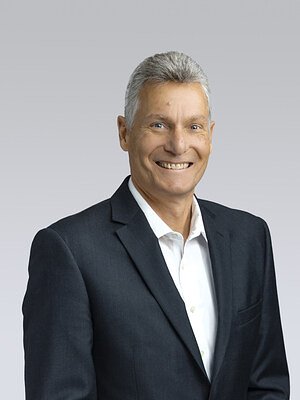
VONORE, TN – May 20, 2026 – In a strategic move signaling a major commercial offensive, Genera has appointed industrial manufacturing veteran Mark Ushpol as its new Chief Executive Officer. The appointment comes as the sustainable packaging manufacturer completes a massive expansion of its Tennessee facility, positioning the company to capitalize on the soaring global demand for plastic alternatives.
Ushpol will take the helm of North America’s largest vertically integrated manufacturer of molded fiber products, tasked with leading the company through a period of “commercial acceleration and innovation.” His leadership is seen as critical for scaling up production and solidifying Genera’s market dominance after a transformational, multi-year investment phase.
A Seasoned Hand for a Green Revolution
Mark Ushpol is not a newcomer to the complexities of large-scale manufacturing. He joins Genera with a distinguished career built on leading global organizations through significant growth and operational scale-ups. His resume includes high-impact leadership roles at industry giants like Suominen, Ahlstrom, DS Smith, and Mondi, where he cultivated a reputation for driving value through operational optimization and strategic commercial initiatives.
This background in the traditional paper and packaging sectors is precisely what Genera’s backers believe is needed to transition the company from a green-tech pioneer into an industrial powerhouse. The challenge is no longer just about proving the technology, but about producing and selling sustainable products at a massive scale, with the efficiency and reliability that major consumer brands demand.
“Mark's deep expertise in the paper and packaging sectors, combined with his proven track record of operational excellence, innovation, and cultural leadership, makes him the ideal person to guide Genera's next chapter,” said Peter Saldarriaga, Managing Director at Ara Partners, the private equity firm behind Genera. “As we continue expanding our domestic manufacturing footprint and advancing new solutions, Mark's vision will be instrumental in scaling our impact for farmers, customers, and consumers.”
Ushpol succeeds Ben Mascarello, who guided the company through its recent $340+ million expansion. Ushpol’s mandate is clear: leverage this new capacity to accelerate growth and deliver superior performance for a growing roster of customers seeking to exit single-use plastics.
Scaling a Farm-to-Factory Powerhouse
The foundation for Ushpol’s mission is the newly expanded Vonore, Tennessee campus—a nearly $350 million marvel of modern sustainable manufacturing. The project has transformed the facility into what is now the largest vertically integrated non-wood agricultural pulp and molded fiber manufacturing facility in North America. This expansion added over 150,000 square feet, housing state-of-the-art equipment including more than 60 robotically controlled thermoforming machines and a fleet of autonomously guided vehicles.
This investment gives Genera an unrivaled annual production capacity of over 30,000 tons, which translates to more than two billion individual molded fiber pieces. The company is now equipped to serve major brands across the food manufacturing, foodservice, retail, and consumer packaged goods (CPG) markets.
At the heart of the operation is Genera’s unique “farm-to-finished-product” model. The company partners with local farmers to grow regenerative perennial grasses, like switchgrass, which are then transformed through advanced biorefining and thermoforming technologies into a range of sustainable products. These include certified compostable food packaging, high-quality non-wood pulp, and other biomaterials.
“I am honored to join a company at the forefront of the circular bioeconomy,” Ushpol stated. “Genera's unique farm-to-finished-product model is a gamechanger for sustainable manufacturing. I look forward to working with this talented team to help advance a more regenerative and sustainable all-American manufacturing economy.”
This vertically integrated system not only provides a robust, domestic supply chain but also creates significant economic and environmental benefits. It turns underutilized farmland into a valuable resource, creates hundreds of local jobs—with the expansion adding over 230 new positions—and produces packaging that can be returned to the earth as nutrient-rich compost, effectively closing the loop.
The Financial Engine of Decarbonization
Genera's aggressive expansion and strategic leadership change are driven by the vision of its parent company, Ara Partners. A global private markets firm founded in 2017, Ara Partners is singularly focused on a mission to decarbonize the industrial economy. With approximately $6.6 billion in assets under management, the firm invests in businesses that can deliver significant decarbonization impact at an industrial scale.
Ara Partners acquired Genera in June 2022, committing up to $200 million in additional capital specifically for the expansion. This investment perfectly aligns with the firm’s thesis of scaling commercially demonstrated solutions to address pressing environmental challenges. For Ara, Genera represents a tangible solution to the global crisis of single-use plastic pollution by providing a domestically sourced, biodegradable, and compostable alternative.
By funding Genera’s growth, Ara Partners is betting that the future of industry lies in circular models that decouple production from fossil fuels and reduce waste. Genera’s success is a key proof point for this investment strategy, demonstrating that sustainable manufacturing can be both environmentally beneficial and highly profitable.
Riding the Green Wave of Market Demand
Genera’s push for commercial acceleration is timed perfectly with a powerful shift in the global market. The demand for sustainable packaging is no longer a niche interest but a mainstream movement, propelled by a convergence of consumer pressure, regulatory action, and corporate responsibility.
Market projections underscore the magnitude of this opportunity. The global molded fiber packaging market is forecasted to grow from $9.54 billion in 2026 to nearly $16 billion by 2034, registering a compound annual growth rate (CAGR) of over 6%. The broader bio-based packaging market is expanding even more rapidly, projected to surge from around $13 billion in 2026 to over $38 billion by 2035 at a CAGR of more than 12%.
This growth is fueled by several factors. Consumers are increasingly making purchasing decisions based on environmental impact, with studies showing that over half actively choose products with sustainable packaging. Simultaneously, governments worldwide are enacting stricter regulations, including bans on single-use plastics, which forces brands to find viable alternatives. Genera’s fiber-based, compostable products are a direct answer to these regulatory and consumer demands.
With its new leadership, unparalleled production capacity, strong financial backing, and a tidal wave of market demand, Genera is positioned not just to participate in the circular economy, but to lead it. The company's next chapter under Mark Ushpol will be a critical test of whether this American-made, farm-to-factory model can redefine the future of packaging on a global scale.