
- Gen Z Credit Growth: 7.8% year-over-year increase in credit-active Gen Z consumers, with average non-mortgage debt rising 9.1% to $13,621.
- National Delinquency Rate: Stabilized at 1.86% for accounts 90+ days past due.
- Mortgage Debt: Outstanding mortgage balances reached $1.91 trillion, with a 4.3% increase in average balance per person.
Experts would likely conclude that while Canada's credit market shows signs of stabilization, generational shifts and regional disparities present both opportunities and risks for lenders and consumers alike.
Gen Z's Debt Boom: Canada's Credit Market at a Generational Crossroads
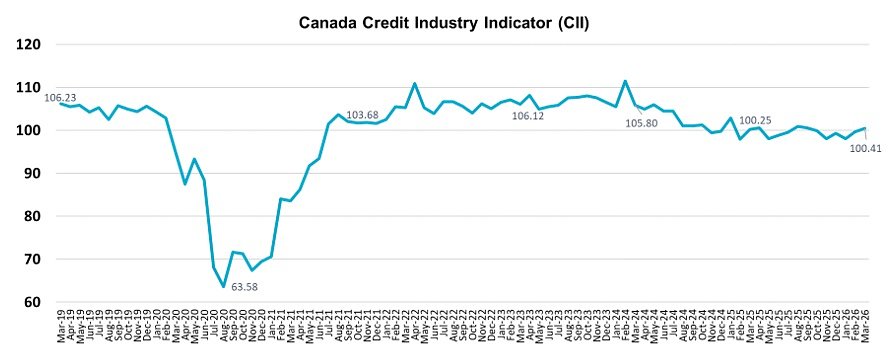
TORONTO, ON – June 23, 2026 – Canada’s credit landscape is being reshaped by its youngest adult consumers, with Generation Z emerging as the primary engine of credit growth, according to a new report from TransUnion. The Q1 2026 Credit Industry Insights Report reveals a market at a crossroads: while overall delinquency rates are showing signs of stabilization after years of economic pressure, a deeper analysis reveals a complex and fragile balance. Beneath the surface of this newfound stability, a generational shift, persistent mortgage pressures, and stark regional divides are creating a nuanced and challenging environment for both lenders and consumers.
The New Engine of Credit
Gen Z is not just participating in the credit market; they are defining its future trajectory. The number of credit-active consumers in this demographic surged by 7.8% year-over-year, adding over 460,000 new participants. More significantly, their borrowing is accelerating. The average non-mortgage debt for a Gen Z consumer climbed by 9.1% to $13,621, a rate of growth that far outpaces every other generation. This suggests a shift from simply opening a first credit card to actively using credit for day-to-day expenses, a trend driven by demand for accessible funding and flexible payment options in a high-cost environment.
This rapid expansion comes with inherent risks. Gen Z still holds the highest delinquency rate of any generation, at 2.75%. This is largely attributed to their thinner credit files and shorter financial histories, which makes them a statistically riskier cohort for lenders. However, the data also reveals a powerful counter-narrative: this same group showed the strongest year-over-year improvement in credit performance, with serious delinquencies falling by 11 basis points. This suggests a generation that is quickly learning to navigate the complexities of debt.
Further challenging stereotypes, research indicates that a significant portion of these young borrowers are not subprime. Around half of credit-active Gen Z Canadians have scores in the prime and above risk tiers. As they mature, older members of this generation are beginning to move into secured lending, taking on auto loans and even entering the formidable housing market. This presents what Matt Fabian, senior director of financial services research at TransUnion Canada, calls a “pivotal opportunity” for financial institutions to build lasting relationships. For lenders, Gen Z represents not just a high-growth segment, but a complex puzzle of balancing immediate risk with long-term potential.
A Fragile and Fractured Stability
On a national level, the report offers a sigh of relief. The total consumer delinquency rate for accounts 90 or more days past due has stabilized, dipping slightly to 1.86%. After a period of steady increases fueled by inflation and aggressive interest rate hikes, the pace of financial deterioration appears to be leveling off. Credit card and line of credit delinquencies have flattened, suggesting consumers and lenders have adapted to the higher-cost reality.
However, this top-line number conceals a growing divergence in the financial health of Canadians. The data points to the emergence of a “K-shaped” credit market, where different segments of the population are on starkly different paths. Super-prime consumers, those with the strongest credit histories, are consolidating their financial strength. At the same time, non-prime households are facing mounting strain, with rising debt burdens and persistent affordability stress. This bifurcation means that while the overall system appears stable, the risk is becoming concentrated among the most vulnerable households.
This fragile equilibrium is playing out against a backdrop of continued economic uncertainty. “The Canadian credit market is transitioning to a phase of stabilizing risk, with signs of normalization,” Fabian noted. But this normalization is uneven, and the stability could be easily disrupted by future economic shocks or continued pressure on household budgets.
The Weight of the Mortgage Market
Nowhere are these pressures more apparent than in the mortgage sector. Total outstanding mortgage balances continued to climb, rising 3.85% to a staggering $1.91 trillion. The average mortgage balance per person also increased by 4.3%, reflecting the persistent affordability crisis in the housing market.
Mortgage delinquencies, while still low by historical standards, have returned to pre-pandemic levels. The 90-day delinquency rate reached 0.19% in the first quarter of 2026. More concerning is the trend beneath this figure: delinquency rates measured by the outstanding balance are rising faster than those measured by the number of accounts. This indicates that higher-balance loans are disproportionately falling behind on payments, amplifying the potential loss severity for lenders even as the overall number of defaults remains contained.
“While delinquency rates remain low by historical standards, the upward trend may reflect increasing affordability pressures as higher interest rates, elevated housing costs and persistent cost‑of‑living challenges continue to weigh on household finances,” Fabian explained. This is particularly true in Canada’s expensive urban markets, where the dream of homeownership has come with an unprecedented debt burden.
A Nation Divided by Debt
The economic fault lines are not just generational or based on credit scores; they are increasingly geographic. The report highlights pronounced regional differences in credit performance, revealing that the national story of stabilization is not shared equally across the country. Alberta, for example, remains an outlier, with its consumer delinquency rate climbing to 2.43%. This reflects the province's economic sensitivity to volatile commodity markets.
In stark contrast, several other provinces are showing meaningful improvement. Manitoba, Newfoundland and Labrador, Nova Scotia, and British Columbia all recorded year-over-year declines in delinquency, suggesting that their local economies are on a more stable footing. Ontario’s delinquency rate held steady at 2.00%, while Quebec maintained the lowest rate in the country at 1.36%. This provincial patchwork underscores that credit health in Canada is not a monolith but a mosaic of distinct regional economies, each facing its own unique pressures and opportunities. As financial institutions look to manage risk and pursue growth, they must navigate a landscape defined not by a single national trend, but by a series of complex and diverging local stories.