
- 24.05% efficiency claimed for GPC 3.0 all-black module
- 8 consecutive quarters of negative net results despite a 30% shipment increase in 2024
- 28.38% cell efficiency target with back-contact technology
Experts would likely conclude that GCL SI's strategic pivot to advanced back-contact technology represents a high-risk, high-reward bet on the future of solar energy, balancing performance, aesthetics, and sustainability in an increasingly competitive market.
GCL SI’s High-Stakes Bet: Beyond Efficiency in the New Solar Era
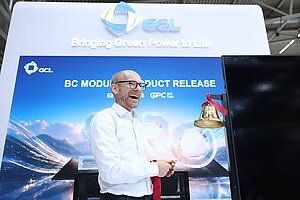
MUNICH, Germany – June 23, 2026 – At Intersolar Europe, one of the world's premier solar industry gatherings, GCL System Integration (GCL SI) unveiled more than just a new product. Its announcement of a strategic pivot to advanced back-contact (BC) cell technology, embodied in the sleek GPC 3.0 all-black module, represents a high-stakes bet on the future of distributed energy. As the first containers of these new modules make their way to European shores, the move signals a critical juncture for the company and a potential inflection point for the broader solar market, where the definition of "value" is rapidly expanding beyond mere watts per dollar.
The End of an Era, The Start of a Race
For years, the solar industry's narrative has been a relentless race for efficiency, dominated by technologies like PERC, TOPCon, and HJT. GCL SI, a top-10 global module manufacturer, has been a major player in this race, having invested heavily in N-type TOPCon technology and boasting a 16 GW production capacity by the end of 2024. The company even celebrated achieving a 23.42% efficiency for its mass-produced TOPCon modules, a significant milestone.
This context makes its decisive shift toward back-contact technology all the more striking. "BC is the ultimate architecture for crystalline silicon cells," stated GengWeng Huang, Executive Dean of GCL SI's Cell Research Division, in the official announcement. "We've already explored TOPCon and HJT extensively, but both are reaching their physical limits. BC is opening a broader window for future efficiency gains."
This pivot is not just a technical preference; it's a strategic gamble made against a challenging financial backdrop. Despite increasing its module shipments by 30% in 2024, the company has reported eight consecutive quarters of negative net results. This shift to a more complex and historically premium technology like BC represents a bold, forward-looking investment. It suggests a belief that the path to profitability and market leadership no longer lies in incremental gains with existing technology, but in a leap toward a new architecture that promises not only higher performance but also addresses a more sophisticated set of market demands.
Designing for the Discerning Rooftop
The vehicle for this strategic leap is the GPC 3.0 module. With a claimed efficiency of up to 24.05% and power output reaching 500 W, its specifications are impressive. But its true target is revealed in its design: a "full-screen all-black" aesthetic. This is a direct appeal to the European distributed solar market—encompassing residential, commercial, and building-integrated applications—where looks matter almost as much as performance.
In dense European cities and design-conscious communities, the visual impact of solar installations is a critical factor. Clunky, grid-lined panels are giving way to sleek, integrated energy solutions that complement a building's architecture. GCL SI is betting that European homeowners and businesses will pay a premium for a product that combines top-tier energy yield with superior aesthetics. The offering is sweetened with robust 30-year product and performance warranties, signaling confidence in the technology's long-term reliability.
However, GCL SI is not entering an empty field. The premium European market is fiercely competitive, with established leaders like Maxeon (the heir to SunPower's pioneering IBC technology) and aggressive new entrants like Aiko Solar, which is also championing a version of back-contact technology. To succeed, GCL SI must prove that its GPC (Graphical Precise-doping Passivation Contact) technology and its claimed cell efficiency of 28.38% can consistently deliver superior real-world value, justifying its position in the market's top tier.
The Sustainable Core: A Systemic Advantage
Perhaps the most compelling part of GCL SI's new strategy lies not on the surface of its black panels, but deep within their material composition. The company is leveraging its vertical integration to incorporate FBR (Fluidized Bed Reactor) granular silicon, a move that speaks directly to the growing demand for sustainability and supply chain transparency.
Unlike the energy-intensive Siemens process traditionally used to produce polysilicon, the FBR method consumes significantly less power, resulting in a demonstrably lower carbon footprint. For a market like Europe, where regulations and consumer preferences are increasingly shaped by environmental impact, this is a powerful differentiator. GCL SI has already secured carbon footprint certifications for its FBR technology, turning a manufacturing process into a key marketing and ethical advantage.
This focus on sustainability is more than just a footnote; it's a systemic approach to building a resilient business. By controlling the production of its core material, GCL SI can ensure material consistency—vital for high-efficiency cells—and provide the kind of verifiable, low-carbon traceability that is becoming a non-negotiable requirement for public and corporate procurement. It's a recognition that in the modern energy landscape, corporate responsibility is inextricably linked to competitive advantage.
As GCL SI navigates its ambitious pivot, its success will hinge on executing this multifaceted strategy. The company must prove that its technological leap can deliver on its promises of efficiency and reliability, that its premium aesthetics can capture the discerning European market, and that its commitment to sustainability is a genuine, value-creating pillar of its business. This launch is not merely about a new solar module; it's about a company trying to define what it means to be a leader in the next chapter of the global energy transition, where performance is measured not just in kilowatts, but in integrity and foresight.