
- 6x computing power: Nexus offers up to six times the performance of Garmin's previous domain controllers.
- 2029 integration: Targeted for production vehicles starting in 2029.
- Centralized architecture: Consolidates digital instrument cluster, infotainment, and ADAS into a single System-on-Chip (SoC) or dual-SoC design.
Experts view Nexus as a transformative leap in automotive computing, enabling safer, smarter, and more connected vehicles through centralized, high-performance architecture.
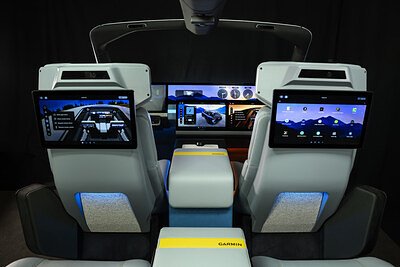
Garmin & Qualcomm Unveil Nexus: The New Brain for Your Future Car
LAS VEGAS, NV – January 06, 2026 – In a move poised to reshape the electronic architecture of future vehicles, Garmin today at CES 2026 announced a significant expansion of its collaboration with Qualcomm Technologies. The centerpiece of the announcement is the Nexus High-Performance Compute (HPC) platform, an automotive-grade supercomputer designed to act as the centralized brain for next-generation cars.
Powered by Qualcomm's formidable Snapdragon Elite Platform for automotive, Nexus promises to deliver up to six times the computing power of Garmin's previous domain controllers. This immense performance leap enables the consolidation of previously separate vehicle systems—including the digital instrument cluster, the main infotainment screen, and critical Advanced Driver-Assistance Systems (ADAS)—into a single, efficient System-on-Chip (SoC) or dual-SoC design. The platform is targeting integration into new vehicle programs beginning in 2029, setting the stage for a new era of smarter, safer, and more connected automobiles.
A Quantum Leap in Vehicle Computing
For decades, vehicle electronics have been a complex web of dozens of individual Electronic Control Units (ECUs), each dedicated to a specific task. The Nexus platform represents a fundamental shift away from this distributed model towards a centralized architecture. By merging multiple domains into one HPC, automakers can simplify vehicle wiring, reduce weight, and lower system complexity, all while unlocking unprecedented capabilities.
At the heart of Nexus is the Snapdragon Elite platform, a purpose-built automotive powerhouse. It features Qualcomm's cutting-edge Oryon CPU and Adreno GPU, delivering massive boosts in processing and graphics performance. This allows for the simultaneous operation of multiple high-resolution displays, graphically intensive user interfaces, and complex applications without lag. More importantly, a dedicated Neural Processing Unit (NPU) provides a massive boost to on-device AI performance, enabling real-time processing for features like generative AI-driven personalization and advanced driver awareness.
"Garmin and Qualcomm Technologies have a strong history of working together to deliver innovative solutions that drive both the feature set and capabilities of next generation domain controllers," said Matt Munn, Executive Vice President and Managing Director of Garmin Automotive OEM. "We look forward to building on our past success by providing automakers with new solutions and feature sets that offer unparalleled capability, scalability and integration."
To manage the immense heat generated by this level of processing, Garmin has developed a proprietary liquid-cooling solution. This is not a trivial feature; it is critical for ensuring the system can sustain high-load operation in the punishing thermal environment of a vehicle, guaranteeing that safety-critical functions and a premium user experience are never compromised by thermal throttling.
Redefining the Digital Cockpit and Driver Safety
The raw power of the Nexus platform translates directly into a transformed in-vehicle experience. For the driver and passengers, this means a digital cockpit that is more responsive, intuitive, and feature-rich than ever before. The system can effortlessly drive an array of screens, from a sprawling pillar-to-pillar main display to individual passenger entertainment screens, all with crisp graphics and fluid animations.
The integrated AI capabilities will power a new generation of in-vehicle assistants that are more conversational and context-aware, capable of personalization without constant reliance on a cloud connection. This opens the door to vehicles that can learn user preferences, anticipate needs, and provide a truly intelligent and adaptive environment.
On the safety front, Nexus integrates a suite of ADAS features built upon the ASIL-compliant Snapdragon Elite foundation. This includes cutting-edge functionality for localization, environmental perception, vehicle control, and high-definition mapping. By centralizing these safety-critical functions on a robust and powerful platform, Garmin and Qualcomm are laying the groundwork for more advanced and reliable automated driving systems, scalable from Level 2+ assistance to higher levels of autonomy.
"These next-generation solutions deliver automakers unparalleled in-vehicle experiences, generative AI-driven personalization, and advanced driver awareness capabilities — setting a new benchmark for software-defined vehicle architecture that prioritize safety and intelligence," commented Nakul Duggal, EVP, Group General Manager, Automotive, Industrial and Embedded IoT, and Robotics at Qualcomm Technologies, Inc.
A Strategic Alliance in a Competitive Arena
The announcement solidifies Garmin's remarkable evolution from a leader in consumer GPS devices to a formidable Tier 1 supplier in the automotive OEM space. This strategic deepening of its partnership with Qualcomm, which first began in 2019, positions the duo to compete effectively in the fiercely contested automotive compute market against giants like NVIDIA and Intel's Mobileye.
While competitors also offer powerful HPC solutions, the Garmin-Qualcomm alliance combines Qualcomm's industry-leading silicon and comprehensive Snapdragon Digital Chassis platform with Garmin's deep expertise in system integration, user experience design, and manufacturing robust automotive hardware. This end-to-end approach provides automakers with a more complete, pre-validated solution, potentially shortening complex development and integration cycles.
The Nexus platform is a direct enabler of the Software-Defined Vehicle (SDV) concept, an industry-wide push to decouple a car's functions from its hardware. With a powerful, centralized computer like Nexus, automakers can deploy new features, security patches, and performance upgrades over-the-air (OTA) throughout the vehicle's lifespan. This allows a car to improve over time, creating new revenue opportunities for manufacturers and delivering sustained value to consumers long after the initial purchase.
The Road to 2029: Integration and the Future
While the Nexus platform was demonstrated to select partners at CES 2026, its target for production vehicle programs starting in 2029 reflects the long, rigorous design and validation cycles inherent to the automotive industry. Integrating such a complex, mixed-criticality system—where safety functions must operate flawlessly alongside infotainment apps—presents significant software and engineering challenges.
However, the industry's momentum is clear. Automakers from Toyota to Mercedes-Benz and Leapmotor are already committing to Qualcomm's Snapdragon platforms for their next-generation vehicles, signaling a broad acceptance of this centralized, software-centric approach. Garmin's Nexus provides a powerful, integrated pathway for more automakers to make this leap.
This collaboration is more than just an incremental upgrade; it represents a foundational component for the next automotive revolution. As vehicles become increasingly defined by their software and computational intelligence, the platforms that power them, like Nexus, will become the central element that dictates not only how we drive, but how we live and interact with our cars.