
- €10M raised in new capital to advance living tissue implants
- Focus on adipose tissue implant program for soft tissue reconstruction
- Global soft tissue repair market valued in the billions
Experts view Cellbricks' €10M funding as a significant step toward clinical validation of living tissue implants, marking a shift from laboratory potential to tangible therapeutic solutions for patients with severe tissue loss.
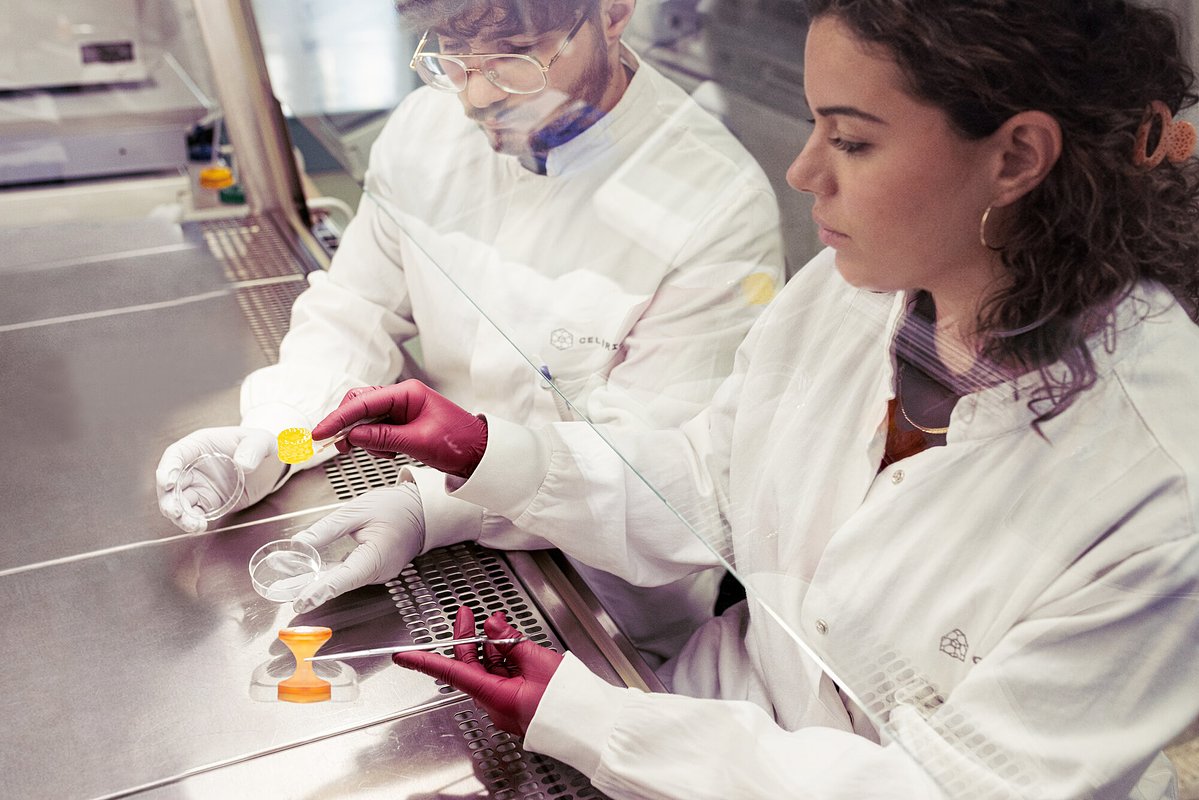
Future of Tissue Repair: Cellbricks Secures €10M for Living Implants
BERLIN / BOSTON – March 25, 2026 – Regenerative medicine has long been defined by its tantalizing promise: a future where damaged tissues and failing organs can be replaced not with inert materials, but with living, functional biological structures. Cellbricks Therapeutics, a German-American tissue engineering company, has taken a significant step toward turning that promise into proof, announcing today that it has raised €10 million in new capital to accelerate its pioneering work on biofabricated human tissue implants.
The financing, which includes a €7 million seed round led by deep-tech investor Silicon Roundabout Ventures, will fuel the next critical phase of development. It enables the company to move its living, vascularized tissue constructs through the rigorous preclinical validation required to approach human clinical trials. This move signals a maturation in the field, shifting the focus from laboratory potential to tangible therapeutic solutions for patients with severe tissue loss.
Beyond Compromise in Soft Tissue Repair
For patients suffering from full-thickness burns, complex blast injuries, or defects left by cancer surgery, current medical options often represent a compromise. Autologous grafts, where tissue is taken from another part of the patient's body, can cause donor site pain and scarring and are limited by tissue availability. Synthetic implants, while restoring shape, are foreign bodies that risk infection, encapsulation, and mechanical failure, never truly becoming part of the patient.
Cellbricks aims to eliminate this compromise. The company's immediate focus is on its lead adipose tissue implant program, designed to offer a biological alternative for soft tissue reconstruction, including in procedures like breast reconstruction after mastectomy. Unlike traditional fat grafting, which suffers from unpredictable survival rates, Cellbricks' engineered tissue is designed with an internal vascular network. This is the key to its survival, allowing it to integrate with the body’s own blood supply, thrive, and restore not just form but living function.
The market for such a solution is substantial. The global soft tissue repair market is valued in the billions and is projected to grow, driven by an aging population and the increasing prevalence of trauma and chronic wounds. By creating living implants that can heal and remodel with the patient, Cellbricks is targeting a core unmet need for more durable, biological, and functional repairs.
The Science of Building Living Tissue
The long-term vision for many in the field is the creation of fully transplantable, 3D-bioprinted human organs. However, the path to that future is not a single leap but a series of deliberate, incremental steps. Cellbricks' strategy embodies this disciplined approach. As co-founder and Co-CEO Alexander Leutner stated, “The ambition is clear: restoring functional human tissue and, ultimately, enabling organ replacement. That future is built one disciplined milestone at a time.”
The greatest biological hurdle in engineering any tissue larger than a few millimeters is vascularization—the creation of a network of blood vessels to supply oxygen and nutrients. Without it, cells in the interior of an implant will quickly die. Cellbricks has developed a proprietary biofabrication platform capable of producing these crucial vascularized human tissue implants. While the specifics of the technology are closely guarded, it allows the company to arrange cells and biomaterials in a way that encourages the formation of these life-sustaining networks.
This funding allows the company to prove its platform's efficacy in clinically relevant models. “Regenerative medicine has talked for a long time about what may one day be possible,” said Dr. Simon MacKenzie, Co-CEO of Cellbricks Therapeutics. “The next chapter is about demonstrating what can actually work in relevant models, with living tissues designed to integrate, restore function and move with real credibility towards the clinic.” The planned preclinical animal studies will generate the essential data on safety, integration, and performance needed to take the next step.
Strategic Capital for a Deep Tech Challenge
The composition of the investment round underscores the significance of Cellbricks' mission. The round was led by Silicon Roundabout Ventures, a VC firm that explicitly targets “hard stuff” and deep-tech founders building critical infrastructure. Their investment is a vote of confidence in the profound technical challenge Cellbricks is tackling.
Further validation comes from Germany’s Federal Agency for Breakthrough Innovation (SPRIND), which contributed to the more than €3 million in non-dilutive funding. SPRIND’s mandate is to support high-risk, high-reward innovations of national strategic importance, positioning Cellbricks' technology as a key asset in Europe's growing biotech landscape. The participation of existing investors like ACT Venture Partners signals continued belief in the company's long-term trajectory.
This strategic capital is earmarked for the arduous and expensive work of translational science. It provides the resources to move beyond promise and into proof, generating the robust data package that regulatory bodies demand. It is an investment not just in a company, but in a foundational technology that could unlock future breakthroughs across medicine.
Navigating the Long Path to the Clinic
The journey from a laboratory breakthrough to a widely available medical treatment is long, complex, and heavily regulated. Products like those being developed by Cellbricks are classified as Advanced Therapy Medicinal Products (ATMPs) in Europe and face similarly stringent oversight from the FDA in the United States. The development and approval process for such therapies can easily take over a decade and cost hundreds of millions of dollars.
Before human trials can even begin, companies must conduct extensive preclinical studies to demonstrate a product's safety and efficacy in animal models. The €10 million financing is precisely for this stage, enabling Cellbricks to launch up to three preclinical studies. These trials will assess how the biofabricated tissue implants survive, vascularize, and integrate within a living system, providing the necessary evidence to file for an Investigational New Drug (IND) application or its European equivalent.
While the ultimate goal of printing on-demand organs remains on a distant horizon—experts suggest it could be decades away—the work being done today on simpler tissues is laying the essential groundwork. Each success in tissue engineering, from skin to cartilage to the adipose tissue Cellbricks is developing, builds the knowledge base, refines the technology, and clears the regulatory pathway for the more complex challenges ahead. This funding accelerates execution where it counts, moving a field-defining goal that has remained tantalizingly out of reach for far too long into a credible, well-funded development pipeline.