
- 21%: Projected annual growth rate of the U.S. 3D printing services market through 2035
- 90%: Major U.S. aerospace firms now using 3D printing for flight-certified parts
- 48%: Portion of the 3D printing market now accounted for by services (Wohlers Report 2026)
Experts view Future Form's adoption of industrial 3D printing as a strategic response to supply chain vulnerabilities and a validation of additive manufacturing's maturation into a core industrial technology, particularly for low-to-mid volume production and prototyping.
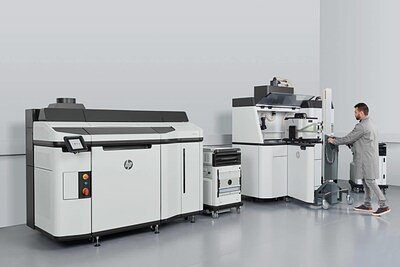
Future Form's 3D Printing Leap Redefines U.S. Manufacturing
SPARKS, Nev. – March 09, 2026 – Future Form, a stalwart in American precision manufacturing for over half a century, today announced a significant expansion of its capabilities, embracing industrial 3D printing to serve critical sectors. The move positions the Nevada-based company to deliver advanced prototyping and low-to-mid volume production parts for the medical, aerospace, and data center industries, signaling a broader shift in how essential components are made in the U.S.
The company will deploy state-of-the-art HP Multi-Jet Fusion (MJF) 3D printing systems, a technology known for its speed and ability to produce high-quality, functional parts. This strategic pivot from a company rooted in traditional methods like CNC machining and sheet metal fabrication underscores the maturation of additive manufacturing from a niche prototyping tool into a core industrial technology.
A Strategic Leap in a Dynamic Market
For a company with 50 years of history, adopting a disruptive technology is a deliberate and calculated move. By integrating plastic additive manufacturing, Future Form joins a competitive but rapidly expanding field. The U.S. market for 3D printing services is projected to grow at a compound annual rate of over 21% through 2035, yet remains fragmented, with no single provider holding a dominant market share. This landscape presents a significant opportunity for established manufacturers with deep industry relationships.
"We specialize in plastic additive manufacturing, focusing on where it delivers the greatest value," said Ben Thomas, CEO of Future Form, in the company's announcement. "Using advanced Multi-Jet Fusion technology, we produce high-quality, functional parts with excellent surface finish, fast turnaround and cost efficiency without the tooling expense or long lead times of injection molding."
This transition allows the company to offer a powerful alternative for low- to mid-volume production runs, where the high upfront cost and long lead times of creating injection molds are prohibitive. By leveraging HP's MJF platform, Future Form can produce parts with mechanical properties comparable to traditionally molded components, but with the agility to iterate on designs and deliver finished products in days, not weeks.
Securing Critical Supply Chains
The decision is also a direct response to persistent global supply chain vulnerabilities. The ability to produce parts on-demand, domestically, has become a critical strategic advantage for industries reliant on a steady flow of specialized components.
"For low- to mid-volume production and/or prototyping, plastic 3D printing is quickly becoming a smarter alternative to traditional manufacturing methods," Thomas stated, noting that ongoing supply chain issues have fueled the rise of additive manufacturing in the U.S. "By adding these services, we're ensuring we can deliver high-quality parts to our customers when they need them without costly transportation fees or exorbitant mark-ups."
This concept of a "digital inventory"—where parts exist as digital files until they are needed—is particularly transformative for the sectors Future Form serves:
- Aerospace and Defense: Over 90% of major U.S. aerospace firms now use 3D printing, not just for models but for flight-certified parts. The technology enables the creation of lighter, stronger components with complex internal structures, consolidating multiple parts into a single, more reliable unit.
- Medical: The healthcare sector is one of the fastest-growing verticals for additive manufacturing. The technology's ability to create patient-specific implants, custom surgical guides, and intricate medical device components with high precision is revolutionizing patient care.
- Data Centers: As the demand for computing power skyrockets, so does the need for innovative cooling solutions. "The use of 3D printing is growing rapidly in the data center sector due to the industry's faster time-to-power needs," Thomas explained. Additive manufacturing allows for the rapid prototyping and production of highly complex liquid-to-chip cooling components and custom airflow guides that are impossible to create with traditional methods, optimizing thermal performance.
The Technology Driving the Transformation
At the heart of Future Form's new service is HP's Multi-Jet Fusion technology. Unlike traditional 3D printing methods that trace an outline, MJF prints across an entire layer of powdered material at once. It uses an array of jets to apply both a fusing agent, which melts the powder into a solid form, and a detailing agent, which ensures sharp edges and precision. This process results in exceptional speed and part quality.
The primary material, Nylon PA12, is known for its strength, durability, and chemical resistance, making it suitable for a wide range of functional, end-use parts. The technology's ability to create complex geometries without the need for support structures allows engineers unprecedented design freedom, enabling them to create internal channels, lattice structures, and other features that optimize performance and reduce weight.
This move also aligns with a larger industry trend where the service component of the 3D printing market is booming. According to the Wohlers Report 2026, services now account for nearly half (48%) of the entire market, indicating that companies are increasingly looking to leverage the expertise and capacity of specialized service bureaus rather than investing in the hardware themselves.
A Greener, More Efficient Manufacturing Model
Beyond speed and resilience, the shift towards additive manufacturing carries significant sustainability benefits. Traditional "subtractive" manufacturing, such as CNC machining, starts with a solid block of material and cuts away what is not needed, often generating substantial scrap waste.
In contrast, additive manufacturing is inherently less wasteful, as it builds parts layer by layer using only the material required for the final product. This not only reduces material costs but also aligns with growing corporate and regulatory mandates for more sustainable, "green" operations. The on-demand nature of 3D printing also minimizes the risk of overproduction and the need for large physical inventories, further reducing waste and the environmental footprint associated with warehousing and logistics.
By integrating this technology, Future Form is not just adding a new service; it is evolving its half-century-old legacy of precision and quality to meet the demands of the modern industrial landscape. The company's investment represents a tangible step toward a more agile, resilient, and sustainable American manufacturing ecosystem, proving that the future of making things is being built today.