
- $30M Investment: The Department of War awarded $30 million to Firestorm Labs for scalable, forward-deployable drone factories.
- 24-Hour Production: Firestorm's xCell platform can produce combat-ready drones in under 24 hours.
- $1.4B APFIT Funding: The APFIT program has surged to over $1.4 billion to accelerate defense technology deployment.
Experts view this investment as a strategic pivot toward decentralized, expeditionary manufacturing to enhance military resilience and operational autonomy in contested regions like the Indo-Pacific.
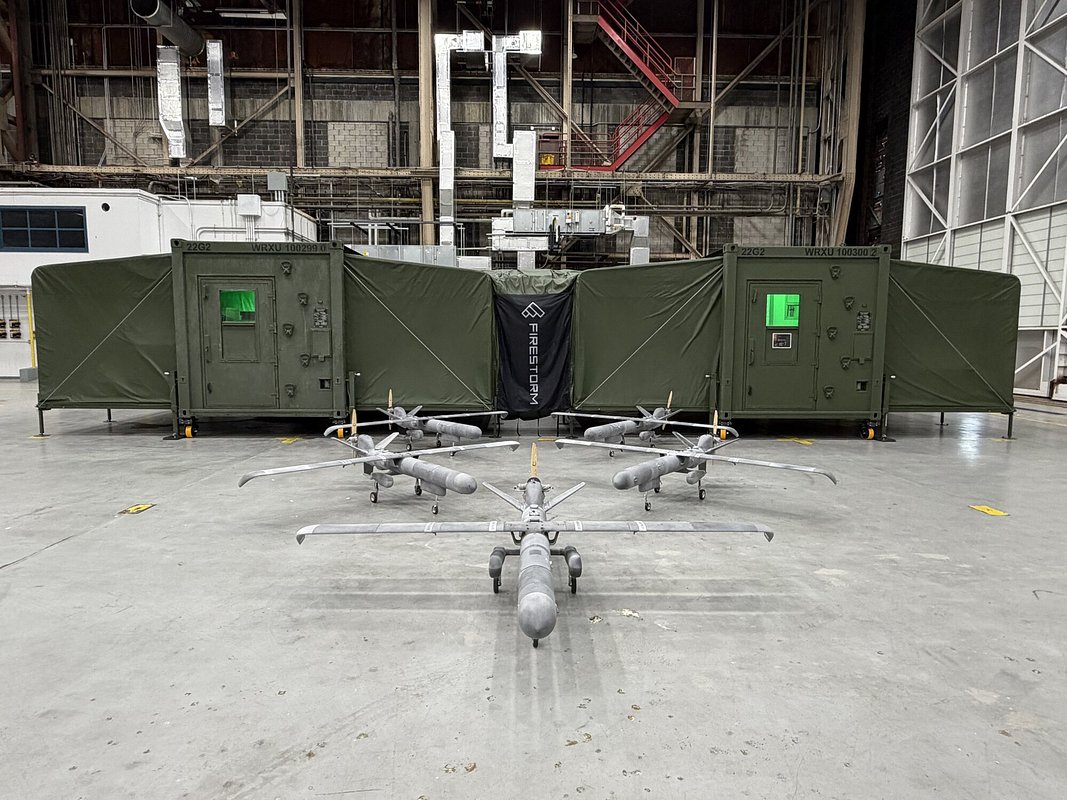
Frontline Factories: DoD Bets $30M on On-Demand Drones for Pacific
SAN DIEGO, CA – May 07, 2026 – The Department of War has awarded up to $30 million to Firestorm Labs to scale up production of its containerized, forward-deployable drone factories, a significant investment aimed at overhauling military logistics in the critical Indo-Pacific theater. The award, granted through the Accelerate the Procurement and Fielding of Innovative Technologies (APFIT) program, will fund the expanded deployment of Firestorm's xCell manufacturing platform and increase the production of its Tempest uncrewed aerial systems (UAS) for operational units.
This move signals a decisive shift in military strategy, directly addressing the critical vulnerability of long, tenuous supply chains in a potential conflict. By enabling troops to 3D-print and assemble combat-ready drones at the point of need, the Pentagon is betting on decentralized, expeditionary manufacturing as a key to maintaining its edge in an increasingly contested global landscape.
A New Frontline Factory for a New Era of Warfare
At the heart of the initiative is Firestorm's xCell platform, a semi-automated factory housed within standard shipping containers. This “factory in a box” can be transported to remote, forward-operating locations, even off-grid, and become fully operational within 24 hours. Inside, a suite of advanced technology, including HP Multi Jet Fusion 3D printers and robotic assembly arms, works to fabricate and assemble mission-ready hardware on demand.
The primary output is the Tempest family of UAS, a line of modular, multi-mission drones designed specifically for production within the xCell system. With a “Lego-like digital design” that emphasizes low-cost, commercial off-the-shelf components, a Tempest airframe can be printed in under 24 hours. These systems can be rapidly configured for a variety of roles, including intelligence, surveillance, and reconnaissance (ISR); electronic warfare (EW); or kinetic strikes. This allows commanders on the ground to adapt their capabilities to the immediate tactical situation without waiting weeks or months for new assets to arrive from a distant depot.
"Our xCell platform and Tempest UAS are a mission-critical enabler for distributed operations, forward sustainment, and affordable mass at the point of need," said Dan Magy, CEO of Firestorm Labs, in the announcement.
Firestorm has demonstrated that its system can produce combat-ready drones in under 24 hours, a capability that could revolutionize battlefield tempo and resilience. The platform's open architecture also allows it to produce spare parts for other equipment, medical tools, or components for partner platforms, further enhancing the self-sufficiency of deployed units.
Bridging the 'Valley of Death' with Strategic Funding
The $30 million award comes from the APFIT program, a Department of War initiative specifically designed to solve a perennial problem in defense acquisition: the “Valley of Death.” This is the infamous gap where promising technologies, having successfully completed research and prototyping, languish for lack of funding to enter full-scale production and fielding. APFIT provides that crucial bridge, using procurement funds to get mature, innovative technologies into the hands of warfighters quickly.
Unlike traditional research and development grants, APFIT awards target production-ready solutions, accelerating their deployment by an average of two years. The program's funding has surged to over $1.4 billion, reflecting the Pentagon's urgency to outpace adversaries by rapidly integrating commercial innovation. The selection of Firestorm Labs underscores the strategic importance the DoW places on the company’s solution for contested logistics.
This funding is not for exploration; it is for execution. It enables Firestorm to scale up its existing, proven capability and deploy it where it is needed most.
"The U.S. lacks the expeditionary manufacturing base to sustain distributed operations at the scale and tempo modern conflict demands. That gap costs lives and missions," Magy stated. "This APFIT award lets us scale that capability and put it where it matters most: in the hands of the warfighter, at the speed and scale the mission requires."
Solving the Indo-Pacific's 'Tyranny of Distance'
The strategic destination for these new capabilities—the Indo-Pacific—is no coincidence. The region is the Pentagon’s declared “priority theater,” but it presents a logistical nightmare defined by what military planners call the “four tyrannies”: distance, water, time, and scale. Traditional military sustainment, which relies on massive, centralized logistics hubs and long sea and air routes, is dangerously vulnerable to disruption by a near-peer competitor with advanced anti-access/area-denial (A2/AD) capabilities.
By placing manufacturing capabilities at the tactical edge, the xCell platform directly attacks this vulnerability. It shrinks the supply chain from thousands of miles to a few feet, transforming a critical weakness into a source of strength. This enhances operational autonomy and resilience, allowing forces to continue fighting even if their primary supply lines are cut. This capability is a core tenet of modern deterrence strategy—convincing a potential adversary that an attack would be too costly and unlikely to succeed because U.S. forces can sustain themselves under pressure.
The Rise of Expeditionary Manufacturing
The Firestorm award is a prominent example of a broader trend transforming the defense industrial base. The conflict in Ukraine has provided a stark, real-world validation of agile, low-cost, and numerous uncrewed systems. In response, venture capital has poured into the defense technology sector, with a particular focus on companies that have moved beyond prototyping and are ready for scaled production.
The market for deployable, additive manufacturing is growing, with companies like SPEE3D and Craitor also developing ruggedized 3D printing solutions for military field use. Even traditional defense giants like Lockheed Martin—an investor in Firestorm through its venture arm—are heavily integrating additive manufacturing into their processes. This investment from the DoW serves as a powerful demand signal, accelerating an “industrialization cycle” where deployable, resilient manufacturing is no longer a novelty but a core requirement for military readiness.
As Firestorm Labs prepares to expand its production and deploy its systems across the Pacific, this award marks more than just a win for a single company. It represents a tangible step in the Pentagon’s pivot towards a more distributed, resilient, and adaptable force posture, one where the factory itself is a deployable weapon system, ensuring that American and allied warfighters have the tools they need, whenever and wherever they need them.